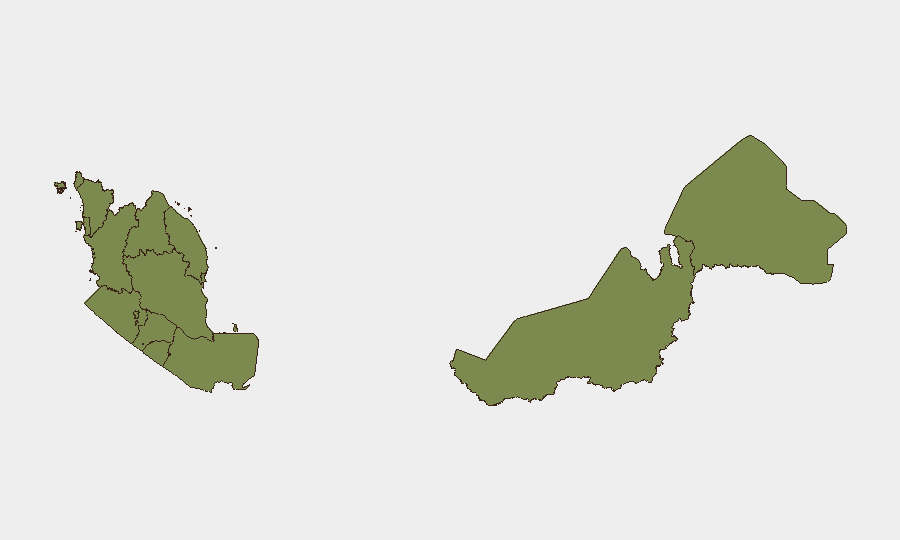
Situation Summary
Malaysia maintains a stable short-term security posture as of 17 July 2026, with no verified acute incidents, civil unrest, or infrastructure disruption reported in the last 24–48 hours. Composite threat ranking places Malaysia at #130 globally (score 6.0), reflecting persistent but non-acute structural risks—principally kidnap-for-ransom and armed activity in Eastern Sabah maritime zones, and standing security measures at police facilities in Kelantan following earlier threat incidents. Government and law-enforcement activity remains routine; foreign travel advisories continue to flag terrorism and demonstration risk but reference existing conditions rather than newly emerged crises.
Key Developments
- Kelantan police compounds (nationwide as of mid-July) – Tightened security protocols at police facilities, including armed personnel, expanded CCTV, and restricted visitor access, remain in force as administrative precaution following earlier threat incidents at Kelantan Shooting Range; no new attacks or breaches reported in the last 48 hours.
- Eastern Sabah maritime zone, Terusan–Tawau coastal waters (ongoing mid-July) – Night-time navigation restrictions within three nautical miles of coast continue due to persistent kidnap-for-ransom and armed-attack risk; assessed as standing measure rather than newly triggered incident.
- Malaysia countrywide (15–16 July) – Cross-checked OSINT sources confirm absence of verified significant security incidents, conflict, or acute travel-risk triggers in the last 24–48 hours; routine policing and governance activity continues without indicators of heightened instability.
- Johor and Kuala Lumpur (15–16 July) – Both regions maintain elevated composite risk scores (18.6 and 22.2 respectively) but no newly reported triggering events—protests, political violence, or major crimes—in the past 48 hours; elevated status driven by medium-term rather than acute factors.
- Government and institutional communications (15–16 July) – Recent OSINT captures health-sector staffing, financial regulation, and court decisions reflecting routine policy and administrative activity with no linkage to new security crises or civil unrest.
Highest-Risk Areas
Sarawak and Negeri Sembilan (both risk 31.8) drive Malaysia's highest composite threat scores, though recent web research indicates no acute incidents in these states within the last 48 hours. Kuala Lumpur (22.2) and Johor (18.6) follow as secondary risk clusters; both remain flagged as higher-risk jurisdictions for medium-term factors including historical demonstration activity and crime patterns, but neither shows new triggering events. Eastern Sabah maritime zones remain structurally elevated due to persistent transnational kidnap-for-ransom and armed-attack activity in disputed waters. All other states register lower individual scores; Kelantan's elevated precautions reflect administrative response to earlier threat incidents rather than current active incidents.
How GeoBit Would Assist
Corporate security and duty-of-care teams monitoring personnel or assets in Malaysia would deploy AOI Monitoring & Early Warning to track Sarawak, Negeri Sembilan, Kuala Lumpur, and Johor for protest, crime, or political-violence signals with automated alerting. Intel Sweep and OSINT fusion capabilities—spanning news, social media (X/Telegram), and structured event feeds—enable 24-hour corroboration of emerging incidents across high-risk states. Maritime tracking and alternative routing analysis are essential for operations in or transiting Eastern Sabah waters to identify safe passage windows and avoid kidnap-for-ransom zones.
7-Day Outlook
No significant shift in Malaysia's security trajectory is forecast for the 7-day horizon. Routine administrative and law-enforcement activity is expected to continue; standing precautions in Kelantan police facilities and Eastern Sabah maritime zones are likely to persist as structural rather than incident-driven measures. Foreign advisories referencing terrorism and demonstration risk are expected to remain unchanged unless new verified incidents emerge.
Highest-Risk Areas — Ranked
| # | State / Region | Risk |
|---|---|---|
| 1 | Sarawak | 31.8 |
| 2 | Negeri Sembilan | 31.8 |
| 3 | Kuala Lumpur | 22.2 |
| 4 | Johor | 18.6 |
| 5 | Selangor | 9 |
| 6 | Penang | 5.4 |
| 7 | Kelantan | 4.2 |
| 8 | Kedah | 3 |
| 9 | Perak | 3 |
| 10 | Pahang | 3 |
| 11 | Labuan | 3 |
| 12 | Sabah | 3 |
Sources
Previous Daily Briefs
A new Malaysia brief is written every day — each with its own risk map and downloadable CSV. Here's the last week; use the calendar to go further back.
📅 Browse every day by calendar →
Highlighted days have a brief. Tap a day for that day's map & analysis, or “csv” for that day's dataset ($5).
Atlas — our AI intelligence desk — emails them this snapshot personally. Nothing else, no list.