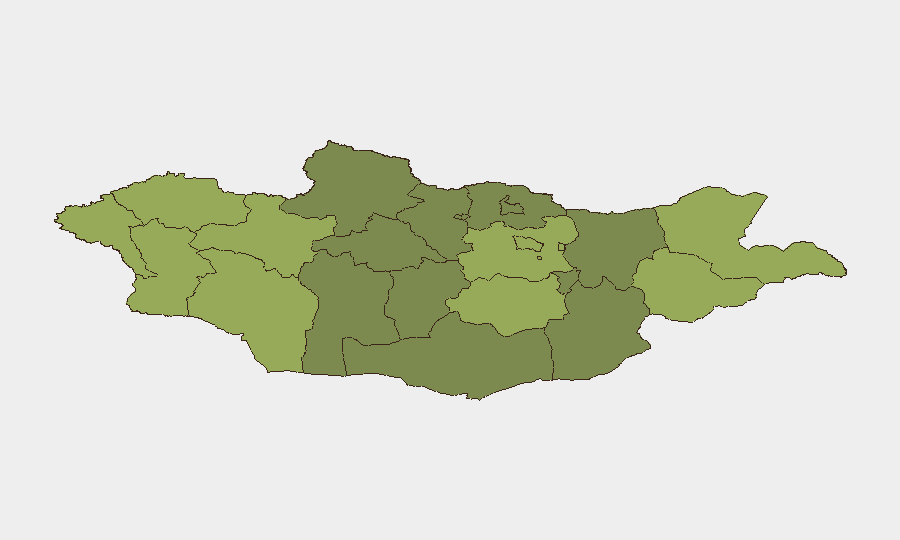
Situation Summary
Mongolia remains at a low composite threat level (score 4) with no significant security incidents, civil unrest, conflict, or infrastructure failures reported in the last 24–48 hours. The most recent travel advisory (Level 1: exercise normal precautions, dated 2026-07-17) remains current, and routine governance and economic activity continue across the country. Risk is concentrated in border regions and the eastern steppe, where historical patterns of cross-border activity and resource competition persist.
Key Developments
No verifiable security, conflict, civil-unrest, crime-spike, political-instability, infrastructure-failure, or travel-risk incidents have been confirmed in Mongolia during August 1–2, 2026. Open-source news (domestic outlets MNB, UBN, Inside Mongolia, government portals) and regional aggregators show only routine political and economic developments. No new nationwide security advisories have been issued in the last 24–48 hours. No active disaster alerts or major incident flags appear in current global monitoring feeds. The absence of fresh incident reports—rather than new developments—is the operative fact for this brief cycle.
Highest-Risk Areas
Eastern and northwestern border regions drive Mongolia's sub-national risk profile. Dornod (risk 58) and Sükhbaatar (risk 55) in the far east, along with Uvs (risk 52) and Khovd (risk 50) in the northwest, reflect persistent cross-border activity, historical smuggling corridors, and proximity to geopolitical tensions affecting neighboring states. Ulaanbaatar (risk 45), though lower than remote border zones, remains operationally significant due to population density and foreign presence; routine crime, petty theft, and occasional civil demonstrations are typical. Central and southern aimags (provinces) maintain lower risk profiles, reflecting stability in livestock-based economies and tourism zones.
How GeoBit Would Assist
Security teams with personnel or assets in Mongolia should employ AOI (area-of-interest) monitoring and early-warning systems on Dornod, Sükhbaatar, and border checkpoints to detect cross-border movement spikes or anomalies in near-real time. Intel Sweep and multi-language OSINT fusion across Mongolian-language news, police bulletins, social media (X/Telegram geotagged posts), and regional aggregators can provide faster incident detection and corroboration than public English-language outlets alone. Risk and threat assessment tools integrated with demographic and border-security data enable continuous scenario modeling for high-risk regions, supporting duty-of-care protocols and travel authorization decisions.
7-Day Outlook
No imminent threat escalation is indicated. Mongolia's political and security environment is expected to remain stable over the next seven days, with routine governance and economic activity continuing. Teams should maintain standard precautions (Level 1 posture) and keep monitoring systems active on eastern border zones, where seasonal resource-competition and cross-border activity historically spike in late summer.
Highest-Risk Areas — Ranked
| # | State / Region | Risk |
|---|---|---|
| 1 | Dornod | 58 |
| 2 | Sükhbaatar | 55 |
| 3 | Uvs | 52 |
| 4 | Khovd | 50 |
| 5 | Bayan-Ölgii | 48 |
| 6 | Govi-Altai | 46 |
| 7 | Ulaanbaatar | 45 |
| 8 | Zavkhan | 44 |
| 9 | Töv | 42 |
| 10 | Dundgovi | 40 |
| 11 | Darkhan-Uul | 38 |
| 12 | Ömnögovi | 37 |
Sources
Previous Daily Briefs
A new Mongolia brief is written every day — each with its own risk map and downloadable CSV. Here's the last week; use the calendar to go further back.
📅 Browse every day by calendar →
Highlighted days have a brief. Tap a day for that day's map & analysis, or “csv” for that day's dataset ($5).
Atlas — our AI intelligence desk — emails them this snapshot personally. Nothing else, no list.