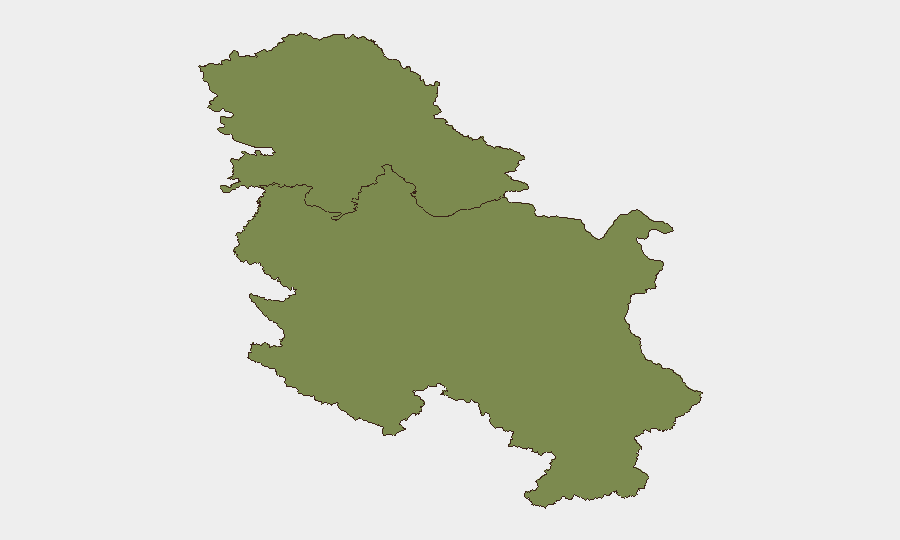
Situation Summary
Serbia remains a moderate-risk operating environment (rank #77 globally, composite threat score 14) characterized by political friction with the European Union, unresolved regional tensions with Kosovo, and concentrated instability in Central Serbia. The past 72 hours have seen elevated diplomatic activity and public criticism from EU bodies, though no discrete acute security incidents within Serbia's territory have been corroborated in open sources dated to 9–10 July 2026. Risk is structurally driven by EU accession friction, border-area military positioning, and organized-crime networks rather than by imminent operational threats to personnel or assets.
Key Developments
• EU–Serbia Cluster 3 Blockade (date unclear, likely past 48h). Eight EU member states have blocked Serbia's advance in EU accession negotiations (Cluster 3), citing concerns over judicial independence and rule of law. European Parliament criticism and calls for investigation signal widening political isolation but do not constitute a direct security incident.
• Presidential and Ministerial Public Statements (7–10 July). Multiple authority and ministerial statements were issued, including rejection of unnamed proposals and administrative sanctions, but open-source reporting does not confirm specific operational details, locations, or security implications within the last 24 hours.
• Prison-Related Detention Activity (9 July). An arrest/detention event was recorded in GoeBit's event feed on 9 July, consistent with routine criminal-justice activity, but specific details (location, charges, individuals involved) are not available in corroborated public reporting.
• Regional Diplomatic Friction (11 July). Croatia issued disapproval statements toward Serbia; simultaneously, tourist-sector and international actors expressed disapproval, likely related to political/judicial concerns rather than security incidents. No specific incidents or locations are identifiable.
• Military Activity – Unconfirmed (10–11 July). One event signal references "Conventional Military Force" involving Serbia on 11 July, and a separate signal involving Copenhagen and judiciary. Open-source verification of location, scale, or context is not available; caution advised pending corroboration.
• Media Statements (11 July). Public media commentary occurred, but timestamps and specific subject matter are not clearly recoverable from available open-source snippets.
Highest-Risk Areas
Central Serbia dominates the sub-national risk profile (composite score 31.5), approximately 7× higher than Vojvodina (4.3). This concentration reflects political capital dynamics, EU-related governance scrutiny, and ongoing Kosovo-border tensions centered on Belgrade and the southern border region. Vojvodina carries lower risk and is generally suitable for routine operations. Organizations should weight security protocols toward Central Serbia, particularly around border crossings, government facilities, and areas subject to EU-mandated judicial reform monitoring.
How GeoBit Would Assist
Intel Sweep & OSINT Fusion would provide multi-language, time-stamped corroboration of political and military statements, clarifying whether recent signals represent routine activity or escalation. AOI Monitoring & Early Warning (persistent area-of-interest watch on Central Serbia, Kosovo border, Belgrade) would alert duty-of-care teams to sudden shifts in military positioning, protest activity, or border incidents. Conflict & Military tracking (force structure, weapons-capability monitoring) and Network & Actor Analysis would identify organized-crime or paramilitary movement relevant to personnel safety and supply-chain risk.
7-Day Outlook
EU accession friction and political messaging are likely to continue through July, with no immediate indication of escalation to civil unrest or acute security incidents. Border-area military positioning warrants routine monitoring; any sudden force concentration or movement should trigger immediate escalation review. Overall trajectory remains stable but politically tense; risk of opportunistic criminal activity (trafficking, extortion) in Central Serbia remains elevated.
Highest-Risk Areas — Ranked
| # | State / Region | Risk |
|---|---|---|
| 1 | Central Serbia | 31.5 |
| 2 | Vojvodina | 4.3 |
Sources
Previous Daily Briefs
A new Serbia brief is written every day — each with its own risk map and downloadable CSV. Here's the last week; use the calendar to go further back.
📅 Browse every day by calendar →
Highlighted days have a brief. Tap a day for that day's map & analysis, or “csv” for that day's dataset ($5).
Atlas — our AI intelligence desk — emails them this snapshot personally. Nothing else, no list.