Situation Summary
Singapore remains a low-threat jurisdiction (global rank #174) with no active large-scale civil unrest, armed conflict, or terror activity in the past 48 hours. Current risk is concentrated in localized property crime and elevated cyber-threat exposure across the enterprise sector. The threat environment is stable but showing incremental pressure on operational infrastructure and business continuity from both physical and digital vectors.
Key Developments
- Hougang, Northeast Singapore – 2–3 July 2026
Two separate break-ins reported at a local F&B establishment within 10 days, involving theft and property damage. The incidents have circulated widely on social media as a neighbourhood safety concern and prompted the business operator to implement enhanced security measures.
- Singapore MRT East-West Line – 2–3 July 2026
Train service disruptions occurred overnight; preliminary investigation indicates a technical infrastructure fault rather than deliberate sabotage or security threat. Official transport and police statements have been circulated to downplay security risk and frame the incident as routine maintenance.
- Singapore (unspecified) – 2 July 2026
Two juveniles aged 11 and 12 received conditional warnings following a break-in incident. The case highlights youth involvement in property crime and has been highlighted on local social channels as a neighbourhood-level security concern.
- National Cybersecurity Posture – 2–3 July 2026
The Cyber Security Agency of Singapore's latest threat report, circulated in the past 24–48 hours, identifies neglected network equipment and AI-related exposure as primary vulnerabilities for local organizations. Regional security outlets and social channels have amplified warnings of elevated risk from misconfigured infrastructure.
- Enterprise Sector Cyber Activity – 2–3 July 2026
Singapore-based security briefings highlight a spike in cyber-attack activity during the past month, shown on live incident dashboards and circulated as an ongoing alert to corporate risk teams. The elevated attack tempo appears to reflect multi-week trend rather than a single incident.
- National Malware Infrastructure – 2–3 July 2026
Renewed social media circulation of 2025 malware statistics (284,300 infected systems, primarily botnet-driven) is being repositioned as a current structural cyber-risk to infrastructure and business continuity. The re-amplification suggests ongoing organizational awareness of persistent infection prevalence.
Highest-Risk Areas
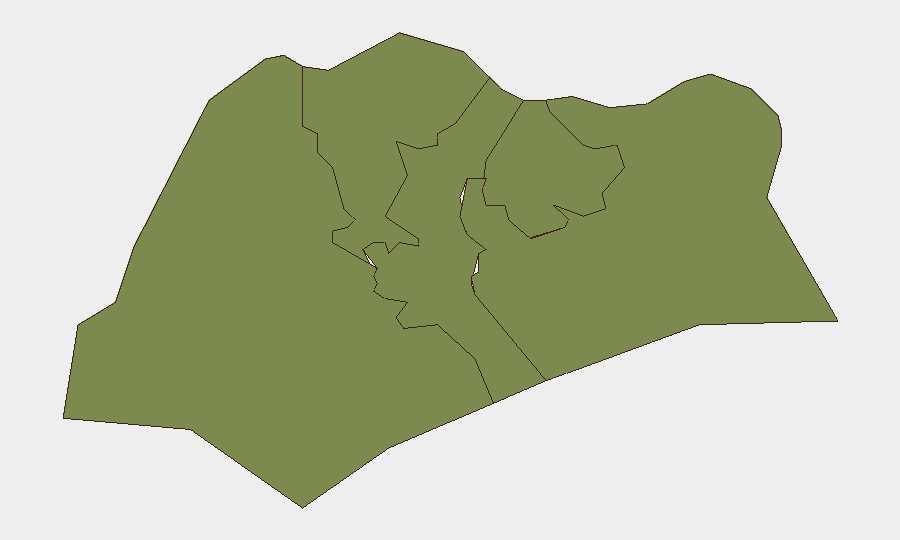
The Northwest region carries significantly elevated sub-national risk (31.8), though the briefing does not specify which districts or sectors drive this score. Southwest, Central, Northeast, and Southeast regions show substantially lower and equivalent risk levels (1.8–3.0). The disparity suggests concentrated vulnerability in Northwest administrative or infrastructure nodes; corporate operations in that region should prioritize asset-level threat assessment and incident-response readiness. Current event signals do not isolate specific Northwest incidents, indicating the risk may reflect structural factors (critical infrastructure density, traffic nodes, or historical incident patterns) rather than acute current events.
How GeoBit Would Assist
Security teams should deploy Intel Sweep and X/Telegram OSINT for continuous monitoring of crime-related activity and social amplification in target neighbourhoods, with AOI Monitoring & Early Warning configured for Hougang and other high-footfall commercial districts to detect property-crime clusters before they escalate. Cyber-focused Search & Research and entity extraction against CSA advisories and regional threat feeds will enable real-time mapping of exposed network assets and malware prevalence by sector and geography, supporting duty-of-care compliance for enterprise infrastructure. Sentiment & Temporal Analysis on social channels will provide early indication of neighbourhood-level security concerns and reputational risk before they affect staff safety or business continuity.
7-Day Outlook
No acute escalation of conflict, civil unrest, or political instability is forecast in the near term. Localized property crime and cyber-threat exposure are likely to remain the principal operational security concerns for corporate assets over the next week. Cyber-threat levels may remain elevated pending corrective action by affected organizations in response to CSA guidance and recent incident activity.
Highest-Risk Areas — Ranked
| # | State / Region | Risk |
|---|---|---|
| 1 | Northwest | 31.8 |
| 2 | Southwest | 3 |
| 3 | Central | 1.8 |
| 4 | Northeast | 1.8 |
| 5 | Southeast | 1.8 |
Sources
Previous Daily Briefs
A new Singapore brief is written every day — each with its own risk map and downloadable CSV. Here's the last week; use the calendar to go further back.
📅 Browse every day by calendar →
Highlighted days have a brief. Tap a day for that day's map & analysis, or “csv” for that day's dataset ($5).