Situation Summary
Tajikistan remains a lower-tier global security risk (rank #118, composite score 8) but faces acute volatility along its southern border with Afghanistan, where cross-border fire has killed at least 5 civilians and injured 5 others in the past week. Authorities have responded by deploying armed security along critical infrastructure corridors and elevating border protection posture. The interior remains stable with no reported major incidents, civil unrest, or infrastructure collapse in the past 48 hours, though flood warnings underscore seasonal vulnerabilities in transportation networks.
Key Developments
- Tajik–Afghan border corridor, Shuroobod–Kulob highway (southern Tajikistan) – c. July 3–4, 2026: Chinese construction workers have resumed activity on the Tajik highway under armed military escort following recent cross-border attacks from Afghanistan. Tajik security forces have been deployed to protect the worksite and transit route, marking a tangible operational security escalation in response to earlier incidents.
- Tajik–Afghan border region (unspecified districts), southern Tajikistan – past week, reported early July 2026: Official casualty figures from Tajikistan's Committee for Emergency Situations and Civil Defense confirm 5 killed and 5 injured from cross-border fire originating in Afghanistan. President Emomali Rahmon issued directives to security agencies to reinforce border protection and publicly condemned the attacks.
- National border posture – early July 2026: Tajik authorities have implemented elevated security measures along the entire Afghan border, including armed escorts on key infrastructure and reinforced protective deployments. This shift reflects ongoing operational concern rather than a single discrete incident.
- Dushanbe – early July 2026 (political signal): President Rahmon met with Iranian counterparts in Tehran and publicly aligned Tajikistan with Iran on regional security, emphasizing Iran's "key role in regional stability" amid heightened US–Israeli tensions. While not a domestic security incident, this reflects Tajikistan's strategic positioning in volatile regional dynamics.
- Nationwide – current week (infrastructure warning): Tajik authorities issued flood-risk advisories affecting parts of the country, with implications for travel reliability and infrastructure resilience in flood-prone areas.
- Washington, D.C. (or overseas venue) – June 30, 2026: The Tajik Ministry of Foreign Affairs participated in its annual political consultations with the United States, covering regional security cooperation and bilateral ties.
Highest-Risk Areas
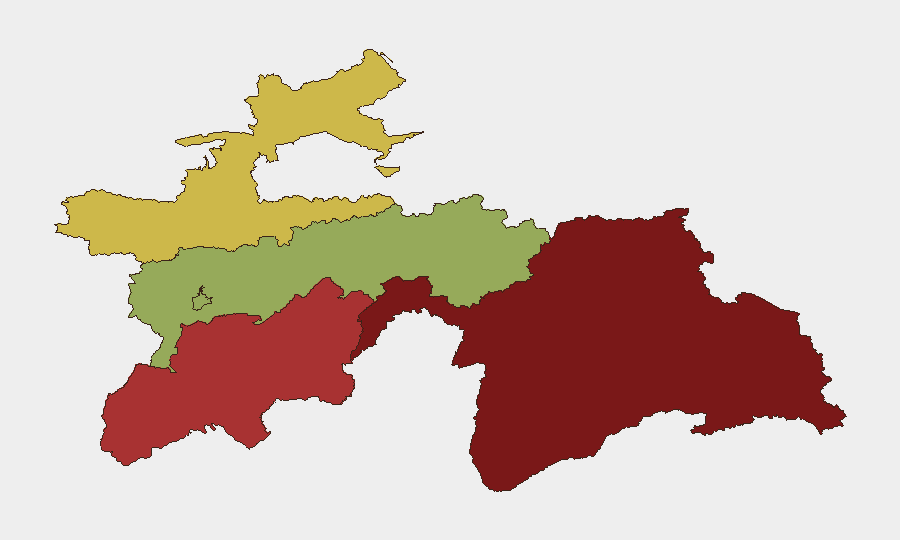
Gorno-Badakhshan (risk 92) and Khatlon (risk 78) dominate the sub-national threat landscape, reflecting the volatile Afghan border and the concentration of recent cross-border fire incidents in southern districts. Sughd Region (risk 65) faces secondary exposure through proximity to border activity and transportation corridors. Dushanbe (risk 42) remains significantly lower-risk but remains the political and administrative nerve center; the capital itself has not experienced major security incidents in the current reporting window.
How GeoBit Would Assist
Security teams operating in or responsible for Tajikistan would deploy AOI Monitoring & Early Warning on the Khatlon–Afghan border corridor to detect emerging cross-border fire and militant movement patterns; Routing & Network Analysis to identify safe and alternative transit corridors as armed escorts become standard on main highways; and Conflict & Military tracking to monitor Tajik and Afghan force posture changes. OSINT fusion across Tajik government statements, regional news feeds, and social-media signals would provide 24–48 hour lead time on security directive changes affecting operations.
7-Day Outlook
Border tensions with Afghanistan are likely to remain elevated absent a significant diplomatic intervention. Expect continued armed protection on key infrastructure corridors, with potential for additional cross-border incidents given the stated "complicated" border situation. The interior remains stable, but operational security protocols (escorts, route changes, delay buffers) should be factored into duty-of-care planning for personnel and supply chains in southern regions.
Highest-Risk Areas — Ranked
| # | State / Region | Risk |
|---|---|---|
| 1 | Gorno-Badakhshan Autonomous Region | 92 |
| 2 | Khatlon Region | 78 |
| 3 | Sughd Region | 65 |
| 4 | Districts of Republican Subordination | 58 |
| 5 | Dushanbe | 42 |
Sources
Previous Daily Briefs
A new Tajikistan brief is written every day — each with its own risk map and downloadable CSV. Here's the last week; use the calendar to go further back.
📅 Browse every day by calendar →
Highlighted days have a brief. Tap a day for that day's map & analysis, or “csv” for that day's dataset ($5).
Atlas — our AI intelligence desk — emails them this snapshot personally. Nothing else, no list.