Situation Summary
Turkmenistan remains a low-threat environment with a composite threat score of 4 (ranked #175 globally) and no confirmed security incidents, civil unrest, or travel-risk changes reported in the last 24–48 hours across open-source media and social platforms. The country's information environment is characteristically opaque; routine governance and economic activity continue without disruption. The single recent signal (a July 4 public statement involving China and Ashgabat) does not yet correlate with any verifiable ground-level incident, infrastructure disruption, or policy change affecting corporate operations or personnel safety.
Key Developments
No confirmed security, civil unrest, crime, political instability, infrastructure disruption, or travel-risk incidents have been identified in Turkmenistan in the last 24–48 hours (July 5–6, 2026) across multiple independent open-source sources.
Background Context (not new developments):
- A July 4, 2026 public statement involving China and Ashgabat was flagged by GeoBit's event signal system but has not been corroborated by additional reporting and does not, as of July 7, correlate with observable ground impact.
- U.S. State Department schedules and NATO-related diplomatic updates show no advisory changes or incident reports specific to Turkmenistan for early July.
- Energy sector analysis (July 6) focusing on gas development and offshore investment shows no security-related disruptions or project delays.
- Neighboring Central Asian states (e.g., Kazakhstan) also report absence of recent security incidents, consistent with regional stability.
Highest-Risk Areas
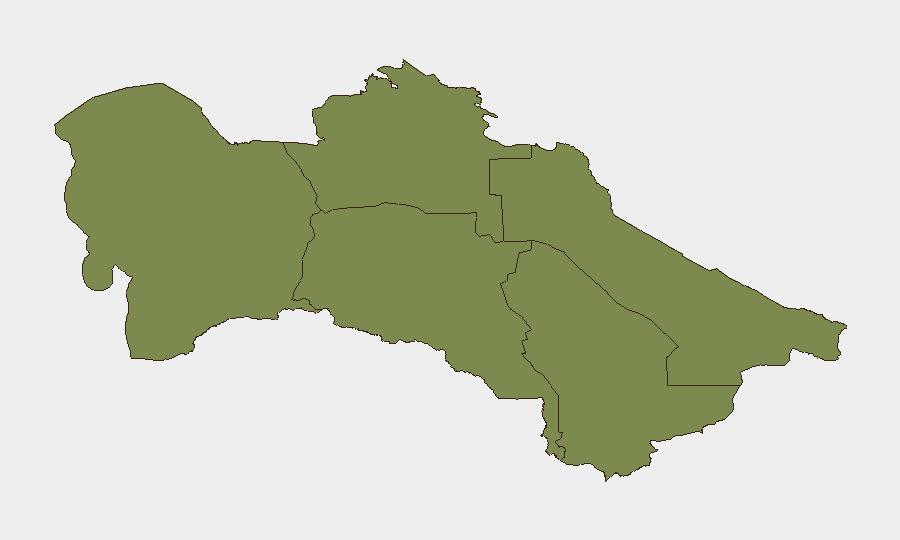
Ashgabat City dominates the sub-national risk profile (score 31.5), reflecting its role as the capital, seat of government, and primary hub for international business, diplomacy, and population concentration. All other regions (Dashoguz, Balkan, Lebap, Ahal, Mary) carry substantially lower risk scores (1.5 each), indicating that threat surface is highly concentrated in the capital. For personnel and assets outside Ashgabat, routine baseline precautions apply; Ashgabat-based operations warrant standard diplomatic and corporate security protocols appropriate to a low-transparency authoritarian state.
How GeoBit Would Assist
Corporate security and duty-of-care teams operating in Turkmenistan should leverage AOI (Area-of-Interest) Monitoring & Early Warning to track Ashgabat and key business districts for emerging disruptions, combined with Intel Sweep and X/Twitter OSINT to detect early signals of policy, security, or infrastructure changes in a low-transparency environment. Multi-language search and sentiment analysis help identify regime-stability shifts, economic stress, or border tensions that may not surface in English-language media. For personnel movement and supply-chain resilience, Routing & Network Analysis supports alternative journey planning in case of unexpected disruptions.
7-Day Outlook
No escalation in threat level is forecast for the next 7 days based on current signals. Turkmenistan's governance and energy focus remain stable; bilateral relations with China and regional partners are routine. Security teams should maintain standard protocols and monitor the July 4 China–Ashgabat signal for corroboration or policy clarification, but no imminent operational impact is anticipated.
Highest-Risk Areas — Ranked
| # | State / Region | Risk |
|---|---|---|
| 1 | Ashgabat City | 31.5 |
| 2 | Dashoguz Region | 1.5 |
| 3 | Balkan Region | 1.5 |
| 4 | Lebap Region | 1.5 |
| 5 | Ahal Region | 1.5 |
| 6 | Mary Region | 1.5 |
Sources
Previous Daily Briefs
A new Turkmenistan brief is written every day — each with its own risk map and downloadable CSV. Here's the last week; use the calendar to go further back.
📅 Browse every day by calendar →
Highlighted days have a brief. Tap a day for that day's map & analysis, or “csv” for that day's dataset ($5).
Atlas — our AI intelligence desk — emails them this snapshot personally. Nothing else, no list.