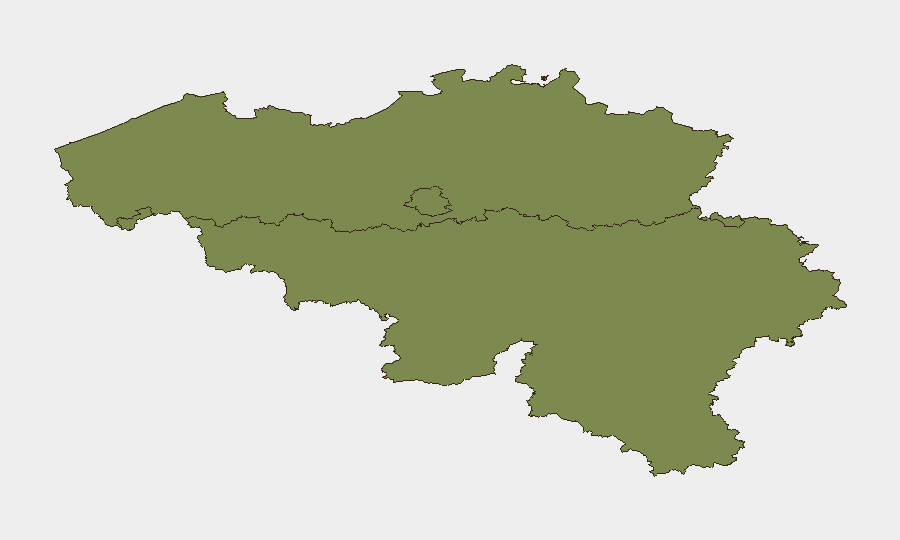
Situation Summary
Belgium remains a low-to-moderate threat environment globally (rank #118, composite score 8), but risk is heavily concentrated in Brussels-Capital, which scores 31.4 and accounts for the majority of recent security events. A major diplomatic event on 28 June drew activist protest and elevated temporary security operations in central Brussels. The broader trend reflects routine political dissent and regulatory activity rather than acute instability, though Flanders and Wallonia present materially lower ongoing risk.
Key Developments
- Brussels, Parc du Cinquantenaire — 28 June 2026 — U.S. Embassy held an invitation-only 250th Independence Day celebration attended by thousands of diplomats, politicians, and military personnel; external security perimeter was established.
- Brussels, Parc du Cinquantenaire — 28 June 2026 — Activist groups including Extinction Rebellion, Indivisible Belgium, and Rise for Climate staged coordinated protest outside the security cordon, reflecting environmental and anti-establishment mobilization.
- Brussels — 28 June 2026 — Multiple public statements and messaging activity recorded across official and activist channels in relation to the diplomatic event and surrounding protest activity.
- Belgium — 27 June 2026 — Regulatory and administrative sanction activity noted; separate corporate rejection events recorded in Brussels involving business entities.
- Flanders & Wallonia — 27–28 June 2026 — Limited event signals reported outside Brussels; no acute incidents confirmed in secondary regions.
No verified crime, transport disruption, or direct security breaches were confirmed in available open-source reporting during the 24–48 hour window. The protest activity was contained and coordinated with host-nation security procedures.
Highest-Risk Areas
Brussels-Capital dominates the risk profile (31.4 vs. 4.0 for Flanders, 1.4 for Wallonia), driven by its role as Belgium's capital, seat of EU institutions, and concentration of diplomatic, political, and international organization presence. The 28 June diplomatic event and associated protest exemplify the pattern: large gatherings, activist mobilization, and elevated temporary security operations are routine in central Brussels but rare and lower-intensity elsewhere. Flanders and Wallonia present baseline risk; security teams with assets or personnel in those regions should apply standard duty-of-care protocols without elevated alert.
How GeoBit Would Assist
Security teams operating in Belgium would benefit from AOI Monitoring & Early Warning on Brussels diplomatic and institutional zones to detect protest coordination and event-related access restrictions in real time. Intel Sweep and multi-language OSINT fusion across X, Telegram, and Belgian-language sources would provide 24–48 hour advance notice of planned demonstrations and activist messaging, enabling duty-of-care adjustments to staff movement and event attendance. Network & Actor Analysis of Extinction Rebellion, Indivisible Belgium, and other recurring protest coalitions would establish baseline behavioral patterns and de-escalation indicators for future events.
7-Day Outlook
Short-term risk is expected to remain contained. The 28 June event and protest cycle will likely conclude without secondary unrest or spillover disruption. Regulatory and political activity will continue as routine; monitor for any summer recess effects on institutional operations or staffing that could alter security posture around EU facilities. No acute threat indicators are present in current signals.
Highest-Risk Areas — Ranked
| # | State / Region | Risk |
|---|---|---|
| 1 | Brussels-Capital | 31.4 |
| 2 | Flanders | 4 |
| 3 | Wallonia | 1.4 |
Sources
Previous Daily Briefs
A new Belgium brief is written every day — each with its own risk map and downloadable CSV. Here's the last week; use the calendar to go further back.
📅 Browse every day by calendar →
Highlighted days have a brief. Tap a day for that day's map & analysis, or “csv” for that day's dataset ($5).