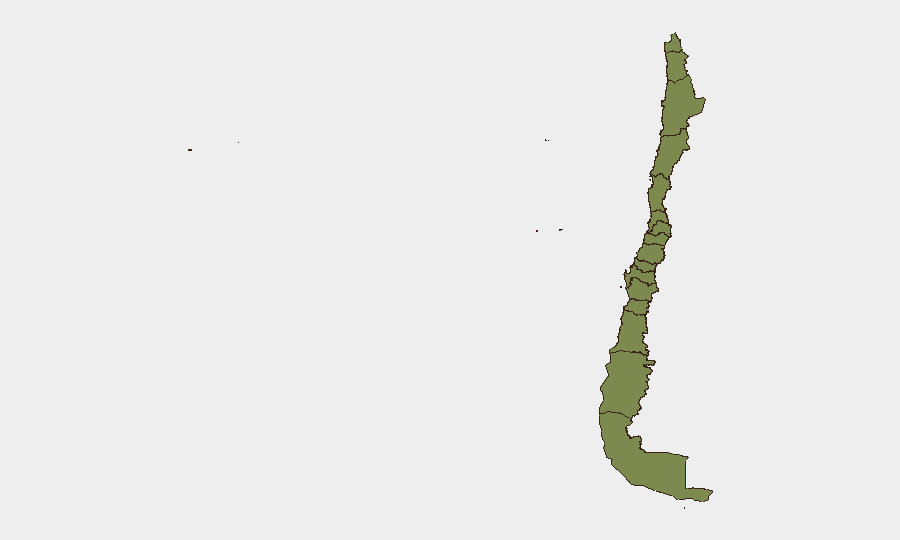
Situation Summary
Chile remains a lower-tier threat environment globally (rank #71, composite score 2.1) with concentrated risk in the Santiago Metropolitan Region. The country has experienced 26 tracked threat events, though accessible open-source reporting from the last 24–48 hours contains no clearly corroborated security incidents, civil unrest, or infrastructure disruptions that meet specificity and recency thresholds. The broader context includes Peru–Chile diplomatic tension, labor and prosecutorial activity at the national level, and a magnitude 5.0 earthquake southwest of Ovalle on 6 July; none of these constitute an acute shift in the security posture for corporate personnel or assets.
Key Developments
No clearly corroborated new security incidents were identified in open-source reporting for the 24–48 hour window (5–6 July 2026). Signal activity detected by GeoBit's event feed reflects labor disputes, governmental disapproval statements, and a seismic event, but do not constitute discrete security, unrest, or infrastructure events requiring immediate duty-of-care escalation at this time.
- Earthquake activity (6 July): Magnitude 5.0 tremor, 43 km SW of Ovalle (Coquimbo Region). Coquimbo ranks second nationally in GeoBit sub-national risk (score 10.0); continued seismic monitoring recommended for personnel in the region.
- Regional governance tensions: Demand-type signals between regional governor and municipal actors (5 July); typical administrative friction, no security implication identified.
- Broader geopolitical context (background): Peru–Chile military activity and demand signals (4–5 July) reflect ongoing bilateral tensions but do not indicate imminent cross-border escalation affecting Chilean territory.
Highest-Risk Areas
Santiago Metropolitan Region dominates the national risk profile with a composite score of 31.5—approximately 3× the risk of the second-ranked region (Coquimbo, 10.0). This concentration reflects the capital's status as the center of political, economic, and labor activity. Coquimbo, Valparaiso, and Aysen regions show secondary elevation, likely tied to mining operations, port infrastructure, and extractive-sector labor dynamics. All other tracked regions remain below 2.0 risk score. Corporate security teams should prioritize personnel safety and asset protection protocols in the Santiago metro area, with heightened attention to labor-related disruptions and seismic preparedness in Coquimbo.
How GeoBit Would Assist
Teams with Chile exposure should deploy AOI Monitoring & Early Warning for Santiago and Coquimbo to detect civil unrest, labor actions, or infrastructure disruptions with sub-24-hour latency. Conflict & Military tracking and Network & Actor Analysis would support ongoing Peru–Chile tension monitoring to flag any escalation beyond current diplomatic posturing. OSINT Fusion & Corroboration across multi-language social feeds, local news, and official announcements will improve real-time incident differentiation and reduce false-positive alerts from routine governmental or labor statements.
7-Day Outlook
No immediate escalation is forecast for the next 7 days. Seismic activity in the Coquimbo and Atacama zones should be monitored through USGS and Chilean geological authority feeds, as aftershock clusters or infrastructure damage could affect regional operations. Peru–Chile diplomatic friction remains low-level; a material shift would require explicit military mobilization or border incident signals, which are not currently present in available reporting.
Highest-Risk Areas — Ranked
| # | State / Region | Risk |
|---|---|---|
| 1 | Santiago Metropolitan Region | 31.5 |
| 2 | Coquimbo Region | 10 |
| 3 | Valparaiso Region | 5.8 |
| 4 | Aysen del General Carlos Ibanez del Campo Region | 5.8 |
| 5 | Antofagasta Region | 1.5 |
| 6 | Atacama Region | 1.5 |
| 7 | Los Lagos Region | 1.5 |
| 8 | Magallanes and Chilean Antarctica Region | 1.5 |
| 9 | O'Higgins Region | 1.5 |
| 10 | Maule Region | 1.5 |
| 11 | Nuble Region | 1.5 |
| 12 | Biobio Region | 1.5 |
Sources
Previous Daily Briefs
A new Chile brief is written every day — each with its own risk map and downloadable CSV. Here's the last week; use the calendar to go further back.
📅 Browse every day by calendar →
Highlighted days have a brief. Tap a day for that day's map & analysis, or “csv” for that day's dataset ($5).
Atlas — our AI intelligence desk — emails them this snapshot personally. Nothing else, no list.