Situation Summary
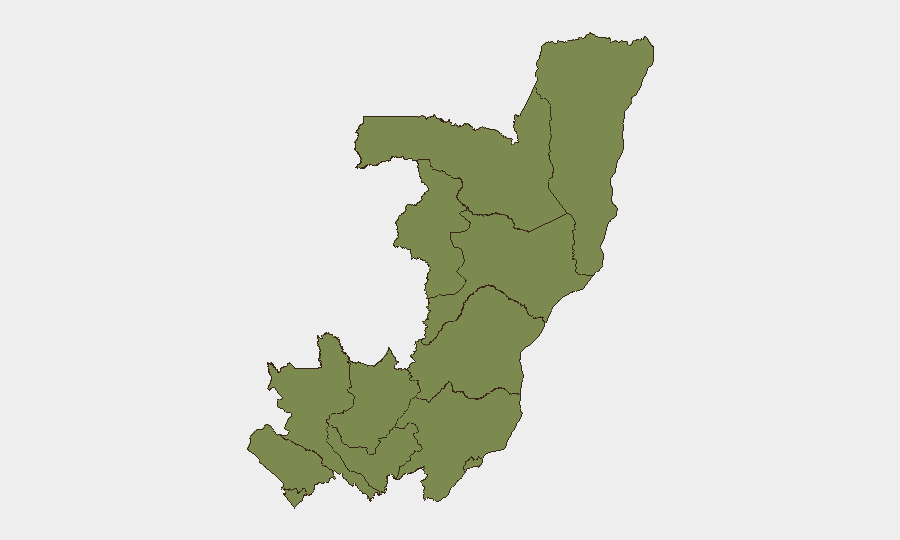
Congo remains at moderate global threat rank (#80 composite score of 15) with no credible, corroborated security incidents—conflict, civil unrest, crime escalations, or infrastructure disruptions—reported in the last 24–48 hours. The most significant regional health-security concern is the ongoing Ebola outbreak in neighboring Democratic Republic of the Congo (Ituri and North Kivu provinces), which poses indirect travel and personnel-risk implications for cross-border activity. Cuvette-Ouest Department shows substantially elevated risk relative to other Congolese regions, driven by historical militia and resource-competition dynamics, though no acute incident escalation has been documented in the current reporting window.
Key Developments
- 2026-07-13 · Public Statement · UNIVERSITY (Congo) – University-level statement issued; content and immediate implications not yet fully clarified in available open-source channels. GeoBit monitoring ongoing for context and spillover risk to institutional security or campus safety.
- 2026-07-13 · Public Statement · CONGO (National) – Government statement released; specific subject matter requires corroboration. Routine policy announcements do not indicate security incident unless further context emerges.
- 2026-07-12 · Public Statement · AUTHORITIES vs DOCTOR (Congo) – Official response issued to healthcare or civil-society actor; nature of dispute not yet detailed in verified sources. No immediate security incident indicated.
- 2026-07-12 · Reduce Relations · GERMANY vs CONGO (Bilateral) – Germany has downgraded diplomatic or trade relations with Congo. Contextual driver requires confirmation; no acute security event implied at present.
- 2026-07-12 · Small Arms Combat · DOCTOR (location unspecified) – Isolated small-arms incident reported; geographic specificity and casualty/impact data insufficient for operational threat assessment at this time. Continued monitoring required.
- Ebola outbreak (DRC, Ituri & North Kivu, data through 8 July) – Democratic Republic of the Congo reports 1,792 confirmed Ebola cases (Bundibugyo virus) and 625 deaths as of 8 July, with 33 new cases and 25 deaths recorded 7–8 July. While not strictly within Congo's borders, the outbreak remains a material travel-health risk for personnel moving to/from northeast DRC and poses indirect strain on regional health systems and border-control capacity.
Highest-Risk Areas
Cuvette-Ouest Department dominates the sub-national risk profile with a composite score of 31.5—more than 20 times that of all other Congolese departments. Risk drivers include historical resource-based militia activity, limited state capacity, and weak infrastructure. All remaining tracked departments carry uniform baseline risk scores of 1.5, indicating either low incident frequency or data scarcity; Brazzaville and Pointe-Noire, as urban and port centers, warrant proportionally higher monitoring despite identical scores, given their economic and logistical significance to expatriate and corporate operations.
How GeoBit Would Assist
Security teams should deploy AOI Monitoring & Early Warning on Cuvette-Ouest to establish persistent watch for militia or resource-competition incidents with automatic alerting. Intel Sweep and OSINT fusion across local media, Telegram/X, and radio SIGINT will detect emerging statements, community alerts, or unofficial incident reports faster than government channels. GIS & Spatial Analysis combined with alternative route/journey planning enables real-time re-routing of personnel and supply chains away from Cuvette-Ouest if escalation occurs, and health and environmental monitoring will flag Ebola case clusters and border-health impacts with sufficient lead time for duty-of-care decisions.
7-Day Outlook
No acute security escalation is forecast in the immediate term absent new militia mobilization or cross-border spillover from DRC unrest. The Ebola outbreak trajectory will remain the primary indirect risk driver for travel, staffing, and supply-chain decisions. Continued monitoring of Cuvette-Ouest and bilateral relations (Germany downgrade) is warranted to detect any secondary policy, trade, or security adjustments.
Highest-Risk Areas — Ranked
| # | State / Region | Risk |
|---|---|---|
| 1 | Cuvette-Ouest Department | 31.5 |
| 2 | Sangha | 1.5 |
| 3 | Likouala | 1.5 |
| 4 | Cuvette Department | 1.5 |
| 5 | Kouilou Department | 1.5 |
| 6 | Niari Department | 1.5 |
| 7 | Pointe-Noire (département) | 1.5 |
| 8 | Lékoumou Department | 1.5 |
| 9 | Bouenza Department | 1.5 |
| 10 | Plateaux Department | 1.5 |
| 11 | Pool Department | 1.5 |
| 12 | Brazzaville (department) | 1.5 |
Sources
Previous Daily Briefs
A new Congo brief is written every day — each with its own risk map and downloadable CSV. Here's the last week; use the calendar to go further back.
📅 Browse every day by calendar →
Highlighted days have a brief. Tap a day for that day's map & analysis, or “csv” for that day's dataset ($5).
Atlas — our AI intelligence desk — emails them this snapshot personally. Nothing else, no list.