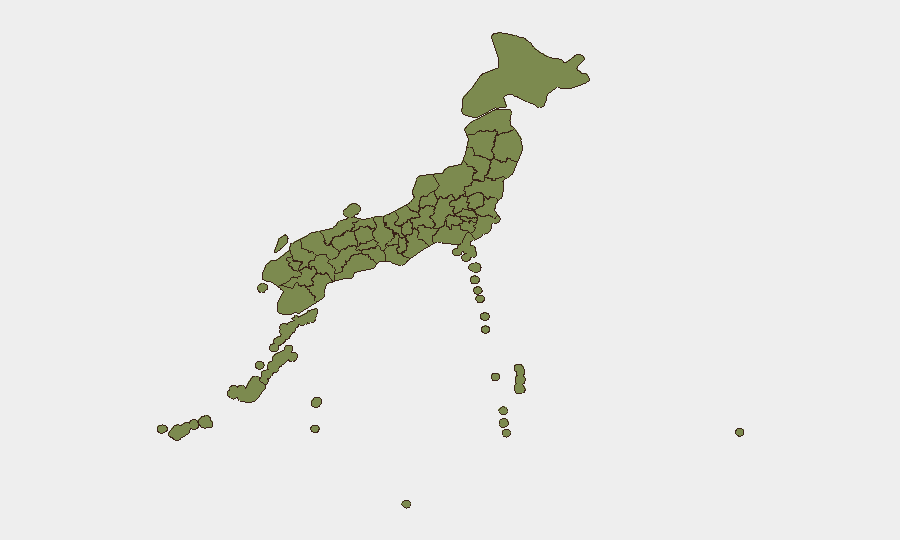
Situation Summary
Japan remains a low-threat environment globally (rank #131, composite score 6) with 121 tracked events, but faces concentrated risk in specific prefectures and emerging cyber vulnerabilities. A major telecommunications breach affecting 14.22 million email addresses and passwords across six ISPs has elevated data-privacy and enterprise-continuity risk nationwide. Localized civil unrest around defense policy and ongoing diplomatic tensions with China create secondary concerns, though direct violence remains non-existent in current reporting.
Key Developments
- Tokyo (nationwide impact) – June 24, 2026: KDDI confirmed a major cyberattack on its email system affecting six Japanese ISPs (STNet, JCOM, Chubu Telecommunications, Nifty, Biglobe, KDDI Web Communications), with up to 14.22 million email addresses and passwords potentially compromised. Intrusion detected June 17; public disclosure occurred June 24. Exploitation of a third-party software vulnerability; affected users directed to change credentials immediately.
- Multiple prefectures – June 24, 2026: Security analysis indicated the KDDI breach's cascading impact on Japanese internet infrastructure and end-user data privacy, elevating cyber and operational risk for corporate users reliant on affected ISPs.
- Tokyo – June 24, 2026: Anti-war protesters disrupted a political speech by LDP figure Sanae Takaichi criticizing defense-policy escalation; incident remained non-violent but reflects underlying civil sentiment around Japan–China military deterrence messaging.
- China–Japan nexus – reported June 24, 2026: China's Foreign Ministry confirmed detention of two Japanese employees in Dalian in May over alleged violations related to rare-earth product exports. Public advisory issued urging Japanese nationals and firms to comply with Chinese law; flagged as potential escalation point for corporate and diplomatic risk.
- Corporate sector (indirect) – June 24, 2026: Cybersecurity reporting noted an extortion claim against Nintendo of America involving employee-data theft from a third-party survey platform. While U.S.-based, this raises information-security and brand-integrity concerns for Japanese parent company Nintendo Co., Ltd.
- Diplomatic activity – June 24, 2026: U.S. State Department multi-country travel involving senior officials includes Japan (June 24–July 1), indicating heightened bilateral engagement but no associated security incidents or advisories beyond routine precautions.
Highest-Risk Areas
Nagano Prefecture (34.1) drives national risk disproportionately, followed by Tokyo (19) and Saga (9.7). Tokyo's risk reflects both its role as the capital and economic center (amplifying impact of cyber incidents and policy protests) and concentration of foreign nationals and critical infrastructure. Nagano's elevated score warrants direct inquiry into triggering events; current reporting does not provide granular visibility into its drivers. Regional clustering in central and northern Honshu (Miyagi, Hokkaido) suggests infrastructure or political vulnerability beyond immediate Tokyo reporting.
How GeoBit Would Assist
Security teams should deploy Intel Sweep and multi-language OSINT (X/Twitter, Telegram, YouTube) to monitor defense-policy discourse and anti-government sentiment in real time, with sentiment and temporal analysis to track protest momentum. Cyber and network analysis focused on ISP breach containment, affected enterprise networks, and threat-actor attribution would support incident response and continuity planning. AOI Monitoring with alerting on Nagano, Tokyo, and diplomatic corridors would enable early warning of secondary incidents.
7-Day Outlook
The KDDI breach will remain the primary driver of corporate and consumer risk through credential-rotation cycles and potential secondary exploitation (phishing, account takeover). Diplomatic activity surrounding U.S. official travel and ongoing China–Japan tensions around defense policy and trade compliance may trigger localized protests or policy statements, but violence remains low-probability. Cyber-threat surface will remain elevated across ISP-dependent supply chains.
Highest-Risk Areas — Ranked
| # | State / Region | Risk |
|---|---|---|
| 1 | Nagano Prefecture | 34.1 |
| 2 | Tokyo | 19 |
| 3 | Saga Prefecture | 9.7 |
| 4 | Hiroshima Prefecture | 7.3 |
| 5 | Miyagi Prefecture | 7.1 |
| 6 | Hokkaido Prefecture | 6.9 |
| 7 | Hyogo Prefecture | 6.9 |
| 8 | Kanagawa Prefecture | 5.7 |
| 9 | Kumamoto Prefecture | 4.8 |
| 10 | Osaka Prefecture | 4.8 |
| 11 | Okinawa Prefecture | 4.5 |
| 12 | Kagoshima Prefecture | 4.5 |
Sources
Previous Daily Briefs
A new Japan brief is written every day — each with its own risk map and downloadable CSV. Here's the last week; use the calendar to go further back.
📅 Browse every day by calendar →
Highlighted days have a brief. Tap a day for that day's map & analysis, or “csv” for that day's dataset ($5).