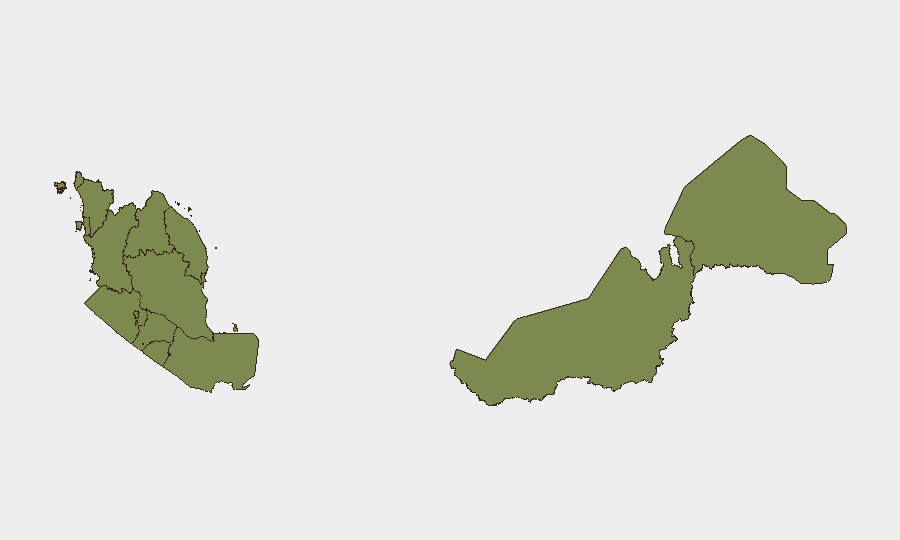
Situation Summary
Malaysia maintains a composite threat ranking of #136 globally with moderate security volatility concentrated in the Klang Valley and central regions. Recent activity signals span immigration enforcement, anti-corruption operations, and civil-society friction, with no indication of systemic destabilization. The threat environment remains fragmented across sub-national jurisdictions rather than unified at the federal level, and trajectory suggests continued administrative and law-enforcement-driven incident clustering rather than escalation toward organized violence or mass disruption.
Key Developments
- Kuala Lumpur — 27 July: Malaysian police placed 113 Rohingya refugees under security monitoring at KL contingent police headquarters following detention near UN refugee office; Prime Minister Anwar Ibrahim had ordered enforcement action against undocumented migrants.
- Selangor / Putrajaya — 30 July: Malaysian Anti-Corruption Commission remanded 33 individuals, including enforcement officers, over alleged visa-bribery syndicate spanning multiple states; offences said to date to 2021 and represent systemic corruption in permit issuance.
- Kuala Lumpur — 27 July: DBKL conducted joint raid on five entertainment venues, seizing equipment and issuing compounds for licensing and foreign-worker violations; separate drug arrests made during operation.
- Perak (Teluk Intan) — 27 July: Fatal road collision killed two teenage girls and injured a child; driver tested positive for benzodiazepines, indicating substance-related traffic risk in provincial areas.
- Selangor / Negeri Sembilan — 29–30 July: Government disapproval signaled and industry-vs.-advocate tensions flagged in event data, context suggesting labor, regulatory, or sectoral friction requiring clarification through deeper sector monitoring.
- Federal level — 29 July: Prime Minister's statement on UN relations and public-facing government communication indicate diplomatic or multilateral engagement friction; Amnesty International issued statement on Malaysia, pointing to ongoing human-rights-advocacy contention.
Highest-Risk Areas
Selangor and Negeri Sembilan drive national risk concentration, both scoring 31.4, driven by high administrative and law-enforcement activity density in the Klang Valley and surrounding manufacturing/logistics zones. Kuala Lumpur (25.4) follows as the capital and enforcement hub. These three jurisdictions account for significant corporate, residential, and expatriate presence; the corruption and immigration-enforcement signals suggest heightened scrutiny of administrative processes, visa compliance, and supply-chain vendor vetting. Eastern states (Kelantan, Pahang) show lower composite scores but warrant targeted monitoring given historical separatist and ideological sensitivities. Northern and southern peninsula regions remain materially lower-risk.
How GeoBit Would Assist
Security and duty-of-care teams should deploy AOI Monitoring & Early Warning on Selangor, Negeri Sembilan, and Kuala Lumpur to track administrative enforcement, immigration policy shifts, and civil-order incidents in real time. Intel Sweep with multi-language OSINT and Network & Actor Analysis would isolate emerging corruption networks, NGO pressure campaigns, and labor-sector friction before they propagate to corporate supply chains or staff safety. Routing & Network Analysis should inform alternative journey planning for personnel in the Klang Valley during enforcement surges, and entity extraction on government and enforcement announcements would flag compliance-requirement changes affecting visa, labor, and licensing operations ahead of corporate deadlines.
7-Day Outlook
Administrative enforcement momentum—immigration, anti-corruption, and licensing—is likely to sustain through early August as agencies process ongoing operations. No credible signals indicate escalation to violence or widespread civil unrest; risk remains compartmentalized by sector and jurisdiction. Duty-of-care focus should remain on compliance verification, staff whereabouts during enforcement operations in Selangor and KL, and vendor/partner due diligence around administrative exposure.
Highest-Risk Areas — Ranked
| # | State / Region | Risk |
|---|---|---|
| 1 | Selangor | 31.4 |
| 2 | Negeri Sembilan | 31.4 |
| 3 | Kuala Lumpur | 25.4 |
| 4 | Kelantan | 13.4 |
| 5 | Pahang | 13.4 |
| 6 | Kedah | 4.4 |
| 7 | Terengganu | 4.4 |
| 8 | Johor | 4.4 |
| 9 | Perlis | 1.4 |
| 10 | Penang | 1.4 |
| 11 | Perak | 1.4 |
| 12 | Labuan | 1.4 |
Sources
Previous Daily Briefs
A new Malaysia brief is written every day — each with its own risk map and downloadable CSV. Here's the last week; use the calendar to go further back.
📅 Browse every day by calendar →
Highlighted days have a brief. Tap a day for that day's map & analysis, or “csv” for that day's dataset ($5).
Atlas — our AI intelligence desk — emails them this snapshot personally. Nothing else, no list.