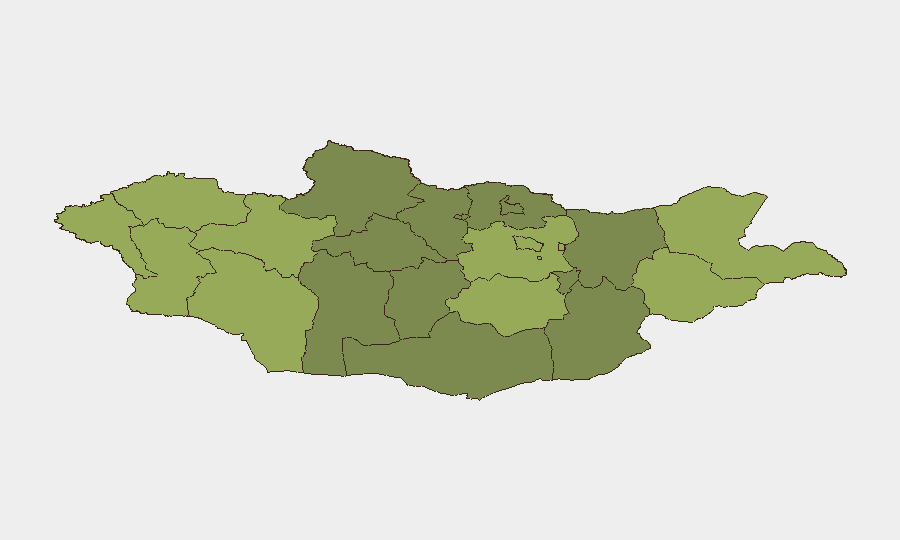
Situation Summary
Mongolia remains a low-threat environment globally (rank #128, composite score 10) with no tracked security incidents in the past 24–48 hours. The country is currently hosting COP17 in Ulaanbaatar (through 28 August), which has drawn indigenous and civil-society demonstrations focused on environmental governance rather than broader civil unrest. Background tension around extractive industries—particularly China-linked mining operations—persists in remote regions, but no new violent incidents have been reported in the last two days.
Key Developments
No discrete security incidents verified in the last 24–48 hours (27–28 August).
Recent event history (prior two weeks) includes:
- Kherlen Tokhoi XXVIII (Dornod province), 14–15 August: Approximately 50 mounted and motorcycle-borne protesters disrupted a Mongolia Foison Energy camp; women protesters documented throwing workers' belongings. Police response initiated; no casualty reports.
- Ulaanbaatar, 20 August: Indigenous representatives and civil-society activists demonstrated at COP17 demanding greater participation in environmental decision-making.
- Standing travel-risk note (nationwide, 25 August): Fuel supply disruptions affecting aviation and remote-area road access remain in effect.
Live research confirms no new protests, riots, infrastructure failures, or cross-border incidents within the past 48 hours.
Highest-Risk Areas
Eastern and western border provinces dominate the risk profile. Dornod (risk 58) and Sükhbaatar (risk 55)—both on the Russian border—rank highest, likely reflecting cross-border trafficking, smuggling, and limited state capacity in sparsely populated regions. Uvs, Khovd, and Bayan-Ölgii (52–48) on the western frontier face similar vulnerabilities, with Bayan-Ölgii historically prone to livestock theft and informal movement. Ulaanbaatar (risk 45) and the central Töv province (42) carry moderate risk driven by urban crime, labor disputes in mining, and periodic protest activity. The extractive-industry footprint in eastern and central Mongolia correlates with protest hotspots and worker-community friction, though violence remains sporadic rather than endemic.
How GeoBit Would Assist
Security and duty-of-care teams with operations in Mongolia should deploy AOI Monitoring & Early Warning on high-risk provinces (Dornod, Sükhbaatar, Khovd) to detect labor disputes, community protests, or cross-border movement in near real-time. Multi-language OSINT (Intel Sweep, X/Telegram monitoring, local media search) paired with sentiment and temporal analysis will flag emerging tensions around mining camps and extractive projects before they escalate. For teams operating in remote areas or dependent on aviation fuel, Economic & Trade monitoring and integration with Routing & Network Analysis will support supply-chain resilience and alternative journey planning during fuel disruptions.
7-Day Outlook
COP17 concludes 28 August; expect a modest decline in protest activity in Ulaanbaatar as conference delegations depart. Environmental and indigenous-rights demonstrations are unlikely to trigger broader civil unrest. Attention should remain on Dornod and eastern provinces, where extractive-industry tensions and cross-border dynamics create persistent friction; no major escalation is forecast, but sporadic incidents (property damage, minor clashes) remain plausible if new labor disputes emerge.
Highest-Risk Areas — Ranked
| # | State / Region | Risk |
|---|---|---|
| 1 | Dornod | 58 |
| 2 | Sükhbaatar | 55 |
| 3 | Uvs | 52 |
| 4 | Khovd | 50 |
| 5 | Bayan-Ölgii | 48 |
| 6 | Govi-Altai | 46 |
| 7 | Ulaanbaatar | 45 |
| 8 | Zavkhan | 44 |
| 9 | Töv | 42 |
| 10 | Dundgovi | 40 |
| 11 | Darkhan-Uul | 38 |
| 12 | Ömnögovi | 37 |
Sources
Previous Daily Briefs
A new Mongolia brief is written every day — each with its own risk map and downloadable CSV. Here's the last week; use the calendar to go further back.
- August 26, 2026
- August 24, 2026
- August 22, 2026
- August 19, 2026
- August 17, 2026
- August 15, 2026
- August 13, 2026
📅 Browse every day by calendar →
Highlighted days have a brief. Tap a day for that day's map & analysis, or “csv” for that day's dataset ($5).
Atlas — our AI intelligence desk — emails them this snapshot personally. Nothing else, no list.