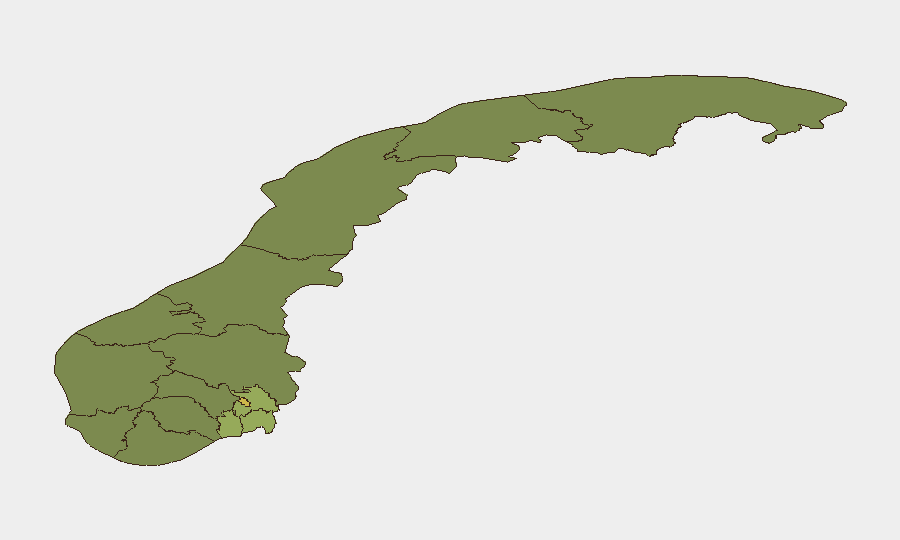
Situation Summary
Norway remains a low-threat environment globally (composite score 35), with no active civil unrest, organised violence, or terror incidents. However, a major nationwide digital infrastructure failure on 3 August, combined with a cluster of serious violent crimes reported over the same period, has created a dual operational concern: service continuity for businesses and government users, and a notable uptick in violent incidents flagged by national police leadership. The trajectory is stabilisation of digital services with continued routine law-enforcement response to isolated violent crime.
Key Developments
- Nationwide – 3 August 2026, ~03:00 local time – ID-porten government login system outage
Norway's centralised digital identity and access gateway failed, disrupting tax services, health records, business registration, and government communications for millions of users. The outage persisted through the morning and marked the second major failure in six weeks, exposing structural vulnerability in critical digital government infrastructure.
- Nationwide (cascading) – 3 August 2026 – Simultaneous outages across dependent services
Altinn (business/tax filings), e-health access (prescriptions and medical records), eFormidling, and Digipost digital mail channels all went offline concurrently. Citizens requiring urgent prescriptions were directed to in-person or phone contact with GPs and pharmacies; businesses with compliance deadlines were advised to document the outage and seek phone-based extensions.
- Lillestrøm (Viken, east of Oslo) – early August 2026 – Violent assault recorded
Authorities documented a serious assault as part of a recent cluster of violent incidents across the country.
- Jæren (Rogaland county, southwest) – early August 2026 – Woman in her 30s found dead; arrest made
Death treated as criminal case with suspect in custody; incident cited by national police as part of a series of recent violent and family-related crimes.
- Ringsaker (Innlandet county) – early August 2026 – Assault and theft
Police reported a violent assault followed by theft, contributing to a wider pattern of serious crime noted by national mobile police leadership.
- Unspecified location – early August 2026 – School burglary with extensive vandalism
Property crime incident raising local concern over youth-related vandalism; treated as isolated rather than systemic civil unrest.
- National police statement – early August 2026 – "Unprecedented events" warning
Head of Norway's National Mobile Police Service (UP) publicly stated a situation "never before experienced," referencing recent fatal accidents and violent crime, signalling official concern about incident frequency and severity despite low national threat classification.
Highest-Risk Areas
Oslo (risk 68) and Akershus (52) dominate the sub-national ranking, reflecting urban concentration of crime, digital infrastructure dependencies, and police activity. Østfold (48) and Vestfold (42) follow, with risk decreasing sharply across rural and northern counties (Innlandet 20, Møre og Romsdal 22). The concentration in the south-eastern urban belt reflects both genuine incident density and reporting density; Oslo's outsize risk score reflects both the ID-porten outage's impact on government and business operations and localised violent crime clusters.
How GeoBit Would Assist
Security teams should deploy AOI Monitoring & Early Warning on Oslo, Akershus, and Østfold counties to track emerging crime and infrastructure incidents with automated alerting. Intel Sweep combined with multi-language OSINT and social-media sentiment analysis on Norwegian police statements and news feeds would provide real-time visibility into service disruptions and serious incidents. Network & Actor Analysis on critical digital infrastructure dependencies (ID-porten, Altinn, e-health) would enable predictive identification of outage cascades and alternative-service routing.
7-Day Outlook
ID-porten service restoration is expected within days; however, the second failure in six weeks suggests recurrent vulnerability through early September. Violent crime incidents appear episodic rather than trending; police mobilisation suggests heightened enforcement activity, which may suppress further reporting-lag effects. Overall threat posture is expected to remain routine with normal urban vigilance recommended in Oslo and surrounding regions.
Highest-Risk Areas — Ranked
| # | State / Region | Risk |
|---|---|---|
| 1 | Oslo | 68 |
| 2 | Akershus | 52 |
| 3 | Østfold | 48 |
| 4 | Vestfold | 42 |
| 5 | Rogaland | 38 |
| 6 | Buskerud | 35 |
| 7 | Trøndelag | 32 |
| 8 | Telemark | 28 |
| 9 | Vestland | 27 |
| 10 | Agder | 26 |
| 11 | Møre og Romsdal | 22 |
| 12 | Innlandet | 20 |
Sources
Previous Daily Briefs
A new Norway brief is written every day — each with its own risk map and downloadable CSV. Here's the last week; use the calendar to go further back.
📅 Browse every day by calendar →
Highlighted days have a brief. Tap a day for that day's map & analysis, or “csv” for that day's dataset ($5).
Atlas — our AI intelligence desk — emails them this snapshot personally. Nothing else, no list.