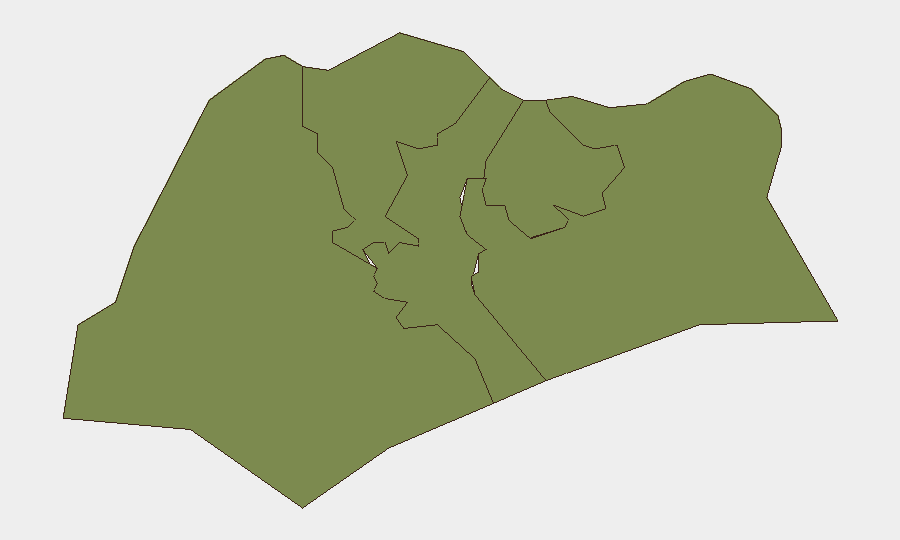
Situation Summary
Singapore maintains a stable security environment with no reported acute incidents in the last 24–48 hours. The nation ranks #169 globally on GeoBit's composite threat index (score 4), reflecting consistent low-to-moderate risk exposure. No discrete security, civil unrest, crime spikes, infrastructure disruption, or travel-risk events have been confirmed in open sources for 2–4 July 2026. The operating baseline remains predictable and controlled.
Key Developments
No time-specific security incidents meeting operational significance criteria have been reported in Singapore during 2–4 July 2026. Open-source monitoring across news, official channels, and social platforms confirms absence of:
- Armed conflict, small-arms activity, or conventional military force incidents
- Civil unrest, demonstrations, or public disorder
- Acute cyber attacks or infrastructure outages
- Political instability or regime-level disruption
- Travel warnings or mass casualty events
The prior cybersecurity incident affecting ~70,000 individuals' personal data (NRIC numbers, addresses) via a Singapore Land Authority vendor's IBM-managed environment occurred in mid-June; follow-up reporting in the last 24–48 hours reflects regulatory and technical remediation only, not a new breach event.
Highest-Risk Areas
The Northwest sub-region carries the highest composite risk (31.8), more than 3.8× the Central area (8.4) and substantially above Southwest (2.9), Northeast (1.8), and Southeast (1.8). This disparity warrants targeting of monitoring and contingency planning toward the Northwest, though the absolute threat level remains modest. The Central region represents the secondary concern and likely includes the core business and diplomatic districts; risk concentration there should inform duty-of-care protocols for personnel and asset location decisions. Northeast and Southeast pose minimal tracked risk.
How GeoBit Would Assist
Security teams operating in Singapore should employ AOI Monitoring & Early Warning with persistent area-of-interest watch and alerting on the Northwest and Central sub-regions to detect emerging incidents before they escalate. Intel Sweep and global event feeds combined with multi-language OSINT fusion (X/Twitter, Telegram, local news outlets) provide 24-hour corroboration of stability claims and rapid signal of anomalies. For cyber-risk continuity post-incident, network & actor analysis and Shodan reconnaissance help identify organizational exposure in cloud and third-party vendor infrastructure similar to the June SLA breach vector.
7-Day Outlook
No significant deterioration in Singapore's security posture is anticipated over the next seven days. Monitoring should remain routine and baseline-calibrated; duty-of-care teams should treat the Northwest and Central regions as the primary focus for contingency and incident-response readiness. Cyber-supply-chain vigilance remains warranted given the June vendor-compromise precedent.
Next brief: 2026‐07‐05 (or upon significant event trigger).
Highest-Risk Areas — Ranked
| # | State / Region | Risk |
|---|---|---|
| 1 | Northwest | 31.8 |
| 2 | Central | 8.4 |
| 3 | Southwest | 2.9 |
| 4 | Northeast | 1.8 |
| 5 | Southeast | 1.8 |
Sources
Previous Daily Briefs
A new Singapore brief is written every day — each with its own risk map and downloadable CSV. Here's the last week; use the calendar to go further back.
📅 Browse every day by calendar →
Highlighted days have a brief. Tap a day for that day's map & analysis, or “csv” for that day's dataset ($5).