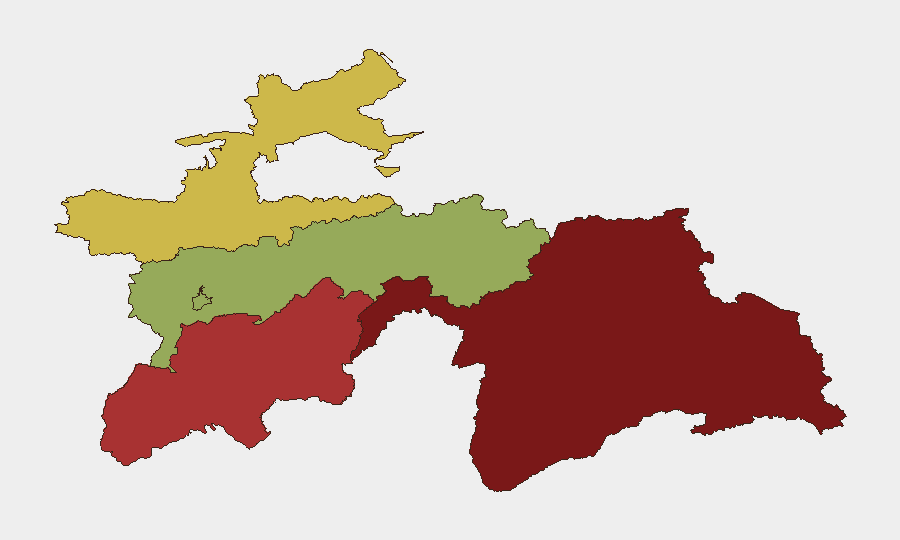
Situation Summary
Tajikistan remains a lower-tier global security risk (#113 worldwide) with a composite threat score of 8 and 15 tracked events, reflecting chronic rather than acute instability. Open-source reporting shows no corroborated large-scale violence, civil unrest, or terrorist incidents in the past 24–48 hours; security concerns are concentrated in the high-altitude Gorno-Badakhshan Autonomous Region and remain tied to structural issues (Afghan border permeability, cross-border militant activity, external security partnerships) rather than triggered by recent incidents. Trajectory remains stable at baseline threat levels for corporate operations, provided teams avoid the highest-risk zones and maintain standard duty-of-care protocols.
Key Developments
No corroborated acute incidents in the last 24–48 hours. Open-source monitoring (X/Twitter, global news feeds, social media) and multi-language web search reveal no specific, dated security, violence, civil-unrest, crime, or infrastructure events in Tajikistan during the past two days. Accessible reporting on the 2026-07-07 journalist and resident arrests lacks geographic detail and timeframe confirmation sufficient for operational risk assessment.
Context (not current developments):
- Tajik–Afghan border inspections, 24–26 June 2026 – CSTO Security General visited to assess border protection; reflects ongoing focus on cross-border threat vectors but predates the 24-hour window.
- M 4.9 seismic event, location Karakenja vicinity – Recorded but undated; consistent with Tajikistan's seismic activity and not a primary security driver for corporate teams.
- Climate and development funding approved – USD 30 million Green Climate Fund allocation; developmental and not security-incident related.
Corporate security teams should treat the absence of publicly reported acute incidents as a baseline; however, the lack of rapid corroboration in open sources does not confirm absence of localized unrest, particularly in remote or language-specific reporting zones.
Highest-Risk Areas
Gorno-Badakhshan Autonomous Region (risk 92) dominates threat exposure, driven by geographic isolation, porous Afghan border, militant cross-border activity, and limited state capacity. Khatlon Region (risk 78) and Sughd Region (risk 65) represent secondary but material concerns, reflecting drug-trafficking corridors and sporadic border friction. Dushanbe (risk 42) presents the lowest sub-national risk and remains operationally viable for corporate presence with standard urban security measures. Any corporate operations, supply chains, or personnel movement in Gorno-Badakhshan should be evaluated against specific project criticality and incident-response capacity; the region's isolation and volatility make real-time emergency support unreliable.
How GeoBit Would Assist
Intel Sweep and OSINT Fusion would monitor multi-language news, X/Telegram feeds, and YouTube for early warning of border clashes, militant activity, or civil unrest before they affect corporate operations. AOI Monitoring & Early Warning on Gorno-Badakhshan, key border crossings, and Khatlon transport routes would provide persistent, alerting-driven surveillance of high-risk zones. Routing & Network Analysis and GIS & Spatial Analysis enable security teams to model alternative routes, supply-chain nodes, and personnel-movement corridors that avoid peak-risk areas while maintaining operational continuity. Real-time satellite and SIGINT capabilities would provide senior leadership with early indicators of escalation in border-security posture or conflict activity.
7-Day Outlook
No indicators suggest imminent escalation in Tajikistan's security posture over the next week. Structural vulnerabilities on the Afghan border and low-level cross-border activity will persist, but corporate operations in Dushanbe and northern regions remain low-risk if standard protocols are observed. Monitor for secondary effects from any regional diplomatic or climate events; no primary triggers are visible at this time.
Highest-Risk Areas — Ranked
| # | State / Region | Risk |
|---|---|---|
| 1 | Gorno-Badakhshan Autonomous Region | 92 |
| 2 | Khatlon Region | 78 |
| 3 | Sughd Region | 65 |
| 4 | Districts of Republican Subordination | 58 |
| 5 | Dushanbe | 42 |
Sources
Previous Daily Briefs
A new Tajikistan brief is written every day — each with its own risk map and downloadable CSV. Here's the last week; use the calendar to go further back.
📅 Browse every day by calendar →
Highlighted days have a brief. Tap a day for that day's map & analysis, or “csv” for that day's dataset ($5).
Atlas — our AI intelligence desk — emails them this snapshot personally. Nothing else, no list.