Situation Summary
Belgium remains at composite threat rank #63 globally with a stable security environment as of 4 July 2026. No credible reports of civil unrest, terrorism, major crime spikes, political instability, or infrastructure attacks within Belgium have been confirmed in the last 24–48 hours. The primary travel disruption affecting Belgium is indirect: rail connectivity to the Netherlands (Eurostar via Rotterdam and Schiphol) is degraded due to fire damage and power loss in the Rotterdam area, with longer journey times and cancellations expected through at least 4 July.
Key Developments
- Rail Disruption (Belgium–Netherlands routes), 3–4 July 2026: Eurostar services between France/Belgium and Amsterdam are operating on alternative routing following fire damage to infrastructure near Rotterdam and a power cut at Rotterdam Centraal. Trains are bypassing Rotterdam and Schiphol; significant delays, limited availability, and cancellations reported. Free refunds and exchanges offered; passengers advised to postpone travel where possible.
- No acute internal security incidents reported in Belgium, 2–4 July 2026: Open-source monitoring and travel advisories indicate routine operating conditions across all regions; no confirmed demonstrations, riots, terrorism-linked activity, or major criminal events in the last 24–48 hours.
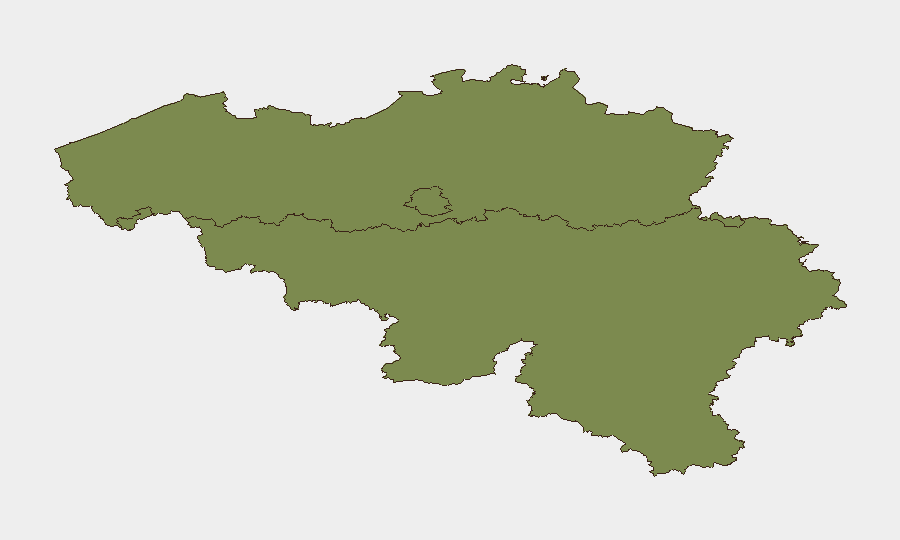
- Sub-national risk concentration in Flanders, ongoing: Flanders maintains the highest composite threat score (31.8) among Belgian regions, more than double that of Brussels-Capital (14). Wallonia presents minimal risk (2.5).
Highest-Risk Areas
Flanders drives the majority of Belgium's composite threat profile, with a risk score more than twice that of Brussels-Capital and over twelve times that of Wallonia. The elevated Flemish score reflects the cumulative effect of tracked event signals over the assessment period, though no acute incidents have materialized in the last 24–48 hours. Brussels-Capital, as the seat of EU institutions, maintains moderate baseline risk; Wallonia presents minimal concern. Corporate security teams with operations in Flanders should maintain standard monitoring protocols and situational awareness.
How GeoBit Would Assist
Intel Sweep & OSINT fusion provides real-time aggregation of event feeds, X/Twitter, Telegram, and multi-language news to detect early signals of unrest, criminal activity, or cross-border incidents affecting Belgium before they escalate. AOI Monitoring & Early Warning with persistent geographic focus on Flanders and Brussels-Capital enables continuous watch with alerting thresholds, reducing response lag during crisis onset. Routing & Network Analysis can surface alternative transport routes and supply-chain paths around known disruptions (e.g., rail outages via Rotterdam) to minimize operational impact on personnel and logistics in the region.
7-Day Outlook
Barring fresh intelligence, Belgium's internal security environment is expected to remain stable through 11 July. The Rotterdam rail disruption is the primary near-term operational constraint for Belgium-based or transiting personnel; resolution or stabilization of Eurostar service should occur within 5–7 days pending infrastructure repair. Continued monitoring of Flanders for any escalation of tracked event signals remains prudent given its elevated composite score.
GEOBIT BELGIUM BRIEF | 4 JULY 2026 | COMPOSITE THREAT #63 GLOBAL
Highest-Risk Areas — Ranked
| # | State / Region | Risk |
|---|---|---|
| 1 | Flanders | 31.8 |
| 2 | Brussels-Capital | 14 |
| 3 | Wallonia | 2.5 |
Sources
Previous Daily Briefs
A new Belgium brief is written every day — each with its own risk map and downloadable CSV. Here's the last week; use the calendar to go further back.
📅 Browse every day by calendar →
Highlighted days have a brief. Tap a day for that day's map & analysis, or “csv” for that day's dataset ($5).