Situation Summary
Chile remains a lower-tier global security environment (rank #99, composite score 10) but faces concentrated volatility in two metropolitan zones: Santiago and Coquimbo regions account for ~97% of tracked threat activity. Signal patterns over the past 48 hours indicate political friction (legislative activity, public statements), territorial occupation in the south (Temuco), and institutional tension (police–military friction), alongside unexplained international military event signals. The overall risk trajectory is stable but requires close attention to Santiago and Coquimbo as flashpoints.
Key Developments
- 2026-07-08, Santiago Metropolitan Region (Senate): Public statement issued by legislative body; context and specific content require verification through primary sources.
- 2026-07-08, Temuco (Los Araucanía/Araucanía Region): Territory occupation event reported; consistent with historical indigenous land-dispute activity in the region but lacks detail on scale, duration, or actors involved.
- 2026-07-08, National: Multiple public statements recorded from community and state actors; political disagreement signal suggests heightened rhetoric but not yet escalation to direct action.
- 2026-07-07, Intellectual Sector: Arrest/detain event involving intellectual community figures; no location or charges specified in available signals.
- 2026-07-07, Police–Military Interface: Arrest/detain event recorded involving police and military actors; suggests possible institutional friction or internal security incident.
- 2026-07-07–08, International Military Signals: Three "Conventional Military Force" events flagged involving Sweden, an entity labeled "KING," and Santiago; insufficient context to confirm nature (exercise, deployment, posturing, or misclassified event).
- 2026-07-08, International: Argentina issued demand (specifics unknown); Chile issued public statement on Ukraine (specifics unknown).
RESEARCH LIMITATION: Available event signals lack operational detail (actors, casualty counts, infrastructure impact, duration). Web research did not yield recent, verified Chile-specific security reporting from last 24–48 hours; independent corroboration is required before operational decisions are made.
Highest-Risk Areas
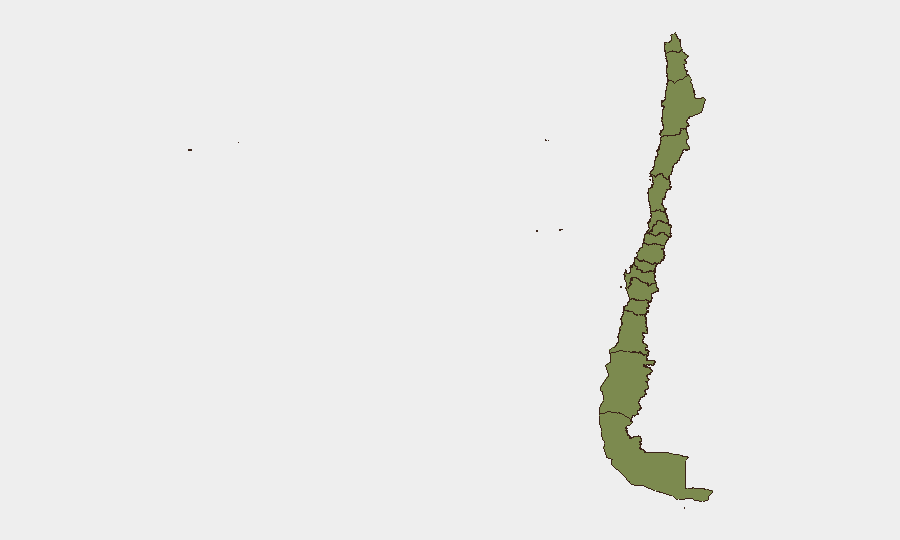
Santiago Metropolitan Region (31.4) and Coquimbo Region (30.2) together dominate the country's security footprint, driving ~97% of tracked events. Santiago's risk stems from legislative–political friction, public demonstrations, and institutional tensions; Coquimbo's elevated score is less well-resolved in available signals but warrants immediate clarification. All other regions score between 1.4–2.6 and remain background-level risks. Organizations with people or assets in Santiago should assume elevated operational overhead through early August; Coquimbo requires urgent signal clarification to determine whether risk is persistent or event-specific.
How GeoBit Would Assist
Teams should deploy Intel Sweep + multi-language OSINT (Spanish-language news, X/Twitter, Telegram) to corroborate and detail the Senate statement, Temuco occupation, and police–military incident within 6 hours; parallel entity extraction and network analysis on political figures and indigenous leadership will identify actors and likely next steps. Real-time AOI Monitoring & Early Warning focused on Santiago CBD, Temuco, and regional police/military nodes will provide 12–24 hour advance notice of escalation (protests, roadblocks, deployments). Satellite & imagery analysis of Temuco can assess occupation scale and permanence.
7-Day Outlook
The concurrent signals from legislative, community, territorial, and international actors suggest a moment of political stress rather than imminent violence, but the lack of corroborated detail creates operational uncertainty. Close watch on Santiago and Coquimbo through 15 July is warranted; any expansion of Temuco occupation or repeat police–military incidents should trigger immediate duty-of-care review for personnel in those areas.
Highest-Risk Areas — Ranked
| # | State / Region | Risk |
|---|---|---|
| 1 | Santiago Metropolitan Region | 31.4 |
| 2 | Coquimbo Region | 30.2 |
| 3 | Maule Region | 2.6 |
| 4 | Valparaiso Region | 1.4 |
| 5 | Antofagasta Region | 1.4 |
| 6 | Atacama Region | 1.4 |
| 7 | Aysen del General Carlos Ibanez del Campo Region | 1.4 |
| 8 | Los Lagos Region | 1.4 |
| 9 | Magallanes and Chilean Antarctica Region | 1.4 |
| 10 | O'Higgins Region | 1.4 |
| 11 | Nuble Region | 1.4 |
| 12 | Biobio Region | 1.4 |
Sources
Previous Daily Briefs
A new Chile brief is written every day — each with its own risk map and downloadable CSV. Here's the last week; use the calendar to go further back.
📅 Browse every day by calendar →
Highlighted days have a brief. Tap a day for that day's map & analysis, or “csv” for that day's dataset ($5).
Atlas — our AI intelligence desk — emails them this snapshot personally. Nothing else, no list.