Situation Summary
Comoros remains stable with no confirmed security incidents, civil unrest, or acute travel risks reported in the last 24–48 hours. The archipelago's composite threat score (2/global rank #197) reflects a low-incident environment, though structural governance and economic pressures persist as medium-term risk factors. No new developments warrant immediate operational concern for corporate assets or personnel in-country.
Key Developments
No significant security, conflict, civil-unrest, crime, political-instability, infrastructure, or acute travel-risk incidents have been confirmed in Comoros in the last 24–48 hours across open-source news aggregators, specialist monitoring feeds, and social-media signals.
The most recent notable Comoros-tagged item in available feeds relates to resumption of direct air service between Comoros and Madagascar—an aviation and connectivity development rather than a security event, and predating the current 24–48 hour window.
Regional analytical coverage references longer-term governance and economic pressures (since February 2026 and earlier) but does not cite time-stamped incidents (arrests, crackdowns, protests, or violence) in the last 1–2 days.
No alerts for Comoros appear in concurrent regional security-incident monitoring across East and Southern Africa, where similar briefs explicitly flag incidents when present and report "no confirmed events" when absent.
Highest-Risk Areas
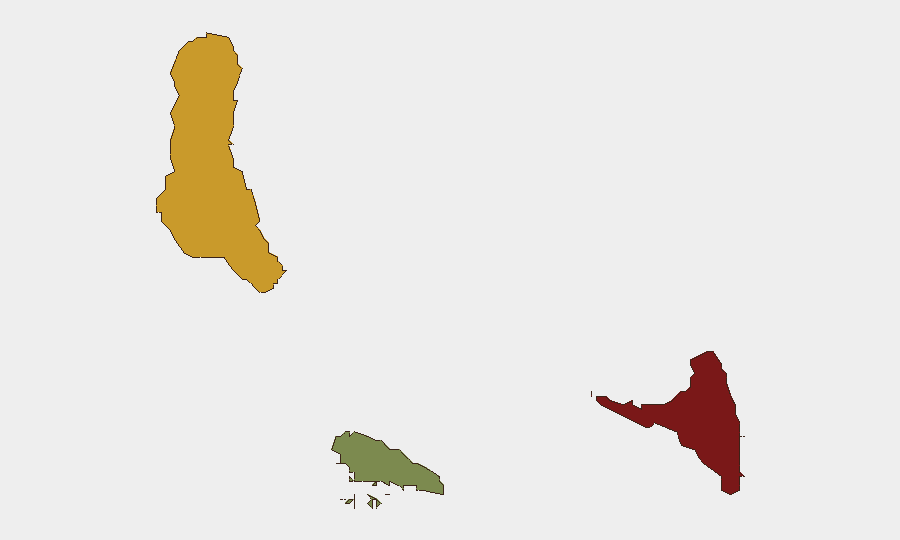
Anjouan (risk score 88) remains the archipelago's highest-risk zone, driven by longer-standing governance fragility, autonomy disputes, and limited state capacity for service delivery and law enforcement. Grande Comore (risk score 72), home to the capital Moroni and the seat of national authority, ranks second; risk factors include urban crime, political concentration, and port-area vulnerabilities. Moheli (risk score 35) poses significantly lower operational risk. The elevated Anjouan score reflects chronic instability rather than acute current events; corporate and humanitarian operations in both Anjouan and Grande Comore should maintain standard duty-of-care protocols.
How GeoBit Would Assist
Security teams monitoring Comoros should deploy AOI Monitoring & Early Warning (persistent watch on Moroni, Anjouan administrative centers, and port facilities with alerting thresholds for unrest, infrastructure disruption, or regime-stability signals) and OSINT fusion (continuous Intel Sweep across news, X/Telegram, and regional feeds to detect emerging protest, crime, or political developments before they escalate). Network & Actor Analysis and regime-stability search capabilities enable tracking of key political and security actors and structural fragility indicators, supporting predictive early warning for medium-term duty-of-care planning.
7-Day Outlook
No acute incidents are forecast for the next 7 days. Comoros is expected to remain in a low-incident posture, with governance and economic pressures persisting as background risk factors rather than triggering near-term security events. Standard monitoring and business-continuity protocols remain appropriate for corporate and NGO operations.
Report Date: 2026-07-14 | Comoros Threat Rank: #197 (Composite 2) | Next Brief: 2026-07-15
Highest-Risk Areas — Ranked
| # | State / Region | Risk |
|---|---|---|
| 1 | Anjouan | 88 |
| 2 | Grande Comore | 72 |
| 3 | Moheli | 35 |
Sources
Previous Daily Briefs
A new Comoros brief is written every day — each with its own risk map and downloadable CSV. Here's the last week; use the calendar to go further back.
📅 Browse every day by calendar →
Highlighted days have a brief. Tap a day for that day's map & analysis, or “csv” for that day's dataset ($5).
Atlas — our AI intelligence desk — emails them this snapshot personally. Nothing else, no list.