Situation Summary
Congo remains a composite threat rank #76 globally with 749 tracked events, characterized by acute but geographically concentrated instability. The eastern provinces (South Kivu, North Kivu, Ituri) face persistent high-intensity armed conflict with heavy weapons and drones, while Kinshasa experiences volatile civil unrest centered on constitutional protest. Public health risk has risen sharply with confirmed Ebola case expansion in mid-July. The security environment is deteriorating incrementally rather than stabilizing, with no material de-escalation signals in the past 48 hours.
Key Developments
- Ebola outbreak expansion (12–13 July): DR Congo reported 31 new confirmed Ebola cases and 10 deaths, bringing cumulative totals to 1,963 confirmed cases and 719 deaths as of 13 July. This represents a recent uptick and directly affects screening protocols and movement restrictions in affected regions.
- South Kivu: Unabated FARDC–M23 combat (11–12 July): Armed clashes between FARDC and M23 in South Kivu highlands continued without material pause through 12 July, employing armed drones, heavy artillery, and explosive weapons in populated areas with confirmed civilian casualties and infrastructure damage.
- Eastern border region: Volatile front lines persist (status as of 12 July): North Kivu, South Kivu, Ituri, and Tshopo provinces report ongoing heavy fighting with no de-escalation in the 48-hour window. Humanitarian access remains severely constrained; front-line positions remain volatile and subject to heavy weapons use.
- Kinshasa: Protest mobilization and security force readiness (mid-July assessment): C64 coalition opposition protests remain active and can be called at short notice, centered in Gombe district and near Palais du Peuple. Authorities report elevated risk of clashes with security forces, roadblocks, and airport-route disruptions after dark during the current mid-July period.
- National crime and night-time travel risk (ongoing, current advisory): Foreign-ministry and security briefs reiterate widespread violent crime, armed robbery, and theft particularly after dark and in crowds, with limited effective police presence. This remains an active threat driver in all major urban centers.
Highest-Risk Areas
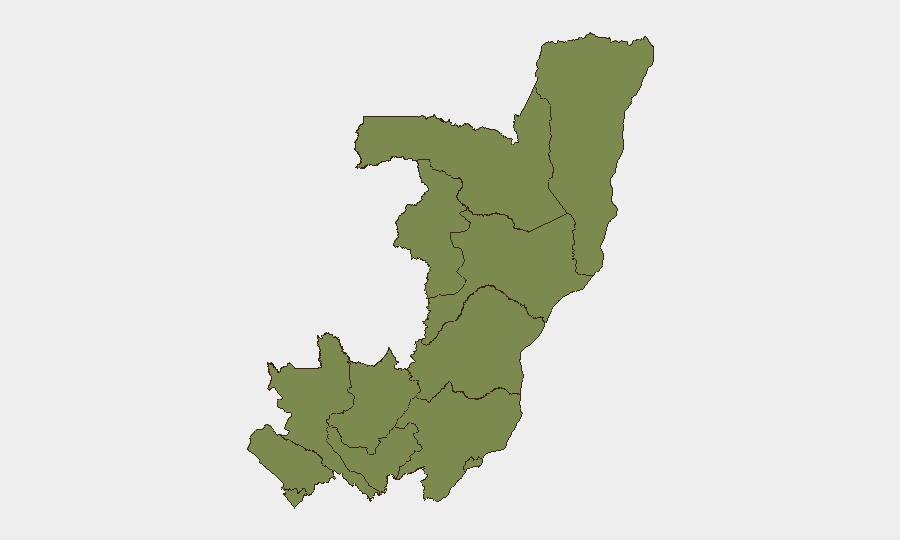
Cuvette-Ouest Department dominates the sub-national ranking with a composite risk score of 31.5—approximately 21 times higher than any other tracked region—though specific recent triggering events are not discrete in current reporting. The remaining 11 departments cluster at risk 1.5 each, indicating that Cuvette-Ouest's isolation reflects either data density, ongoing resource-extraction-related activity, or unresolved localized instability not captured in broad event feeds. Eastern provinces (North Kivu, South Kivu, Ituri) present sustained conflict risk despite lower formal sub-national scores; Kinshasa poses acute civil-unrest and crime risk. Security teams should prioritize Cuvette-Ouest for monitoring gap analysis and maintain heightened vigilance in the east and capital regardless of sub-national ranking anomalies.
How GeoBit Would Assist
GeoBit's Intel Sweep, multi-language OSINT fusion, and Telegram/X monitoring enable real-time tracking of protest mobilization, military movements, and armed-group activity across fragmented reporting environments. AOI Monitoring & Early Warning with persistent watch on Kinshasa (Gombe, Palais du Peuple), Cuvette-Ouest, and eastern conflict zones would provide 24-hour alerting on roadblocks, clashes, and movement restrictions. Conflict battle mapping and force-structure tracking, combined with alternative route/journey planning, allow security teams to model safe corridors and adjust duty-of-care logistics before incidents occur.
7-Day Outlook
Eastern conflict intensity is expected to remain high through mid-to-late July with no negotiated pause announced. Kinshasa protest volatility will likely spike around upcoming parliamentary or judicial proceedings; short-notice demonstrations remain probable. Ebola case counts are trending upward and should be monitored for secondary health-infrastructure impacts on medical evacuations and personnel movement.
Highest-Risk Areas — Ranked
| # | State / Region | Risk |
|---|---|---|
| 1 | Cuvette-Ouest Department | 31.5 |
| 2 | Sangha | 1.5 |
| 3 | Likouala | 1.5 |
| 4 | Cuvette Department | 1.5 |
| 5 | Kouilou Department | 1.5 |
| 6 | Niari Department | 1.5 |
| 7 | Pointe-Noire (département) | 1.5 |
| 8 | Lékoumou Department | 1.5 |
| 9 | Bouenza Department | 1.5 |
| 10 | Plateaux Department | 1.5 |
| 11 | Pool Department | 1.5 |
| 12 | Brazzaville (department) | 1.5 |
Sources
Previous Daily Briefs
A new Congo brief is written every day — each with its own risk map and downloadable CSV. Here's the last week; use the calendar to go further back.
📅 Browse every day by calendar →
Highlighted days have a brief. Tap a day for that day's map & analysis, or “csv” for that day's dataset ($5).
Atlas — our AI intelligence desk — emails them this snapshot personally. Nothing else, no list.