Situation Summary
Guinea-Bissau remains at composite threat rank #113 globally with no tracked acute security incidents in the past week, but the security environment is characterized by high political tension centred on military-junta control measures ahead of 6 December elections. The ruling military command has imposed a sweeping relocation order on political-party headquarters in central Bissau, effective this week, which opposition parties have denounced as repression and has raised civil-liberties and instability risk despite the absence of large-scale unrest. A Guinea-Bissau–flagged merchant vessel was struck by a Russian drone in the Black Sea on 17 September, killing a crew member and indicating continued maritime risk under that flag registry. Overall, the country faces a short-term political flashpoint driven by military-opposition friction rather than armed conflict or terror activity.
Key Developments
- Bissau, 2026-09-15 to 21 – The High Military Command for the Restoration of Security and Public Order issued a mandatory relocation order for all political-party headquarters within 500 m of sovereign institutions, hospitals, diplomatic missions, and military/paramilitary units, with a seven working-day compliance deadline (approximately 21 September). Interior Ministry enforcement is implied.
- Bissau, 2026-09-19 – The opposition PAIGC party publicly denounced the relocation order as politically motivated repression by military authorities, framing it as an escalation ahead of December elections. PAIGC's own headquarters are directly affected due to proximity to the presidential palace.
- Bissau, 2026-09-19 to 20 – Multiple media outlets reported the order as a junta-led security measure designed to reinforce military control over public space and political activity in central Bissau, with potential to disrupt established party structures and campaign operations.
- Black Sea (off Ukraine), 2026-09-17 – A Guinea-Bissau–flagged dry-cargo vessel carrying Ukrainian wheat was struck by a Russian drone, killing the Ukrainian captain and injuring three crew members. The incident reflects maritime-risk exposure for Guinea-Bissau–registered shipping.
- Guinea-Bissau (national), 2026-09-19 – Foreign ministry travel-advice updates assessed the current security situation as calm and stable, while warning that rapid deterioration and political tensions cannot be ruled out and advising close monitoring of developments.
- Bissau, compliance deadline week (2026-09-21) – The seven working-day deadline for party-headquarters relocation creates a near-term political-security flashpoint, with risk of administrative or coercive enforcement action by security forces should opposition parties resist or fail to comply.
Highest-Risk Areas
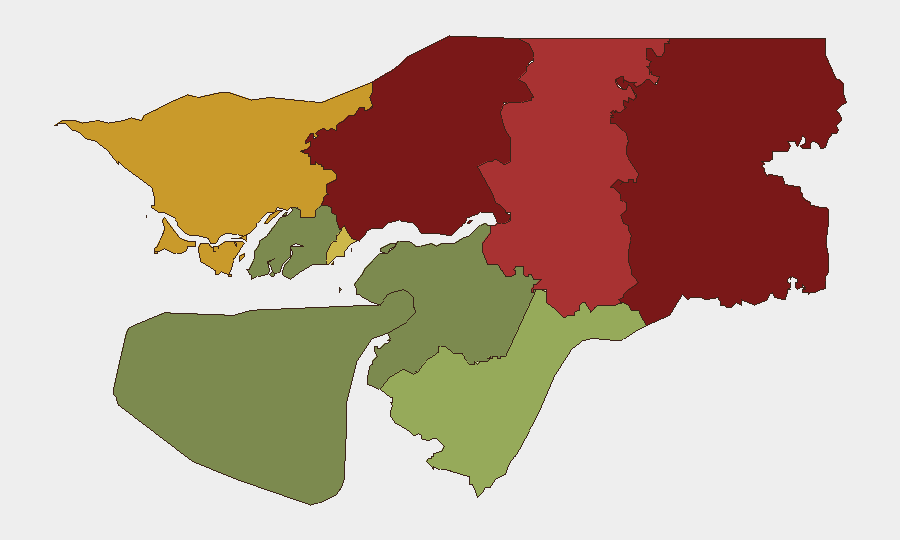
Gabu Region (risk 92), Oio Region (85), and Bafatá Region (78) dominate the sub-national risk ranking, reflecting broader instability in northern Guinea-Bissau—likely driven by transnational organised-crime and smuggling activity, weak state presence, and historical political fragmentation. Bissau Autonomous Sector (68) ranks fifth and is the immediate epicentre of current political-military tension. Southern and eastern regions (Tombali, Quinara, Biombo, Bolama) show substantially lower composite risk, suggesting that acute threats are concentrated in the north and the capital.
How GeoBit Would Assist
Security teams monitoring Guinea-Bissau should deploy AOI Monitoring & Early Warning on Bissau's central administrative zone to track enforcement actions, protest activity, and opposition-party movements in response to the relocation deadline. Multi-language OSINT fusion (X/Twitter, Telegram, local media) and sentiment & temporal analysis will track opposition and civil-society responses and detect rapid shifts in political rhetoric that may signal escalation. Election monitoring and regime-stability assessment capabilities are essential to quantify deterioration risk ahead of the December ballot.
7-Day Outlook
The relocation-order deadline (approximately 21 September) will likely generate immediate political friction and possible acts of non-compliance by opposition parties, though large-scale protest or armed confrontation remains unlikely in the near term. The military command is expected to enforce the order selectively or signal enforcement capacity to consolidate control. Political temperatures will remain elevated through December elections, with material risk of administrative harassment or restriction of opposition campaign activity.
Highest-Risk Areas — Ranked
| # | State / Region | Risk |
|---|---|---|
| 1 | Gabu Region | 92 |
| 2 | Oio Region | 85 |
| 3 | Bafatá Region | 78 |
| 4 | Cacheu Region | 72 |
| 5 | Bissau Autonomous Sector | 68 |
| 6 | Tombali Region | 45 |
| 7 | Quinara Region | 38 |
| 8 | Biombo Region | 32 |
| 9 | Bolama Region | 15 |
Sources
Previous Weekly Briefs
A new Guinea-Bissau brief is written every Monday, covering the week — each with its own risk map and downloadable CSV. Use the calendar to go further back.
- September 14, 2026
- September 7, 2026
- September 1, 2026
- August 30, 2026
- August 28, 2026
- August 26, 2026
- August 24, 2026
📅 Browse past briefs by calendar →
Highlighted days have a brief. Tap a day for that day's map & analysis, or “csv” for that day's dataset ($5).
Atlas — our AI intelligence desk — emails them this snapshot personally. Nothing else, no list.