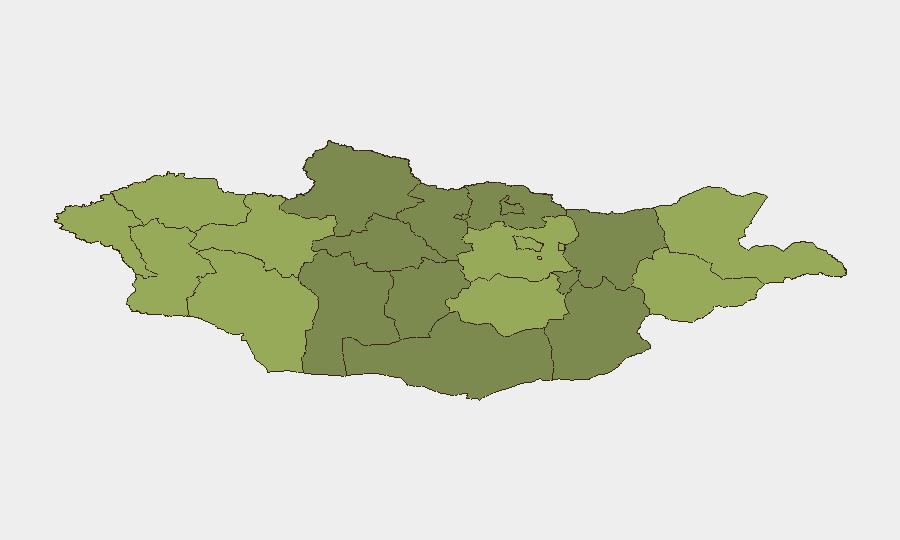
Situation Summary
Mongolia remains a low-threat environment globally (rank #142, composite score 10) with no discrete security incidents recorded in the past week. Domestic political instability has emerged as the primary risk vector, centered on institutional dysfunction in justice and security leadership. Eastern border regions (Dornod, Sükhbaatar) present elevated composite risk scores, likely driven by remote geography, limited state capacity, and cross-border dynamics rather than active conflict or criminal organization. The security posture is stable but fragile, contingent on resolution of governance disruptions now unfolding in Ulaanbaatar.
Key Developments
- Ulaanbaatar — September 16: Prime Minister Nyam-Osoryn Uchral dismissed Justice and Internal Affairs Minister Sainbuyan Amarsaikhan, stating that deterioration in the justice and internal-affairs sector had undermined public trust and disrupted normal security-institution operations. Senior and mid-level officials implicated in the shortcomings were also removed. The move signals concern within the executive over institutional performance but does not itself indicate a security emergency.
- Ulaanbaatar — September 17: Parliament failed to achieve quorum (52 of 126 members present; 41.3% vs. 50% required) for proceedings on the new justice minister's appointment and proposed fiscal-rule amendments. The sitting was rescheduled to September 21. The absence underscores fracturing party discipline and potential obstruction within the legislative body.
- Western Mongolia–Russia–China rail corridor — September 17: Mongolia, Russia, and China established a trilateral working group to finalize design and financing for a proposed western railway corridor. This is an infrastructure and geostrategic connectivity initiative, not a security incident, but signals coordination among the three powers on regional integration.
Highest-Risk Areas
Eastern aimags (provinces) Dornod (risk 58) and Sükhbaatar (risk 55) dominate the sub-national ranking, reflecting limited state reach, sparse population density, and border-area vulnerabilities in proximity to Russia. Western regions (Uvs, Khovd, Bayan-Ölgii) register elevated scores (52–48), likely attributable to geographic remoteness, weak infrastructure, and terrain-based barriers to governance. Ulaanbaatar itself (rank 7, risk 45) reflects political volatility and concentrated population exposure; the current ministerial crisis may temporarily elevate institutional risk in the capital. Southern and central aimags remain lower-risk but merit routine monitoring.
How GeoBit Would Assist
Security teams with personnel or assets in Mongolia should deploy AOI (Area-of-Interest) Monitoring & Early Warning on Ulaanbaatar's political institutions and eastern border regions to flag disruptions in ministerial succession, legislative gridlock, or border-management incidents before they escalate. Multi-language OSINT and entity-extraction capabilities can track senior official movements, appointment delays, and institutional reorganization across Mongolian-language media and official sources in near-real time. Network & Actor Analysis applied to justice and internal-security leadership will identify fractures in institutional authority and regional delegation chains that could affect duty-of-care responses or regulatory engagement.
7-Day Outlook
Parliament's rescheduled session on September 21 will likely determine the stability of justice-sector leadership and signal whether institutional gridlock persists. No imminent security escalation is expected; however, sustained political dysfunction in Ulaanbaatar may degrade governance capacity in border and remote regions over weeks to months. Routine monitoring of parliamentary proceedings and ministerial appointments is warranted.
Highest-Risk Areas — Ranked
| # | State / Region | Risk |
|---|---|---|
| 1 | Dornod | 58 |
| 2 | Sükhbaatar | 55 |
| 3 | Uvs | 52 |
| 4 | Khovd | 50 |
| 5 | Bayan-Ölgii | 48 |
| 6 | Govi-Altai | 46 |
| 7 | Ulaanbaatar | 45 |
| 8 | Zavkhan | 44 |
| 9 | Töv | 42 |
| 10 | Dundgovi | 40 |
| 11 | Darkhan-Uul | 38 |
| 12 | Ömnögovi | 37 |
Sources
Previous Weekly Briefs
A new Mongolia brief is written every Monday, covering the week — each with its own risk map and downloadable CSV. Use the calendar to go further back.
- September 15, 2026
- September 8, 2026
- September 1, 2026
- August 30, 2026
- August 28, 2026
- August 26, 2026
- August 24, 2026
📅 Browse past briefs by calendar →
Highlighted days have a brief. Tap a day for that day's map & analysis, or “csv” for that day's dataset ($5).
Atlas — our AI intelligence desk — emails them this snapshot personally. Nothing else, no list.