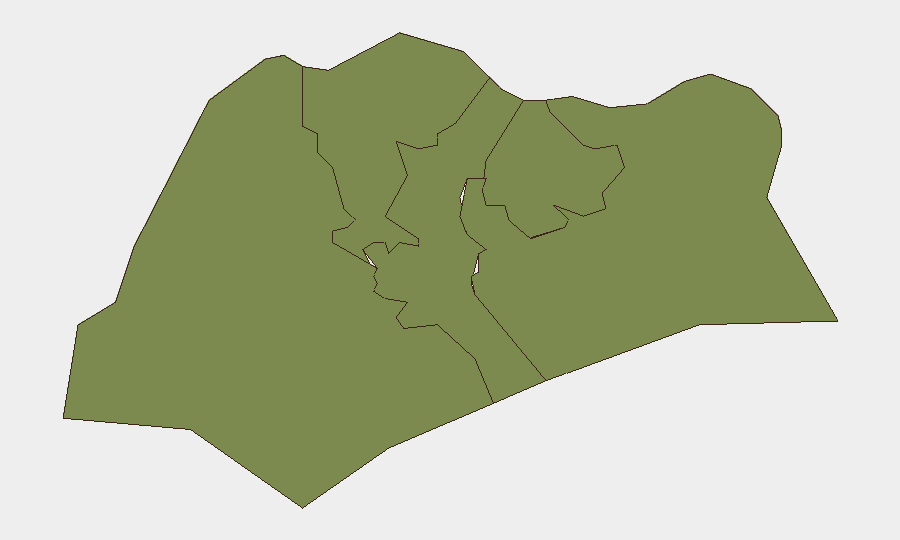
Situation Summary
Singapore remains a low-threat jurisdiction globally (rank #169; composite score 4), with stable governance and controlled security infrastructure. A significant cybersecurity incident emerged on 7–8 July affecting the Singapore Land Authority (SLA), exposing personal data for approximately 70,000 individuals through a vendor-managed cloud environment. The breach, while contained to development systems rather than operational infrastructure, has triggered a coordinated government response and public awareness. Overall threat trajectory remains modest, but the SLA incident underscores infrastructure-sector vulnerability to supply-chain and cloud-management risks.
Key Developments
- Singapore Land Authority data breach (7–8 July 2026): Unauthorized access to a development-and-testing dataset in an IBM-managed cloud environment exposed names, NRIC numbers, and property addresses for ~70,000 individuals. SLA confirmed operational systems (STARS and ELS) were not compromised. [Confirmed, multiple sources.]
- SLA incident response (8 July 2026): SLA revoked access to the affected cloud environment and activated a multi-agency investigation involving GovTech, Cyber Security Agency (CSA), Personal Data Protection Commission (PDPC), and Singapore Police Force.
- Public disclosure and amplification (7–8 July 2026): Regional media outlets (New Straits Times, Anadolu Agency) and social media (Facebook, Instagram) rapidly disseminated breach details, widening public awareness and potential for secondary social engineering or fraud targeting exposed individuals.
Highest-Risk Areas
The Northwest region carries elevated composite risk (31.4), substantially above other sub-national zones; Southeast (7.2) and Southwest (6.4) present moderate secondary concern, while Northeast (2.2) and Central (1.4) remain low-risk. The Northwest's elevated score likely reflects infrastructure density, port/maritime activity, and cross-border exposure; however, the SLA breach demonstrates that critical-information risk is not geographically confined and affects national-level systems serving all regions. Security teams should treat infrastructure and data-governance vulnerabilities as nationwide concerns, not isolated to high-risk zones.
How GeoBit Would Assist
Intel Sweep and OSINT Fusion would monitor government statements, media reports, and social channels to track SLA breach amplification, attribution claims, and secondary incidents in near-real time. Cyber & Supply-Chain Search capabilities would help identify other Singapore government or critical-infrastructure systems relying on similar third-party cloud vendors, enabling proactive vulnerability assessment. Early Warning & AOI Monitoring would flag emerging exploitation attempts, credential-market activity, or follow-on phishing campaigns targeting individuals whose NRIC numbers and addresses are now public, allowing duty-of-care teams to issue targeted alerts to exposed staff and stakeholders.
7-Day Outlook
Immediate focus will remain on SLA remediation, affected-party notification, and police investigation progression. Risk of secondary exploitation (credential compromise, SIM-swap attacks, impersonation fraud targeting affected individuals) is elevated over the next 7–10 days. No indication of foreign state involvement or broader critical-infrastructure compromise has emerged; however, the incident reinforces the need for continuous supply-chain risk review across Singapore's public-sector IT estate.
Highest-Risk Areas — Ranked
| # | State / Region | Risk |
|---|---|---|
| 1 | Northwest | 31.4 |
| 2 | Southeast | 7.2 |
| 3 | Southwest | 6.4 |
| 4 | Northeast | 2.2 |
| 5 | Central | 1.4 |
Sources
Previous Daily Briefs
A new Singapore brief is written every day — each with its own risk map and downloadable CSV. Here's the last week; use the calendar to go further back.
📅 Browse every day by calendar →
Highlighted days have a brief. Tap a day for that day's map & analysis, or “csv” for that day's dataset ($5).
Atlas — our AI intelligence desk — emails them this snapshot personally. Nothing else, no list.