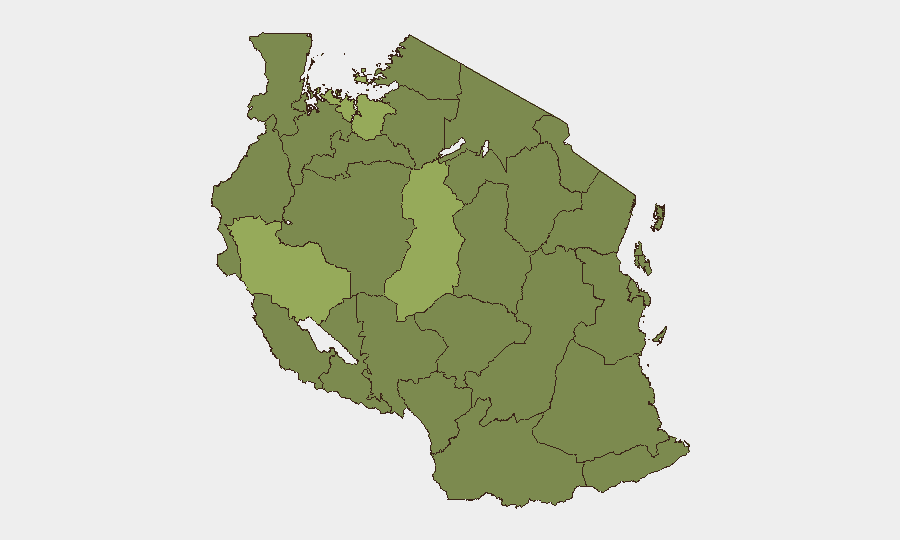
Situation Summary
Tanzania remains at moderate global threat rank (#46, composite score 37) with 1,391 tracked security events. The most recent corroborated developments date to 7 July 2026, when authorities conducted a nationwide security crackdown ahead of planned anti-government protests in Dar es Salaam, including pre-emptive arrests and a reinstatement of the political-rally ban. No genuinely new incidents have been corroborated in the last 24–48 hours; current threat posture reflects the aftermath of that July 7 lockdown and ongoing monitoring of trader threats, university-related demands, and farmer investigations flagged in the event signal feed.
Key Developments
- Dar es Salaam — 7 July 2026 — Heavy police and military deployments suppressed planned anti-government protests; protesters did not materialize, and the capital was effectively locked down by security forces across major roads and public spaces.
- Nationwide — 7 July 2026 — Government reinstated a nationwide ban on political rallies, citing security concerns and alleged disruption plans.
- Dar es Salaam — 7 July 2026 — Authorities arrested individuals ahead of planned demonstrations and intensified operations against alleged online mobilization for protests.
- Event Signal Indicators (11–12 July) — Multiple "Threaten" events flagged involving traders; "Public Statement" and "Reject" events involving Tanzanian and company actors; "Demand" signals tied to university and government interactions. No field-verified incidents have been corroborated for these dates.
- Intelligence Gap — No new corroborated field incidents from the last 24–48 hours have been verified via live web research; event-signal alerts require on-ground verification.
Highest-Risk Areas
Singida Region (55.9) and Mwanza Region (49.9) rank significantly above the national composite score and warrant focused monitoring. Katavi Region (43.9) and Simiyu (37.9) represent secondary concentrations of risk. The clustering of high-risk regions in northwestern Tanzania (Lake Victoria basin and Tabora belt) suggests regional drivers—including trader disputes, resource access, cross-border movement, and localized governance challenges—rather than a single nationwide pattern. Northern border regions (Kagera, Kigoma, Geita) and southern zones (Rukwa, Songwe) show lower but persistent risk and should not be discounted for duty-of-care planning.
How GeoBit Would Assist
Intel Sweep and OSINT Fusion across X/Twitter, Telegram, and multi-language sources would provide real-time corroboration and early warning of event-signal alerts (e.g., the "Threaten–Trader" signals). AOI Monitoring & Early Warning with persistent geographic watch on Singida, Mwanza, and Katavi would alert security teams to protest activity, trader incidents, or security-force movements before they escalate. Network & Actor Analysis of university demands, government rejection patterns, and cross-border trader networks would clarify whether the July 7 crackdown has shifted actor behavior or merely suppressed visibility. Risk & Threat Assessment and Sentiment & Temporal Analysis would distinguish between event-signal noise and actionable threats to corporate personnel or assets.
7-Day Outlook
The nationwide rally ban and July 7 security posture are likely to persist through mid-month, with security forces maintaining elevated presence in Dar es Salaam and potential secondary deployments to high-risk northwestern regions if trader or university-linked tensions escalate. Event-signal alerts will continue; field verification and corroboration remain critical to separating genuine incidents from reporting artifacts. Risk trajectory is stable but dependent on whether the government sustains enforcement and whether trader or cross-border activity in Singida and Mwanza triggers secondary incidents.
Highest-Risk Areas — Ranked
| # | State / Region | Risk |
|---|---|---|
| 1 | Singida Region | 55.9 |
| 2 | Mwanza Region | 49.9 |
| 3 | Katavi Region | 43.9 |
| 4 | Simiyu | 37.9 |
| 5 | Kigoma Region | 25.9 |
| 6 | Kagera | 25.9 |
| 7 | Geita | 25.9 |
| 8 | Shinyanga Region | 25.9 |
| 9 | Tabora Region | 25.9 |
| 10 | Rukwa Region | 25.9 |
| 11 | Songwe Region | 25.9 |
| 12 | Mara Region | 25.9 |
Sources
Previous Daily Briefs
A new Tanzania brief is written every day — each with its own risk map and downloadable CSV. Here's the last week; use the calendar to go further back.
📅 Browse every day by calendar →
Highlighted days have a brief. Tap a day for that day's map & analysis, or “csv” for that day's dataset ($5).
Atlas — our AI intelligence desk — emails them this snapshot personally. Nothing else, no list.