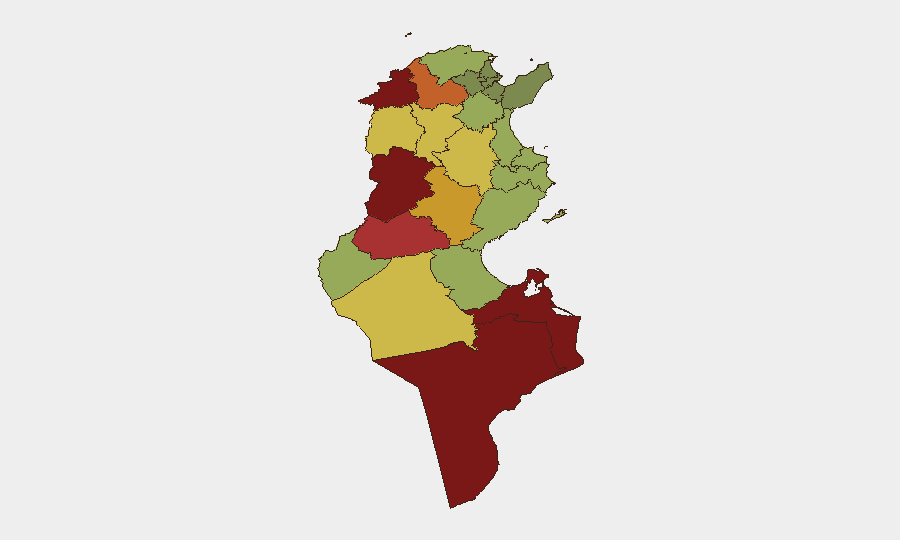
Situation Summary
Tunisia remains under a nationwide state of emergency with elevated terrorism and security-force activity across multiple governorates, particularly in mountainous border regions and the south. The country ranks #64 globally for composite security risk (15 points), driven primarily by recurring anti-terrorist operations in Kasserine, Jendouba, and Tataouine, and by ongoing restrictions in areas near the Libyan and Algerian borders. No major new security incidents have been publicly verified in the past 24–48 hours; current advisories from US, UK, Canadian, German, and Australian governments reflect persistent baseline conditions rather than acute escalation. Wildfire activity in Kef governorate (late July) added strain on emergency services but does not appear to have triggered broader security disruption.
Key Developments
- Nationwide state of emergency remains in effect (status current as of late July 2026). Foreign travel advisories continue to flag heightened security-force powers, including frequent checkpoints and patrols; no indication of measures being lifted in the last 48 hours.
- Central-western mountain zones (Kasserine, Kef governorates) – Recurring anti-terrorist operations in Jebel Chaambi, Jebel Selloum, and Jebel Mghila designated military zones persist without public reporting of specific new clashes in the past 48 hours.
- Southern border region (Tataouine, Médenine) – Ongoing military/security presence and movement restrictions remain in effect south of Remada and around Ben Guerdane; no new incidents documented in the past 24–48 hours.
- Algerian border belt – US and Canadian advisories maintain "avoid all travel" guidance for areas within 16–20 km of the border (except designated towns) due to recurring counter-terrorism operations; no new arrests or attacks disclosed in the past 48 hours.
- Tourist areas and coastal security posture – UK and German advisories confirm security forces on elevated alert in Tunis and beach/public zones during summer season; precautionary deployments rather than response to specific incidents.
- Kef governorate wildfire operations (late July, outside 48-hour window) – Civil Protection responded to approximately 600 fires over a 48-hour peak, representing strain on emergency resources but not triggering security-sector diversion or political instability signals.
Highest-Risk Areas
Kasserine (risk 92), Jendouba (88), and Tataouine (85) drive the country's overall ranking, reflecting sustained anti-terrorism operations in mountain terrain and proximity to ungoverned or contested border areas. Kasserine's Jebel Chaambi complex and the southern border zone near Libya remain persistent operational theaters for both Tunisian security forces and designated terrorist organizations. Médenine (83) and Gafsa (78) extend this risk band southward and into the interior, where militant networks have historically exploited remote terrain and weak state presence. Coastal and northern urban centers (Tunis, Sfax, Sousse) remain under elevated alert but rank lower in sub-national composite scores, indicating that dispersed rural and border zones present greater systemic risk.
How GeoBit Would Assist
Security teams with personnel or assets in Tunisia should employ AOI Monitoring & Early Warning on Kasserine, Tataouine, and Médenine to detect any shifts in security-force deployment or militant activity before they escalate. Routing & Network Analysis capabilities enable identification of safe travel corridors and checkpoint patterns, particularly for staff transiting between coastal cities and interior operations. Intel Sweep and OSINT fusion (X/Twitter, Telegram, local news, radio SIGINT) provide real-time corroboration of incident reports and sentiment shifts across border and mountain zones, reducing reliance on delayed official advisories.
7-Day Outlook
The state of emergency and baseline security posture are expected to remain stable over the next week, with no indication of major policy changes or escalation. Wildfire season and summer tourism create parallel resource demands on emergency and security services, but do not presently signal broader destabilization. Teams should maintain heightened situational awareness in Kasserine and southern governorates and plan operations around checkpoint frequencies and curfew patterns.
Highest-Risk Areas — Ranked
| # | State / Region | Risk |
|---|---|---|
| 1 | Kasserine | 92 |
| 2 | Jendouba | 88 |
| 3 | Tataouine | 85 |
| 4 | Médenine | 83 |
| 5 | Gafsa | 78 |
| 6 | Béja | 75 |
| 7 | Sidi Bouzid | 72 |
| 8 | Al Kaf | 70 |
| 9 | Kébili | 68 |
| 10 | Kairouan | 65 |
| 11 | Siliana | 62 |
| 12 | Tozeur | 58 |
Sources
Previous Daily Briefs
A new Tunisia brief is written every day — each with its own risk map and downloadable CSV. Here's the last week; use the calendar to go further back.
📅 Browse every day by calendar →
Highlighted days have a brief. Tap a day for that day's map & analysis, or “csv” for that day's dataset ($5).
Atlas — our AI intelligence desk — emails them this snapshot personally. Nothing else, no list.