Situation Summary
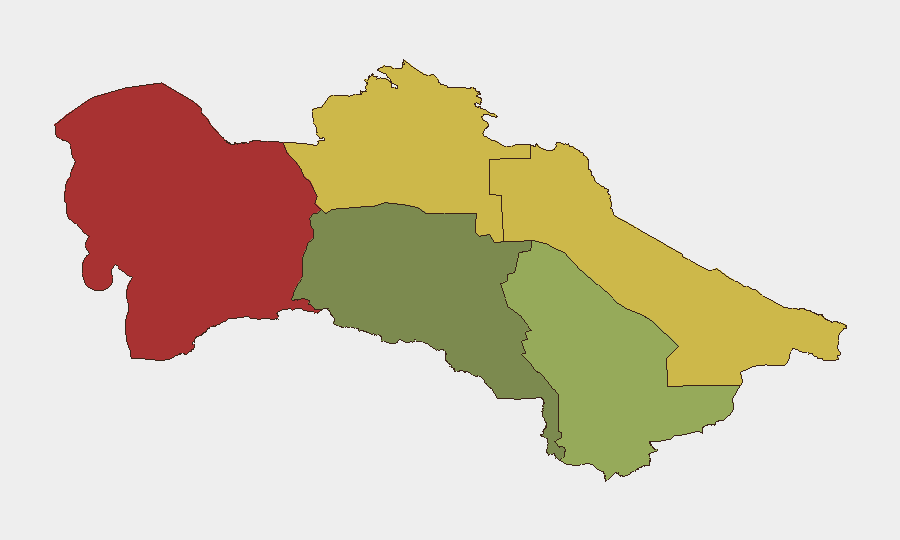
Turkmenistan remains a low-threat environment overall (global rank #158, composite score 5), with no confirmed security incidents, civil unrest, or infrastructure disruptions reported in the last 24–48 hours. Open-source monitoring across major news outlets, regional services, and social media shows routine economic and transport activity as the primary topic of international coverage. The country's security posture remains stable, though concentrated geographic risk exists in its western and northern regions.
Key Developments
- No discrete security incidents documented in Turkmenistan during the last 24–48 hours across credible open-source channels, government advisories, or regional news services.
- Economic and transport focus dominates recent international mentions of Turkmenistan, with reporting centered on cross-border cargo growth and commercial developments rather than security events.
- Regional context: Two GeoBit-tracked events flagged on 2026-07-09 reference conventional military activity near Jerusalem and Iran–Turkmenistan posture; however, these do not indicate active conflict within Turkmenistan's territory or imminent spillover as of this briefing.
- No travel advisory updates issued by major Western governments in the last 24–48 hours; standing guidance remains unchanged.
- No emergency alerts or escalations in Ashgabat or other major urban centers reported.
Highest-Risk Areas
Balkan Region (risk 78) and Lebap Region (risk 68) represent the country's primary threat concentrations and should anchor corporate security planning. Balkan's elevated score likely reflects proximity to Iran and maritime/border considerations along the Caspian; Lebap's risk profile suggests exposure to cross-border instability and trafficking corridors. Dashoguz Region (risk 62) follows as a secondary concern. By contrast, Ashgabat City (risk 18) remains the safest zone for operations, consistent with its status as a controlled capital and primary business hub.
How GeoBit Would Assist
Security teams with personnel or assets in Turkmenistan should employ AOI Monitoring & Early Warning on Balkan and Lebap regions to detect any emergent unrest, border activity, or infrastructure disruption before it escalates. Intel Sweep and multi-language OSINT (including Telegram, X, and regional media) provide continuous coverage of Turkmen-language and Russian-language open sources where early signals typically surface. Network & Actor Analysis combined with regime-stability search help identify any shifts in state control or factional dynamics that could create secondary risks for international operations.
7-Day Outlook
No significant escalation is anticipated in the near term based on current trajectory and absence of acute triggering events. Regional tensions involving Iran warrant continued passive monitoring, though Turkmenistan itself shows no active involvement or militarization response. Duty-of-care teams should maintain routine vigilance, particularly in border zones, but no emergency mitigation measures are warranted at present.
Highest-Risk Areas — Ranked
| # | State / Region | Risk |
|---|---|---|
| 1 | Balkan Region | 78 |
| 2 | Lebap Region | 68 |
| 3 | Dashoguz Region | 62 |
| 4 | Mary Region | 42 |
| 5 | Ahal Region | 35 |
| 6 | Ashgabat City | 18 |
Sources
Previous Daily Briefs
A new Turkmenistan brief is written every day — each with its own risk map and downloadable CSV. Here's the last week; use the calendar to go further back.
📅 Browse every day by calendar →
Highlighted days have a brief. Tap a day for that day's map & analysis, or “csv” for that day's dataset ($5).
Atlas — our AI intelligence desk — emails them this snapshot personally. Nothing else, no list.