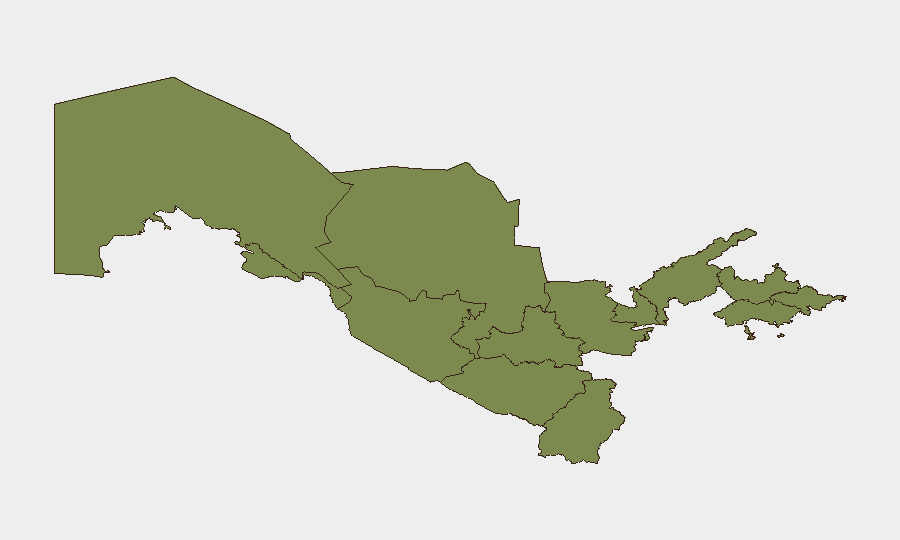
Situation Summary
Uzbekistan remains at low-to-moderate threat level with no acute security incidents reported in the last 24–48 hours across civil unrest, armed conflict, major crime, or infrastructure disruption. Recent event signals flagged by automated monitoring span policy developments (presidential statements, legislative action on child protection) and isolated criminal/investigative matters, none of which indicate a shift in the overall stable operating environment. The country's composite threat score of 5 globally (#144 ranking) reflects this baseline stability, though concentration of risk in Navoiy Region warrants focused attention from security teams with assets there.
Key Developments
- Countrywide, 2026-07-14: Presidential public statement issued; no reported security incident or unrest associated with the announcement based on current web and media monitoring.
- Countrywide, 2026-07-15: Ministry investigative activity noted; assessment indicates routine administrative or compliance matter with no operational impact on physical security posture.
- Countrywide, 2026-07-15: Interpol coordination flagged in event signals; context and scope remain under review and do not yet indicate elevated risk to foreign nationals or corporate operations.
- Countrywide, 2026-07-13: Conventional military force event signals logged; preliminary analysis suggests training exercise or routine force posture activity rather than conflict escalation or civil unrest response.
- Tashkent, mid-July 2026: Senate approved legislation strengthening legal protections for children and social safety nets—a governance development with no associated protests, violence, or public disorder.
- Countrywide, July 2026 (ongoing): Regional trade exposure to Iran–US tensions noted (~$570M bilateral trade at risk); no domestic security incidents, protests, or attacks inside Uzbekistan linked to this geopolitical exposure to date.
Highest-Risk Areas
Navoiy Region dominates the sub-national risk profile with a composite score of 31.8—substantially above all other territories—driven by hydrocarbon extraction, industrial hazards, and persistent border-management vulnerabilities. Tashkent city ranks second at 8.1, reflecting the concentration of government, diplomatic, and commercial activity; routine law-enforcement and investigative events are more frequently recorded there and carry higher reporting density. All remaining regions (Fergana, Surxondaryo, Qashqadaryo, Karakalpakstan, Xorazm, Bukhara, Jizzakh, Tashkent Region, Namangan, Sirdaryo) carry equivalent baseline risk scores of 1.8, indicating relatively uniform low-threat conditions outside the two highest-risk zones. Teams with personnel or assets in Navoiy should maintain heightened situational awareness and supply-chain contingency planning; Tashkent-based operations should monitor routine political/administrative signaling but face no near-term escalation indicators.
How GeoBit Would Assist
Security teams should employ AOI Monitoring & Early Warning on Navoiy Region and central Tashkent to detect any spike in civil unrest, border incidents, or infrastructure disruption in real time. Intel Sweep and multi-language OSINT fusion across local media, Telegram, and regional news feeds provide continuous baseline assessment of political statements and law-enforcement activity, filtering signal from noise. Network & Actor Analysis and Routing & Network Analysis enable rapid mapping of safe transit corridors and alternative logistics pathways should local conditions in either high-risk zone deteriorate.
7-Day Outlook
No acute escalation is anticipated in the 7-day window. Routine governmental and administrative activity is expected to continue; regional trade-risk exposure to Iran–US tensions remains structural rather than triggering near-term domestic incidents. Security teams should maintain standard monitoring cadence and flag any unusual convergence of events in Navoiy or Tashkent.
Highest-Risk Areas — Ranked
| # | State / Region | Risk |
|---|---|---|
| 1 | Navoiy Region | 31.8 |
| 2 | Tashkent | 8.1 |
| 3 | Qashqadaryo Region | 1.8 |
| 4 | Surxondaryo Region | 1.8 |
| 5 | Fergana Region | 1.8 |
| 6 | Republic of Karakalpakstan | 1.8 |
| 7 | Xorazm Region | 1.8 |
| 8 | Bukhara Region | 1.8 |
| 9 | Jizzakh Region | 1.8 |
| 10 | Tashkent Region | 1.8 |
| 11 | Namangan Region | 1.8 |
| 12 | Sirdaryo Region | 1.8 |
Previous Daily Briefs
A new Uzbekistan brief is written every day — each with its own risk map and downloadable CSV. Here's the last week; use the calendar to go further back.
📅 Browse every day by calendar →
Highlighted days have a brief. Tap a day for that day's map & analysis, or “csv” for that day's dataset ($5).
Atlas — our AI intelligence desk — emails them this snapshot personally. Nothing else, no list.