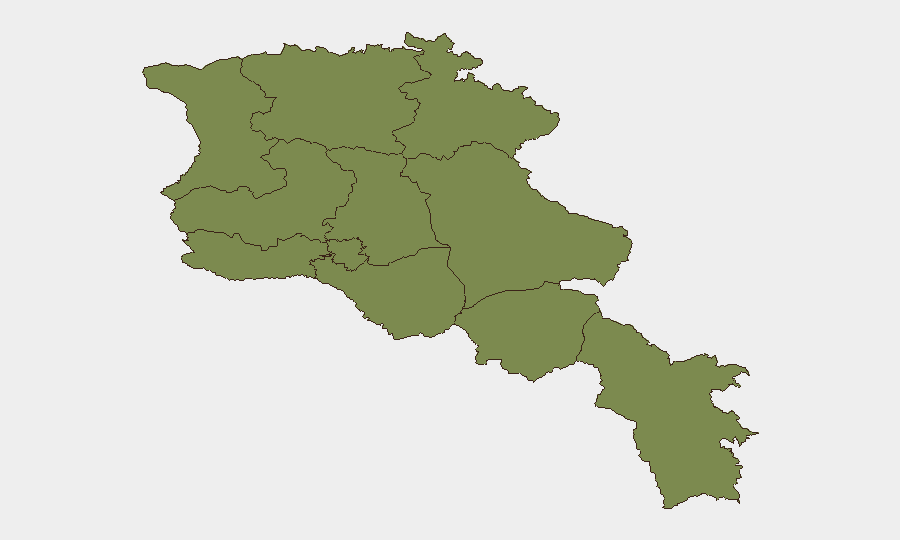
Situation Summary
Armenia faces a complex security environment characterized by elevated political tensions, localized public-health and safety incidents, and continued border volatility with Azerbaijan. Yerevan dominates the risk profile (31.3) due to ongoing detention of opposition figures, a recent fatal shooting, and sovereignty disputes over transit corridor agreements with the United States. While no large-scale armed clashes have occurred on the Armenia–Azerbaijan border in the past 48 hours, security advisories warn of sudden checkpoint closures and rapid deterioration risk; the broader geopolitical context—including Russian–Turkish tensions and Moscow's recent threats toward Armenia—adds uncertainty to the trajectory.
Key Developments
- Yerevan, night of 22–23 July: A fatal shooting incident occurred in central Yerevan; newly circulated video shows a gunman opening fire on a street group and throwing a grenade, resulting in one death, one hospitalization, and at least one suspect detained as police launched a criminal investigation.
- Byureghavan, Kotayk Province, 23–24 July: Local health services reported an intestinal-infection outbreak with 29 emergency calls and six hospitalizations; residents staged protests outside city hall, linking illnesses to poor-quality tap water and demanding urgent resolution.
- Yerevan, 21–23 July: Armenia's Justice Ministry publicly challenged the legality of the U.S.-proposed "TRIPP" transit corridor to Azerbaijan, citing violations of Armenian law and intensifying domestic political tensions over sovereignty.
- Yerevan, 20–24 July (ongoing status): Authorities continued detention of opposition figure Andranik Tevanyan under a treason case while monitoring reported health deterioration during medical examination—flagged as a potential trigger for renewed opposition mobilization and street protests.
- Armenia–Azerbaijan border, 22–24 July: Security assessments reported no large-scale armed clashes over the past two days, but advisories emphasized continued risk of sudden checkpoint closures and rapid deterioration along border areas and approach roads.
- Lori Region, 22–24 July: An Armenian serviceman sustained a serious leg injury during a military training exercise, prompting internal safety review and local media concern about training protocols.
- Syunik Province, 22–24 July: Regional media reported a wolf attack on residents in southern Syunik, injuring six people including a child—a localized rural safety incident rather than conflict-related violence.
Highest-Risk Areas
Yerevan's risk score (31.3) reflects concentration of political instability, criminal violence, and diplomatic friction over corridors and opposition detention. Armavir Province (11.3) ranks second but significantly lower, suggesting risk is highly capital-concentrated. The remaining nine provinces cluster at 1.3, indicating baseline or minimal tracked threat activity. Security and duty-of-care teams should prioritize Yerevan for monitoring of opposition mobilization, street-level violence, and checkpoint disruptions; Armavir warrants secondary attention. Border-adjacent regions (Tavush, Gegharkunik, Syunik) carry latent escalation risk despite currently low scores, given Azerbaijan tension.
How GeoBit Would Assist
Intel Sweep and multi-language OSINT on opposition figures, government statements, and border-incident reporting provide real-time visibility into detention developments and political catalysts for unrest. AOI Monitoring & Early Warning on Yerevan's central districts and border crossing points enables persistent watch for street protests, checkpoint closures, or sudden clashes—with alerting thresholds customizable by client risk tolerance. Conflict & Military battle mapping and force-structure tracking support assessment of Armenian and Azerbaijani posture changes, while Routing & Network Analysis helps security teams plan alternative transit routes around closed or volatile border crossings.
7-Day Outlook
Near-term risk will hinge on opposition reaction to Tevanyan's detention and health status, with renewed street protests possible if his condition worsens or charges escalate. The U.S. corridor dispute may sustain political friction but is unlikely to trigger immediate armed escalation. Border stability remains fragile; any Azerbaijani checkpoint closure or military repositioning should be treated as a deterioration signal warranting immediate route and personnel review.
Highest-Risk Areas — Ranked
| # | State / Region | Risk |
|---|---|---|
| 1 | Yerevan | 31.3 |
| 2 | Armavir Province | 11.3 |
| 3 | Lori Province | 1.3 |
| 4 | Tavush Province | 1.3 |
| 5 | Kotayk Province | 1.3 |
| 6 | Ararat Province | 1.3 |
| 7 | Gegharkunik Province | 1.3 |
| 8 | Vayots Dzor Province | 1.3 |
| 9 | Syunik Province | 1.3 |
| 10 | Shirak Province | 1.3 |
| 11 | Aragatsotn Province | 1.3 |
Sources
Previous Daily Briefs
A new Armenia brief is written every day — each with its own risk map and downloadable CSV. Here's the last week; use the calendar to go further back.
📅 Browse every day by calendar →
Highlighted days have a brief. Tap a day for that day's map & analysis, or “csv” for that day's dataset ($5).
Atlas — our AI intelligence desk — emails them this snapshot personally. Nothing else, no list.