Situation Summary
Australia's security environment is deteriorating across multiple vectors—cyber, counterintelligence, and terrorism—according to official assessments released 24–25 June. Nation-state actors have already compromised critical infrastructure networks; 14 terrorism cases have been resolved since the Bondi Beach attack in December 2025, but 31 major plots have been disrupted since 2014, indicating sustained threat activity. The Northern Territory and New South Wales carry composite risk scores significantly higher than other jurisdictions, driven by ongoing operational security incidents and geopolitical tensions centring on Chinese state actors and Five Eyes intelligence concerns.
Key Developments
- Sydney, NSW (24–25 June): ASIO disclosed in its annual threat assessment that nation-state hackers have already compromised an unnamed critical infrastructure provider's network, creating capability for disruptive attack; ASIO and partners disrupted the operation and have established dedicated counter-infrastructure-attack teams.
- National (24–25 June): ASIO Director-General Mike Burgess warned that Australia's security environment is "degrading," citing espionage, foreign interference and coercion campaigns targeting politics, institutions, and communities; the Chinese Communist Party identified as a major strategic threat.
- National (24–25 June): Five Eyes cyber security agencies issued a joint warning that AI is rapidly enabling more sophisticated attacks on Australian critical infrastructure in energy, health, and telecommunications sectors, requiring enhanced monitoring and incident response.
- Sydney, NSW (23–24 June): Cybersecurity firm Kaspersky signed a distribution agreement with LIVA Telecom to integrate security solutions into telecom services, framed as defence against AI-enabled cyber threats to infrastructure.
- Western Australia (24–25 June): Western Australia Police commenced live facial recognition technology trials linked to CCTV for real-time identification; cybersecurity experts flagged civil-liberties and "scope creep" risks from normalised pervasive surveillance.
- National (since December 2025): 14 significant terrorism-related cases resolved following the Bondi Beach attack; cumulative disruption of 31 major plots since 2014 underscores sustained domestic extremism pressure.
Highest-Risk Areas
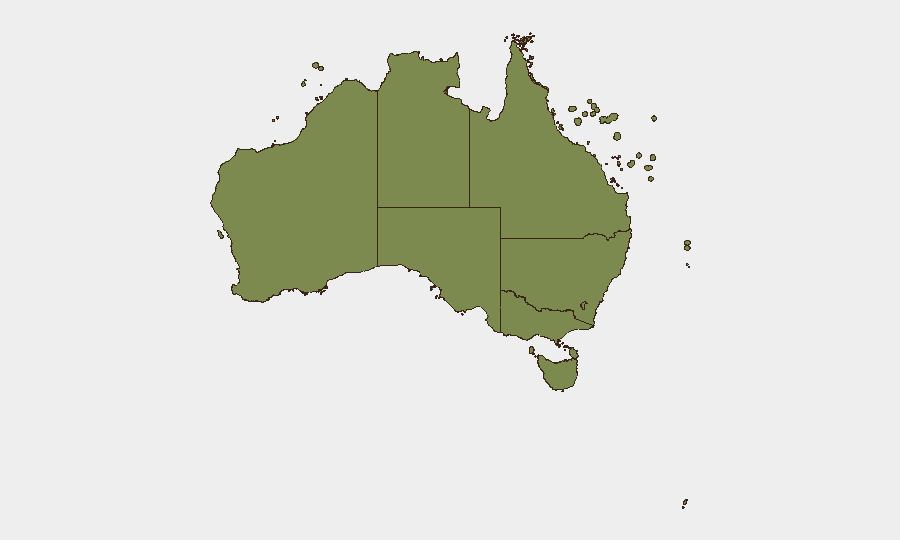
Northern Territory (risk 33.1) and New South Wales (risk 30.8) dominate the threat landscape—a gap substantially wider than all other jurisdictions. NSW hosts the capital's political and intelligence apparatus, major critical infrastructure nodes, and urban terrorism risk evident from recent plot disruptions and the Bondi Beach incident. The Northern Territory's elevated score reflects remote border proximity, maritime sovereignty concerns, and sparse physical security infrastructure. Queensland (10.2) trails significantly, suggesting concentrated rather than distributed national risk; Victoria, ACT, and Tasmania cluster around 8–8.8, indicating baseline elevated environment but not acute concentration.
How GeoBit Would Assist
Security teams should employ AOI Monitoring & Early Warning on critical infrastructure clusters in Sydney, Brisbane, and major energy/telecom hubs to detect reconnaissance or intrusion signals before exploitation. Five Eyes cyber threat intelligence and multi-language OSINT fusion (including Telegram, X, and YouTube intelligence) would surface emerging nation-state TTPs and foreign interference campaigns targeting Australian institutions. Network & Actor Analysis combined with entity extraction across government, media, and business communications would support early detection of espionage and coercion operations before operational impact.
7-Day Outlook
Cyber threat activity against critical infrastructure will remain elevated; ASIO's public disclosure of existing compromise suggests either imminent remediation completion or preparation for public breach notification. Terrorism-related investigations will continue routine momentum; no specific plot announcement in the last 48 hours suggests no immediate tactical escalation. Foreign interference and state-sponsored cyber operations are expected to persist and likely accelerate in line with Five Eyes warnings and deteriorating Australia–China relations.
Highest-Risk Areas — Ranked
| # | State / Region | Risk |
|---|---|---|
| 1 | Northern Territory | 33.1 |
| 2 | New South Wales | 30.8 |
| 3 | Queensland | 10.2 |
| 4 | Victoria | 8.8 |
| 5 | Australian Capital Territory | 8.3 |
| 6 | Tasmania | 8.1 |
| 7 | Western Australia | 4.7 |
| 8 | South Australia | 3.3 |
| 9 | Ashmore and Cartier Islands | 3.1 |
| 10 | Jervis Bay Territory | 3.1 |
| 11 | Coral Sea Islands | 3.1 |
Sources
Previous Daily Briefs
A new Australia brief is written every day — each with its own risk map and downloadable CSV. Here's the last week; use the calendar to go further back.
📅 Browse every day by calendar →
Highlighted days have a brief. Tap a day for that day's map & analysis, or “csv” for that day's dataset ($5).