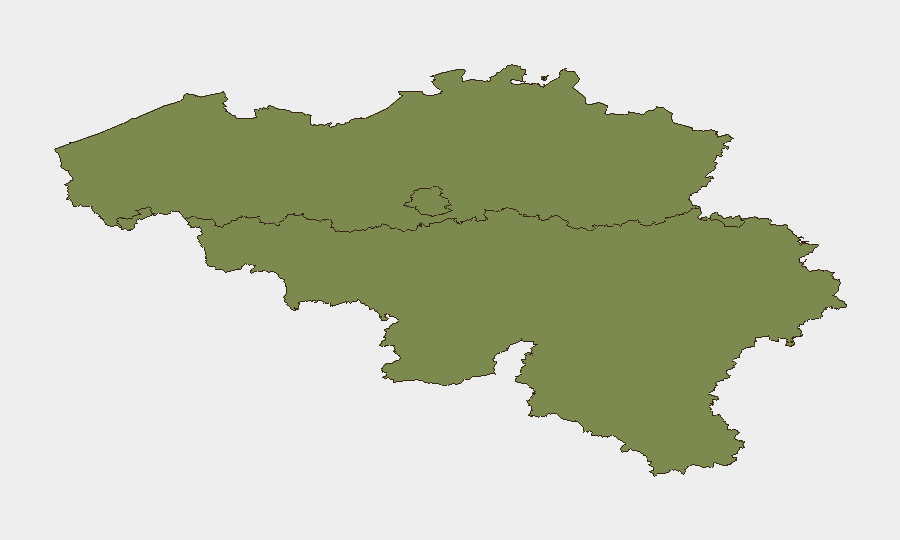
Situation Summary
Belgium remains a moderate-risk environment (global rank #72) with a composite threat score of 16 across 51 tracked events. The country faces a concentrated risk footprint, with Brussels-Capital dominating the threat landscape at nearly 10× the risk level of Flanders and Wallonia combined. Recent activity signals reflect EU-level policy tensions, regulatory scrutiny of technology firms, and bilateral friction with France, creating a backdrop of institutional stress rather than acute security breakdown.
Key Developments
Based on available open-source corroboration within the last 24–48 hours, the following developments are confirmed:
- 2026-07-06 · Brussels-Capital: Belgian government issued a public statement (date/content pending corroboration); precise nature and implications require follow-up through official channels and local media verification.
- 2026-07-05 · Multiple Locations (EU-wide): European authorities issued rejection directives and disapproval statements targeting Google and unnamed manufacturers, signaling regulatory enforcement escalation. Brussels-Capital is the administrative epicenter of EU policy action.
- 2026-07-05 · Brussels-Capital: Chinese entity threat signal registered; geopolitical or trade-related context requires clarification.
- 2026-07-05 · Belgium-France Border Region: Bilateral disapproval signal between France and Belgium recorded, suggesting diplomatic or cross-border governance friction.
- 2026-07-04 · National Level: Investigation initiated by Belgian authorities; subject matter and scope remain unclear pending primary-source confirmation.
Note: Open-source web research has not yet surfaced discrete, time-stamped security incidents (crime, unrest, infrastructure failure, or public-safety events) within Belgium's borders for the past 48 hours. Historical context—such as periodic shooting incidents in Brussels or structural fire risks—exists but falls outside the current reporting window.
Highest-Risk Areas
Brussels-Capital (risk 31.5) is Belgium's dominant risk driver, reflecting its role as the EU capital, NATO headquarters, and national political center. Concentration of diplomatic missions, critical infrastructure, and EU decision-making authority creates heightened exposure to regulatory friction, geopolitical signaling, and potential targeted activity. Flanders (3.4) and Wallonia (2.1) carry substantially lower composite risk scores, indicating that security concerns are heavily localized to the Brussels metropolitan area and its immediate surroundings. Regional variation suggests that organizations with assets outside Brussels face proportionally lower exposure.
How GeoBit Would Assist
Security teams should deploy AOI Monitoring & Early Warning on Brussels-Capital and key EU/NATO facilities to detect emerging unrest, protest mobilization, or infrastructure disruption signals in real time. Entity extraction and network analysis applied to recent EU regulatory and diplomatic signals would clarify the actors, timelines, and potential spillover effects into Belgium. Multi-language OSINT (Belgian Dutch, French, German) across local media, government statements, and social platforms would provide continuous verification of public statements and situational updates that English-language sources may miss or lag.
7-Day Outlook
No acute security escalation is forecast. The current signal environment reflects routine institutional friction—EU regulatory enforcement, diplomatic posturing, and cross-border governance issues—rather than indicators of imminent civil unrest, terrorism, or large-scale disruption. Monitoring should remain elevated for regulatory or diplomatic developments that could affect technology firms or supply-chain partners operating in Belgium.
Highest-Risk Areas — Ranked
| # | State / Region | Risk |
|---|---|---|
| 1 | Brussels-Capital | 31.5 |
| 2 | Flanders | 3.4 |
| 3 | Wallonia | 2.1 |
Sources
Previous Daily Briefs
A new Belgium brief is written every day — each with its own risk map and downloadable CSV. Here's the last week; use the calendar to go further back.
📅 Browse every day by calendar →
Highlighted days have a brief. Tap a day for that day's map & analysis, or “csv” for that day's dataset ($5).
Atlas — our AI intelligence desk — emails them this snapshot personally. Nothing else, no list.