Situation Summary
Chile remains a stable, mid-range security environment (global rank #70, composite threat 2.2) with localized volatility concentrated in the Coquimbo Region and Santiago Metropolitan Area. Recent signal activity (last 48 hours) indicates political friction, prison-system messaging, and community/merchant statements, but no confirmed large-scale civil unrest or armed activity. The threat profile is fragmented rather than systemic, reflecting regional grievances and institutional tensions rather than nationwide instability.
Key Developments
Data Limitation Notice: GeoBit's event signals (drawn from the platform's global monitoring) show recent *activity categories* (public statements, disapproval actions, territorial occupation in Temuco) but do not include live-web corroboration or specific incident narratives from the past 24–48 hours. The following signals require validation against Chilean media and official sources:
- 2026-07-10 · Presidential-Political Friction – Disapproval signal between President and unspecified politician; likely legislative or inter-party dispute. No geographic specificity or operational impact flagged.
- 2026-07-08 · Temuco Territory Occupation – Occupy-territory event in Temuco (Los Araucanía region, not in top-12 ranked zones). Historical context: land and indigenous-rights activism endemic to the region; current scope and duration unknown.
- 2026-07-08–10 · Prison-System Statements – Multiple public statements from prison actors vs. ministry and authorities; disapproval signal on 2026-07-10. Suggests intra-system or labor grievance; no violence or escape reported in signal data.
- 2026-07-09 · Merchant & Community Statements – Localized merchant and community public statements; rejection by Senator. Likely labor, commerce, or sectoral concern; geographic origin and scale unclear.
- 2026-07-10 · Judicial Statement – Public statement by judge; context unspecified.
For operational teams: These signals indicate fragmented institutional and community messaging, not coordinated unrest. Validation against Carabineros, PDI, ONEMI, and Chilean newsroom alerts is essential before operational adjustments.
Highest-Risk Areas
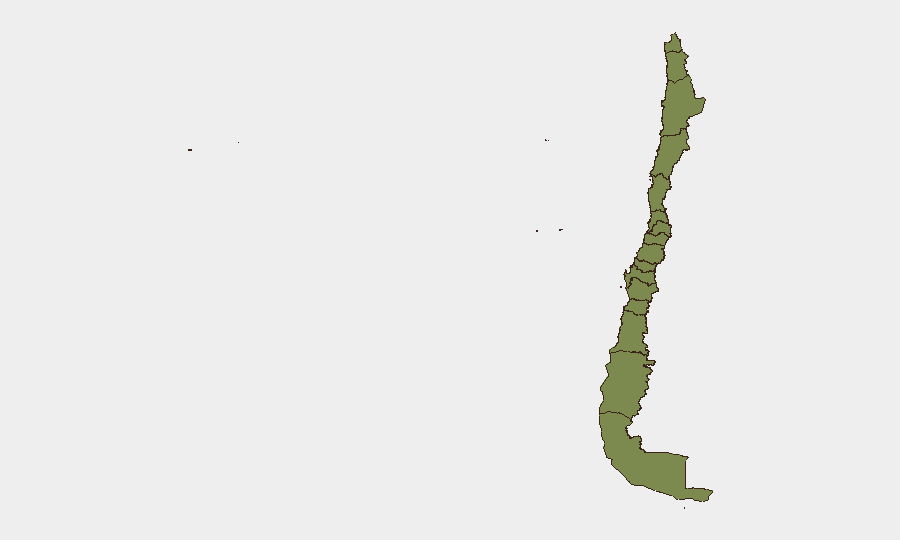
Coquimbo Region dominates the risk profile (score 31.5, more than double Santiago's 15.6), indicating concentrated vulnerabilities—likely related to resource extraction, labor disputes, or organized-crime activity endemic to the northern mining corridor. Santiago Metropolitan Region (15.6) reflects capital-city political friction and population density, where protests and institutional tensions create periodic disruption. Los Ríos, Aysen, and the southern regions show minimal scores (2.5–4.4), suggesting localized or episodic issues rather than sustained threats. Teams with personnel or assets in Coquimbo should maintain elevated vigilance; Santiago operations should monitor political and transport channels for disruption windows.
How GeoBit Would Assist
Security teams monitoring Chile should employ AOI Monitoring & Early Warning on Coquimbo and Santiago to detect emerging protests, roadblocks, or civil unrest in real time. X/Twitter & Telegram OSINT and multi-language search corroborate local media and official statements (Carabineros, PDI, ONEMI) to separate signal from noise within 2–4 hours of incident onset. Routing & Network Analysis pre-positions alternative travel and supply routes around high-risk zones, enabling duty-of-care compliance if primary corridors close. Sentiment & Temporal Analysis tracks political and institutional friction before escalation.
7-Day Outlook
Fragmented institutional signaling (prison, judicial, legislative) suggests stress points rather than flashpoints, but the concentration of activity within 48 hours warrants close monitoring. No indicators of organized violence or nationwide unrest are present; regional and sectoral grievances are likely to manifest as localized protests or labor actions rather than systemic instability. Security postures should remain baseline-elevated in Coquimbo and Santiago; significant escalation would require either coordinated labor action, major political event, or resource-sector disruption.
Highest-Risk Areas — Ranked
| # | State / Region | Risk |
|---|---|---|
| 1 | Coquimbo Region | 31.5 |
| 2 | Santiago Metropolitan Region | 15.6 |
| 3 | Los Ríos | 4.4 |
| 4 | Aysen del General Carlos Ibanez del Campo Region | 3.4 |
| 5 | Valparaiso Region | 2.5 |
| 6 | Los Lagos Region | 2.5 |
| 7 | Maule Region | 2.5 |
| 8 | Antofagasta Region | 1.5 |
| 9 | Atacama Region | 1.5 |
| 10 | Magallanes and Chilean Antarctica Region | 1.5 |
| 11 | O'Higgins Region | 1.5 |
| 12 | Nuble Region | 1.5 |
Sources
Previous Daily Briefs
A new Chile brief is written every day — each with its own risk map and downloadable CSV. Here's the last week; use the calendar to go further back.
📅 Browse every day by calendar →
Highlighted days have a brief. Tap a day for that day's map & analysis, or “csv” for that day's dataset ($5).
Atlas — our AI intelligence desk — emails them this snapshot personally. Nothing else, no list.