Situation Summary
Iceland remains a globally low-threat environment with a composite threat score of 1 and no credible indications of major security incidents, civil unrest, or infrastructure disruptions in the past 24–48 hours. The Capital Region (Reykjavík and surrounding areas) accounts for the majority of tracked risk, driven by routine property crime and minor public-order incidents rather than organized threats or instability. The overall security trajectory remains stable, with localized concerns limited to opportunistic crime and operational airport delays.
Key Developments
- Reykjavík city centre, late night 27–28 July – Police report a continuing surge in opportunistic residential burglaries across central Reykjavík and nearby neighbourhoods; authorities are urging residents to report all incidents and suspicious activity. Risk remains localized to property crime; no organized criminal activity indicated.
- Downtown Reykjavík (miðbær), early hours 28 July – Police detained two individuals following a group fight (hópslagsmál) in the city centre. The incident was contained with no ongoing public-order disturbance reported.
- Kópavogur and Breiðholt (Capital Region), 27–28 July – One person was taken into custody on suspicion of bodily assault; multiple drunk-driving incidents were also reported the same night in the Police Station 3 jurisdiction. Routine criminal activity with limited impact on general travel safety.
- Reykjanesbraut (main road to Keflavík), afternoon 27–28 July – A three-vehicle collision around 16:00 required police response; no prolonged road closure reported. Short-term traffic disruption on a key corridor to Keflavík International Airport.
- Laugardalslaug swimming pool complex, Reykjavík, decision announced 27–29 July – City authorities have closed parts of the facility for several months due to spectator-stand safety risks. Local recreational disruption with potential crowding at alternative facilities; no broader public-safety emergency.
- Keflavík International Airport (Suðurnes), ongoing as of late July – Non-Schengen passengers face significantly longer border-control queues following a new entry system implementation; average processing times have increased from 15–20 seconds to over one minute per passenger, with peaks up to 90 seconds. Operational rather than security-driven, but affects travel connections and passenger flow.
Highest-Risk Areas
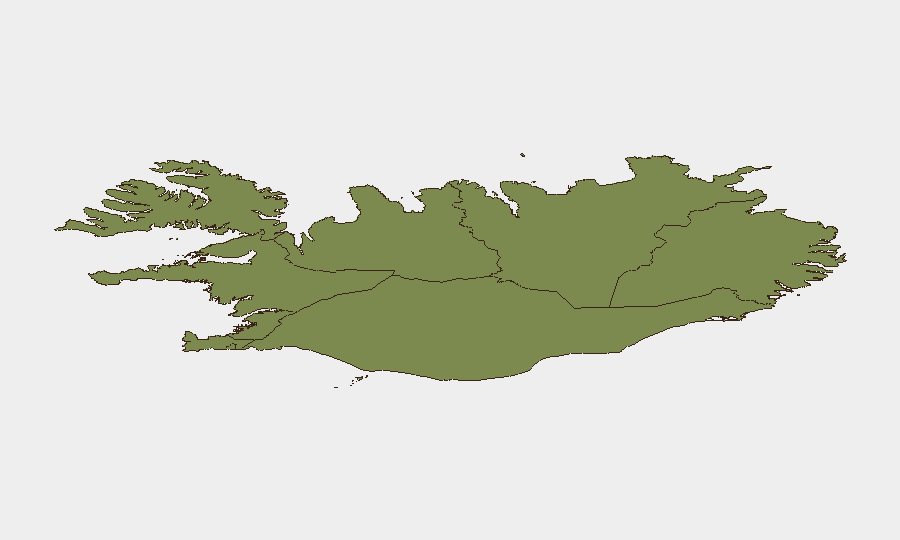
The Capital Region (risk score 24) dominates Iceland's threat landscape, accounting for the vast majority of tracked incidents and driven primarily by property crime and minor public-order incidents in Reykjavík's central districts and suburban municipalities (Kópavogur, Breiðholt). The Southern Peninsula (risk 12) and Southern Region (risk 11) show secondary risk elevation, though no acute incidents were reported in the last 48 hours. All other regions (Eastern through Northeastern) remain below risk 10 and show minimal incident activity. Risk is concentrated in urban centres and remains below thresholds associated with organized crime, political instability, or large-scale security threats.
How GeoBit Would Assist
Security teams with personnel or assets in Iceland would benefit from AOI Monitoring & Early Warning focused on central Reykjavík and Keflavík to detect emerging patterns in property crime or public-order incidents before escalation. OSINT & Intel Sweep capabilities (social media monitoring, local news feeds, multi-language search) would provide early detection of any shifts toward organized activity or civil unrest. Routing & Network Analysis would enable real-time alternative journey planning around airport delays and road disruptions on high-traffic corridors like Reykjanesbraut.
7-Day Outlook
Iceland's security environment is expected to remain stable over the next seven days, with no indicators of escalating instability, civil unrest, or significant natural-hazard events. Property crime in Reykjavík will likely persist at current levels; airport processing delays are expected to continue pending system optimization. Teams should maintain standard duty-of-care protocols for personnel in central Reykjavík and monitor travel schedules for Keflavík transits.
Highest-Risk Areas — Ranked
| # | State / Region | Risk |
|---|---|---|
| 1 | Capital Region | 24 |
| 2 | Southern Peninsula | 12 |
| 3 | Southern Region | 11 |
| 4 | Eastern Region | 10 |
| 5 | Western Region | 9 |
| 6 | Westfjords Region | 8 |
| 7 | Northwestern Region | 7 |
| 8 | Northeastern Region | 6 |
Sources
Previous Daily Briefs
A new Iceland brief is written every day — each with its own risk map and downloadable CSV. Here's the last week; use the calendar to go further back.
📅 Browse every day by calendar →
Highlighted days have a brief. Tap a day for that day's map & analysis, or “csv” for that day's dataset ($5).
Atlas — our AI intelligence desk — emails them this snapshot personally. Nothing else, no list.