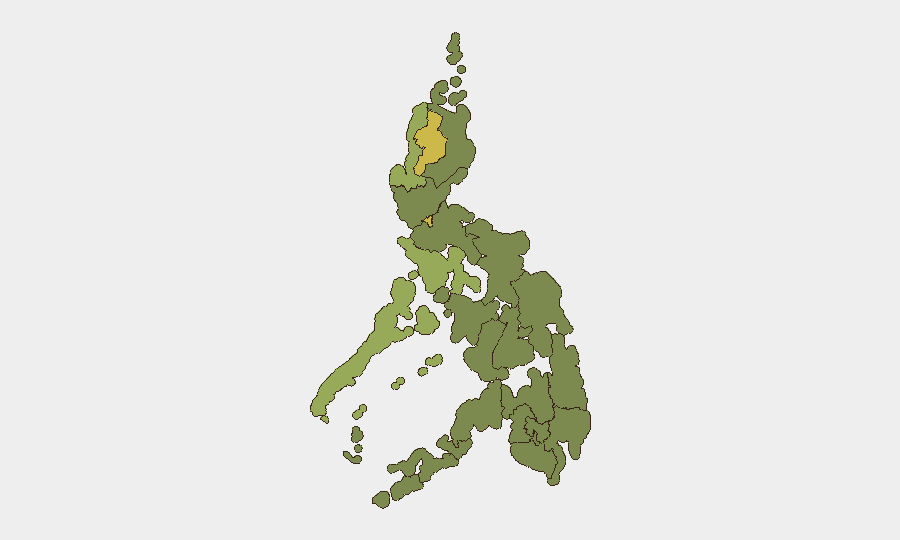
Situation Summary
The Philippines remains at moderate composite risk (rank #40 globally, score 55) with 107 tracked threat events. Recent signal traffic reflects elevated political and governance tensions—including tribunal statements, legislative disputes, and international friction—rather than acute security incidents. No confirmed security or travel-risk events (crime, civil unrest, armed conflict, infrastructure disruption) have been verified in the last 24–48 hours; the security environment remains stable operationally, though geopolitical pressure points warrant continued monitoring.
Key Developments
No clearly verified incidents meeting recency and evidence standards have been identified in the last 24–48 hours. Open-source web research has surfaced no confirmed crime, civil unrest, conflict, or infrastructure events in the Philippines dated to the last two days. A single unconfirmed report references a possible aircraft ground collision at Ninoy Aquino International Airport (NAIA), Metro Manila, on an unspecified Tuesday at 11:38, but the exact calendar date and corroboration remain unclear and do not meet the 24–48 hour threshold. Operational security conditions in monitored zones remain within baseline parameters.
Highest-Risk Areas
Metro Manila (68.4) and Cordillera Administrative Region (61.7) drive the national composite risk score and warrant prioritized monitoring. Metro Manila's elevation reflects its status as the capital, financial hub, and primary target zone for political, criminal, and social friction; Cordillera's ranking reflects historical civil unrest and separatist activity. Mimaropa (42.2) and Ilocos Region (40.7) show moderate-elevated risk; Bangsamoro and Mindanao regional clusters (38.4 composite) remain endemic zones of concern due to residual armed-group presence and historical conflict dynamics, though operational tempo remains subdued. Corporate and NGO personnel in Metro Manila and Cordillera should maintain heightened situational awareness; Mindanao assignments require baseline hardening and contingency planning.
How GeoBit Would Assist
Security teams should employ AOI (Area-of-Interest) Monitoring & Early Warning on Metro Manila, Cordillera, and key Mindanao nodes to detect emerging civil unrest, security-force activity, or crime spikes in real time. Intel Sweep and OSINT fusion (X/Twitter, Telegram, local news aggregation, multi-language signal capture) will flag political developments, official statements, or grassroots activity faster than traditional reporting. Routing & Network Analysis can generate real-time alternative journey and supply-chain routes around high-risk zones, and satellite & imagery analysis supports facility and border-zone monitoring. Together, these enable duty-of-care compliance and early warning ahead of operational disruption.
7-Day Outlook
Geopolitical signals (tribunal statements, international military gestures, legislative disputes) are likely to persist but remain in the realm of diplomatic and rhetorical friction rather than kinetic escalation. Security conditions in target zones are forecast to remain stable through 2026-07-16 absent major political shock; however, political calendar events (legislative votes, tribunal announcements, international statements) should be monitored as potential catalysts for street-level mobilization, particularly in Metro Manila. Mindanao baseline risk remains steady but non-emergent.
Highest-Risk Areas — Ranked
| # | State / Region | Risk |
|---|---|---|
| 1 | Metro Manila | 68.4 |
| 2 | Cordillera Administrative Region | 61.7 |
| 3 | Mimaropa | 42.2 |
| 4 | Ilocos Region | 40.7 |
| 5 | Bangsamoro | 38.4 |
| 6 | Caraga | 38.4 |
| 7 | Northern Mindanao | 38.4 |
| 8 | Soccsksargen | 38.4 |
| 9 | Davao Region | 38.4 |
| 10 | Cagayan Valley | 38.4 |
| 11 | Central Luzon | 38.4 |
| 12 | Bicol Region | 38.4 |
Sources
Previous Daily Briefs
A new Philippines brief is written every day — each with its own risk map and downloadable CSV. Here's the last week; use the calendar to go further back.
📅 Browse every day by calendar →
Highlighted days have a brief. Tap a day for that day's map & analysis, or “csv” for that day's dataset ($5).
Atlas — our AI intelligence desk — emails them this snapshot personally. Nothing else, no list.