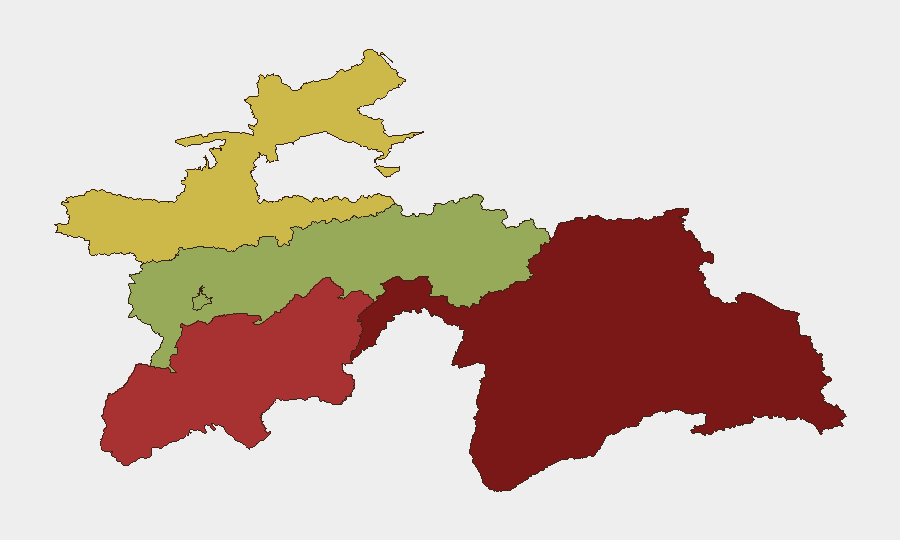
Situation Summary
Tajikistan remains a low–incident environment (global rank #159, composite threat score 2.1) with no confirmed security events, unrest, or infrastructure disruptions reported in the last 24–48 hours. Risk is concentrated in remote and border-adjacent regions, particularly Gorno-Badakhshan Autonomous Region (GBAO) and Khatlon, where terrain, cross-border proximity, and limited state presence create persistent vulnerabilities. The capital Dushanbe and most populated areas remain stable; the current security picture reflects structural risk rather than acute crisis.
Key Developments
No discrete security, crime, political, or infrastructure incidents meeting verification criteria were identified in open reporting from Tajikistan in the last 24–48 hours. Recent Central Asia security commentary and news streams (past 48 hours) do not carry date-stamped incident reports from Tajikistan proper. Historical context: opposition activist Asadullo Boboev was deported from Germany to Dushanbe on 20 June 2026 and detained on arrival; Human Rights Watch reported this on 7 July 2026, but the event falls outside the current reporting window. Analysts should monitor ongoing structural risks (below) rather than react to fresh incidents at present.
Highest-Risk Areas
Gorno-Badakhshan Autonomous Region (GBAO; risk score 92) and Khatlon Region (78) drive overall national risk due to remote terrain, weak state capacity, Afghan border proximity, and reported militant activity corridors. GBAO—the Pamir plateau—is particularly isolated and under-resourced; the Afghan frontier and past reports of transnational terrorism and drug trafficking create persistent baseline threat. Khatlon, bordering Afghanistan and including the Panj River valley, faces similar cross-border crime and smuggling pressure. Sughd Region (65) and Districts of Republican Subordination (58) show elevated but secondary risk; Dushanbe (42) is the safest major population center. Risk in GBAO and Khatlon remains structural and endemic rather than event-driven at present.
How GeoBit Would Assist
Security teams with personnel or assets in Tajikistan should deploy AOI Monitoring & Early Warning on GBAO and Khatlon border zones to detect emerging incidents, cross-border activity, or infrastructure disruption before they escalate to international visibility. Multi-language Intel Sweep and Telegram/X OSINT can track local security and law-enforcement chatter, opposition narratives, and militia signals in near-real-time. Routing & Network Analysis supports duty-of-care planning for Dushanbe-based staff and supply chains, identifying safer transit corridors and alternative routes in event of regional flare-ups. Satellite & Imagery analysis and GIS spatial analysis enable persistent monitoring of remote border areas (GBAO, Panj Valley) where open reporting is scarce.
7-Day Outlook
No acute crisis is anticipated in the immediate week ahead. However, the structural concentration of risk in border regions and GBAO means that localized incidents (smuggling operations, militant movement, cross-border clashes) may occur with limited visibility in mainstream reporting. Organizations should maintain baseline AOI monitoring and ensure staff in high-risk regions (GBAO, southern Khatlon) have clear incident-reporting and evacuation protocols in place.
Highest-Risk Areas — Ranked
| # | State / Region | Risk |
|---|---|---|
| 1 | Gorno-Badakhshan Autonomous Region | 92 |
| 2 | Khatlon Region | 78 |
| 3 | Sughd Region | 65 |
| 4 | Districts of Republican Subordination | 58 |
| 5 | Dushanbe | 42 |
Sources
Previous Daily Briefs
A new Tajikistan brief is written every day — each with its own risk map and downloadable CSV. Here's the last week; use the calendar to go further back.
📅 Browse every day by calendar →
Highlighted days have a brief. Tap a day for that day's map & analysis, or “csv” for that day's dataset ($5).
Atlas — our AI intelligence desk — emails them this snapshot personally. Nothing else, no list.