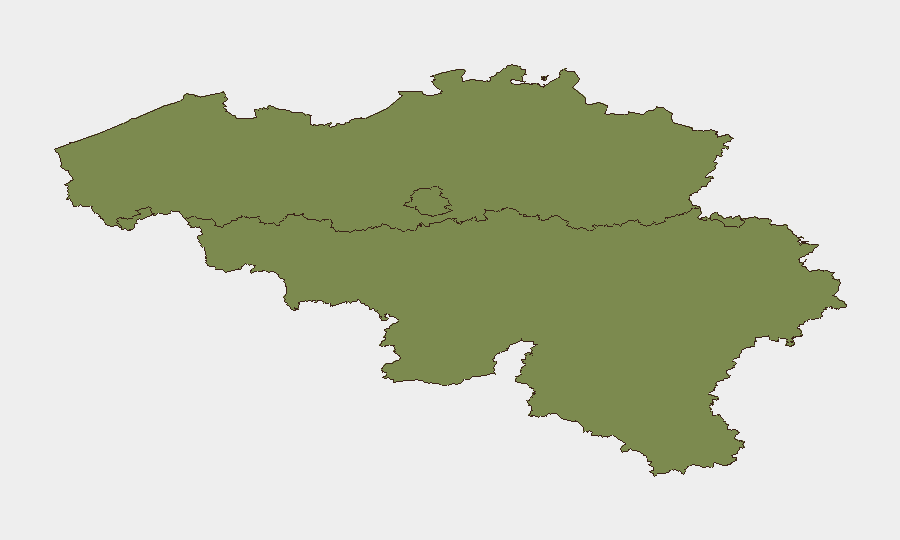
Situation Summary
Belgium's composite threat score of 10 places it at moderate risk globally (#98), with significant geographic concentration in Brussels-Capital (31.4), which accounts for the majority of the 49 tracked events this cycle. Recent signals point to financial-sector pressure (bank demand on Brussels), business disapproval, and international diplomatic friction involving the Dominican Republic, Lithuania, and France-Morocco relations—suggesting multi-vector stress on governance and commercial operations. Wallonia and most of Flanders remain substantially lower-risk, but Brussels-based organizations and operations face elevated exposure.
Key Developments
- 2026-07-08 · Financial pressure: Bank demand action directed at Brussels-Capital authorities; nature and rationale remain under analysis.
- 2026-07-08 · Business disapproval: Unspecified business-sector negative signal recorded in Belgium; context requires clarification.
- 2026-07-08 · Diplomatic friction: Dominican Republic and Belgium in public disapproval exchange; Lithuania-Estonia signal suggests regional diplomatic instability spillover.
- 2026-07-08 · Judicial controversy: Belgium government disapproves of judicial action or ruling; potential institutional tension.
- 2026-07-08 · International criticism: European institutions issued public statement regarding Brussels; topic and severity pending corroboration.
- 2026-07-07 · Corporate investigation: Unspecified company under investigation (jurisdiction and sector unknown).
*Note: Web research on Belgium for the past 24–48 hours returned sports-related results (FIFA World Cup) rather than security incident reporting. Signals above derive from GeoBit event feeds; corroboration with on-the-ground reporting is pending.*
Highest-Risk Areas
Brussels-Capital dominates the risk profile at 31.4, driven by financial-sector demands, judicial disagreements, and international diplomatic activity concentrated in the capital. Flanders (15.4) shows secondary elevated risk, likely reflecting broader economic or regulatory pressures affecting the northern region's business environment. Wallonia (1.4) remains substantially lower-risk and is not a primary operational concern at this time. Organizations with headquarters, banking operations, or government-facing functions in Brussels should treat current signals as actionable; regional operations in Flanders warrant standard monitoring, while Wallonia operations remain in baseline posture.
How GeoBit Would Assist
Intel Sweep and multi-language OSINT would rapidly isolate the specifics of the bank demand, business disapproval, and judicial controversy, mapping actors and timelines. Entity extraction and network analysis would clarify the Dominican Republic–Belgium dispute and its potential impact on trade, sanctions, or consular operations. AOI monitoring with persistent alerting on Brussels government, judicial, and financial-sector venues would provide continuous early warning of escalation in governance or commercial friction, enabling duty-of-care teams to adjust travel, asset, or operational posture before secondary effects materialize.
7-Day Outlook
Short-term trajectory is uncertain: if the bank demand, judicial controversy, and business disapproval reflect isolated incidents, risk should stabilize within 48–72 hours. However, if the Dominican Republic–Belgium dispute and judicial friction signal broader institutional instability or financial-system stress, Brussels risk could harden over 7–10 days. Continued monitoring of European and Belgian government statements, central bank communications, and diplomatic cables is essential; organizations should prepare contingency routing and communications plans in case Brussels-based travel or transactions require mitigation.
Highest-Risk Areas — Ranked
| # | State / Region | Risk |
|---|---|---|
| 1 | Brussels-Capital | 31.4 |
| 2 | Flanders | 15.4 |
| 3 | Wallonia | 1.4 |
Previous Daily Briefs
A new Belgium brief is written every day — each with its own risk map and downloadable CSV. Here's the last week; use the calendar to go further back.
📅 Browse every day by calendar →
Highlighted days have a brief. Tap a day for that day's map & analysis, or “csv” for that day's dataset ($5).
Atlas — our AI intelligence desk — emails them this snapshot personally. Nothing else, no list.