Situation Summary
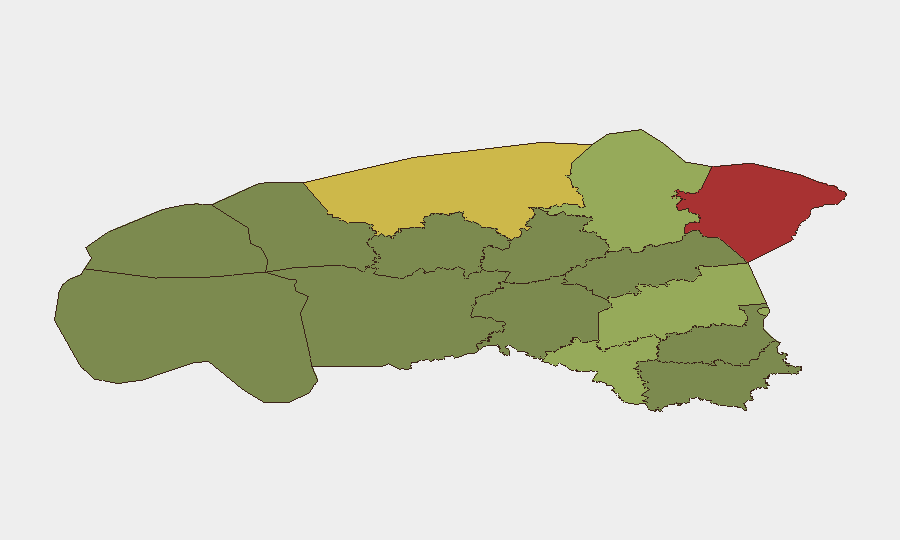
Estonia faces a near-term security environment shaped by four concurrent stressors: irregular migration surges attributed to Belarusian-facilitated hybrid operations, a spike in bomb-threat reporting, detected cross-border drone incursions with explosive payloads, and elevated cyber-breach activity affecting resident data. While the national threat score remains composite-low (13), regional concentration of risk in border-proximate counties—particularly Ida-Viru (78) and Harju (68)—reflects operational pressure at Estonia's eastern frontier and on critical infrastructure near Tallinn. The trajectory shows sustained operational tempo rather than escalation, but authorities are extending enforcement posture into late summer.
Key Developments
- South Estonia – attack drone with explosives recovered – Tuesday, 4 August 2026
Estonian authorities secured an unmanned aerial system carrying approximately 5 kg of explosives that had crashed or landed inside Estonian territory. Police and explosive-ordnance specialists responded. Source: ERR.
- Tallinn, Nõmme district – major police raid on illegal-migrant network – early August 2026
The PPA and Police conducted a large-scale operation detaining 12 individuals suspected of illegal border crossing from Belarus via the EU's external frontier. Drones and intelligence-led tactics were deployed. Source: ERR, regional outlets.
- Estonia–Latvia border – Estonian police deployment to Latvia–Belarus frontier – early August 2026
Estonia deployed a police unit to reinforce Latvian border control in response to accelerating irregular-migration pressure attributed to hybrid operations. Source: ERR.
- Estonia nationwide – 63 illegal migrants detained in past week; 102 year-to-date – reported 4 August 2026
The PPA characterized the surge as Belarusian-driven hybrid attack activity. Interior officials warned pressure will likely persist through summer months. Source: PPA statements, ERR.
- Tallinn, Lilleküla Stadium – vandalism by Swedish football fans; €30,000 damage – reported 4 August 2026
Visiting supporters caused substantial property destruction at the stadium, prompting police response and damage assessment. Source: ERR.
- Estonia nationwide – uptick in bomb-threat calls – recent days, reported 4 August 2026
Police received elevated volumes of bomb-threat reports; most assessed as hoaxes or false alarms but requiring law-enforcement resource diversion and scene assessment. Source: ERR.
- Bonava (real-estate operator) – customer data breach – announced Monday, 3 August 2026
Unidentified actors accessed names, addresses, contact details, dates of birth, and housing preferences of Estonian and multi-country clients. Breach reported to Data Protection Inspectorate; cyber-defense measures activated. Source: Bonava announcement, data-protection authority reporting.
- Estonia (multiple locations) – four traffic crashes, seven injured – Tuesday, 4 August 2026
Short-term spike in road accidents across the country; police and rescue services responded. Source: ERR incident summary.
Highest-Risk Areas
Ida-Viru County (risk 78) and Harju County (risk 68) drive the national risk profile, both positioned as gateway zones for Belarus-linked irregular migration and potential drone/cross-border hybrid operations. Ida-Viru's proximity to Russia and Belarus and Harju's inclusion of metropolitan Tallinn and critical-infrastructure corridors amplify their operational significance. Tartu County (58) and Valga County (55) represent secondary border-adjacent risk clusters. The concentration of risk in counties bordering or near Belarus and Russia reflects enforcement tempo, intelligence focus on migrant networks, and exposure to unmanned-systems incursions; southern and rural counties show markedly lower composite scores.
How GeoBit Would Assist
Corporate security and duty-of-care teams would deploy AOI Monitoring & Early Warning on Ida-Viru and Harju counties to track recurring migrant detention, drone sightings, and infrastructure threats in near-real time. Intel Sweep and OSINT fusion (X/Telegram monitoring, ERR and regional-media cross-verification, entity extraction) would surface emerging cyber-breach notifications and threat-actor targeting of resident or corporate data. Routing & Network Analysis would identify alternate travel corridors and facility access points during spikes in public disorder or border-enforcement operations.
7-Day Outlook
Irregular-migration pressure and associated police operations are expected to sustain or intensify through August, with repeated large-scale enforcement raids likely in Tallinn and border counties. Drone incursions and bomb-threat reporting may remain episodic but warrant continued monitoring. Cyber-breach risk for companies and individuals remains elevated; data-protection compliance and breach-notification readiness should be assumed essential.
Highest-Risk Areas — Ranked
| # | State / Region | Risk |
|---|---|---|
| 1 | Ida-Viru County | 78 |
| 2 | Harju County | 68 |
| 3 | Tartu County | 58 |
| 4 | Valga County | 55 |
| 5 | Lääne-Viru County | 52 |
| 6 | Pärnu County | 35 |
| 7 | Rapla County | 32 |
| 8 | Jõgeva County | 30 |
| 9 | Järva County | 28 |
| 10 | Viljandi County | 25 |
| 11 | Põlva County | 22 |
| 12 | Võru County | 18 |
Sources
Previous Daily Briefs
A new Estonia brief is written every day — each with its own risk map and downloadable CSV. Here's the last week; use the calendar to go further back.
📅 Browse every day by calendar →
Highlighted days have a brief. Tap a day for that day's map & analysis, or “csv” for that day's dataset ($5).
Atlas — our AI intelligence desk — emails them this snapshot personally. Nothing else, no list.