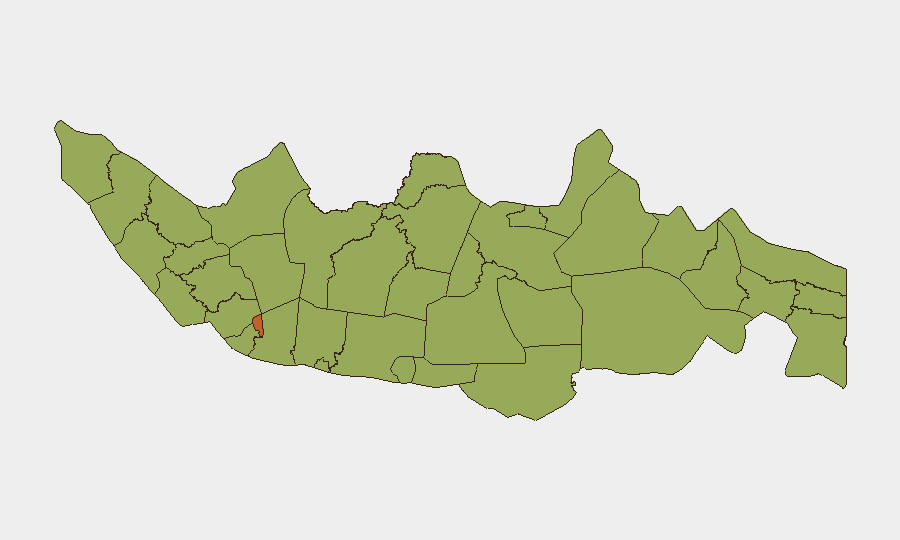
Situation Summary
Indonesia remains a moderate-tier global security concern (rank #33, composite score 64) with 849 tracked events, driven primarily by separatist activity in Papua, institutional governance friction, and persistent regional instability across the archipelago. The country's risk profile has sharpened following a confirmed separatist attack on a civilian aircraft in Highland Papua on July 2, resulting in the death of an American pilot and destruction of a transport asset. While Jakarta and surrounding regions dominate the composite threat index, Papua's recurring aviation targeting and explicit rebel ultimatums against civilian flights represent an acute, high-consequence risk vector that is likely to persist and escalate duty-of-care requirements for organizations with personnel or assets in remote eastern provinces.
Key Developments
- Yahukimo regency, Highland Papua – July 2, 2026: West Papua National Liberation Army (TPNPB) claimed responsibility for shooting down a PT AMA civilian aircraft and killing American pilot Nicholas F. Gosselin near Balinggama village. Indonesian authorities later confirmed discovery of a burned aircraft with one pilot and seven passengers, though casualty confirmation remains pending.
- Wamena–Yahukimo air corridor – July 2, 2026: The downed aircraft departed Wamena with eight occupants bound for Yahukimo; Indonesia's transportation ministry confirmed the route disruption and heightened risk profile on this Highland Papua civil aviation segment.
- TPNPB public messaging – July 2, 2026: Spokesperson Sebby Sambom publicly reaffirmed a separatist ultimatum banning civilian flights from rebel operational zones, framing the aircraft attack as a "message" to Indonesian and U.S. governments and signaling intent to continue targeting civil aviation in separatist-affected districts.
- Jakarta national security posture – July 2, 2026: Indonesian joint police–military command in Papua initiated investigations into rebel involvement, pilot status, and passenger fates; ongoing casualty verification and forensic work underscore operational uncertainty in the theater.
- Institutional capacity assessment – July 2, 2026: Indonesian media cited analysis warning that recent defense budget cuts and centralized foreign-policy decision-making are eroding state capacity to respond to geopolitical shocks, flagging fiscal and governance vulnerabilities affecting national security resilience.
Highest-Risk Areas
Jakarta's composite risk score (74.5) reflects concentrated governance, law enforcement, and political volatility in the capital, but should not obscure the acute, high-consequence threats in Papua provinces. South Sulawesi (58.9), North Sulawesi (49.3), and Maluku (49) follow, reflecting persistent separatist, maritime-crime, and communal-violence risk in the eastern corridor. The July 2 aircraft attack in Highland Papua—though not yet fully represented in the 849-event cumulative dataset—exemplifies why remote, conflict-affected provinces demand priority attention: aviation targeting by armed separatists, limited rapid-response infrastructure, and explicit rebel no-fly directives create acute duty-of-care exposure for organizations operating in Yahukimo, Wamena, and adjacent districts regardless of lower composite scores.
How GeoBit Would Assist
GeoBit's AOI Monitoring & Early Warning capability with persistent watch on Highland Papua airfields and separatist activity corridors would provide real-time alerting on aviation incidents and rebel statements, enabling duty-of-care teams to adjust travel schedules preemptively. Network & Actor Analysis on TPNPB command structure and multi-language OSINT (Telegram, radio SIGINT, local media) would yield earlier warning of operational tempo changes and targeting intent. Routing & Network Analysis could identify alternative air and ground corridors to and from eastern provinces, mitigating single-corridor dependency.
7-Day Outlook
TPNPB's public reaffirmation of aviation targeting and explicit no-fly ultimatums suggest elevated risk for the next 7–14 days on Highland Papua routes. Joint police–military investigative activity and potential retaliation operations may increase armed-group operational tempo. Organizations with personnel scheduled for Papua travel should assume heightened threat posture and prepare contingency protocols.
Highest-Risk Areas — Ranked
| # | State / Region | Risk |
|---|---|---|
| 1 | Special capital Region of Jakarta | 74.5 |
| 2 | South Sulawesi | 58.9 |
| 3 | West Java | 52.7 |
| 4 | North Sulawesi | 49.3 |
| 5 | Maluku | 49 |
| 6 | East Java | 49 |
| 7 | North Sumatra | 47.4 |
| 8 | East Nusa Tenggara | 46.9 |
| 9 | Central Java | 46.9 |
| 10 | Jambi | 46.7 |
| 11 | Riau | 46.6 |
| 12 | Special Region of Yogyakarta | 45.8 |
Sources
Previous Daily Briefs
A new Indonesia brief is written every day — each with its own risk map and downloadable CSV. Here's the last week; use the calendar to go further back.
📅 Browse every day by calendar →
Highlighted days have a brief. Tap a day for that day's map & analysis, or “csv” for that day's dataset ($5).