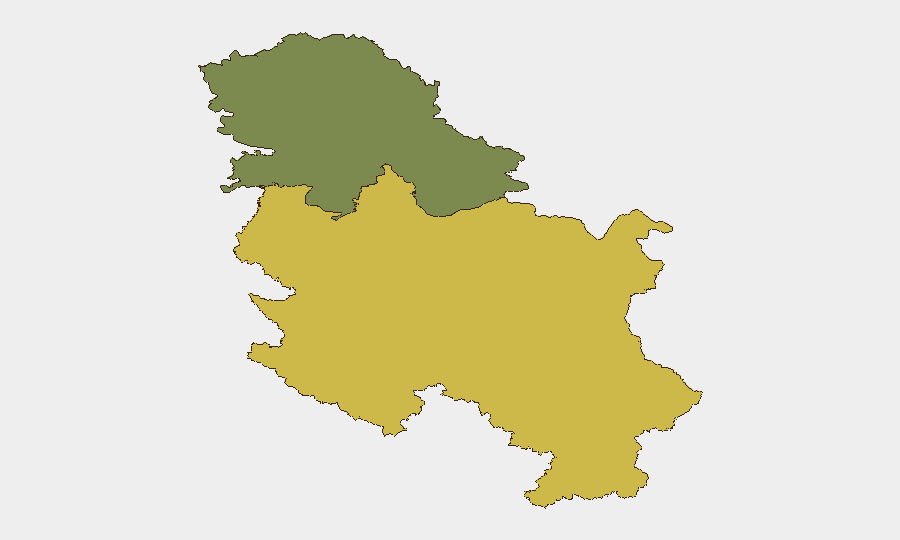
Situation Summary
Serbia remains at composite threat rank #89 globally with a primary driver of civil unrest, though no tracked events are currently active. The security environment is characterized by sporadic organized-crime violence, criminal homicides, and natural disasters (wildfires), rather than systemic political instability or large-scale unrest. Central Serbia dominates the sub-national risk profile at score 65, significantly outpacing Vojvodina at 35, indicating concentrated vulnerability in the core region.
Key Developments
Last-24–48-hour incident confirmation: GeoBit's live web research has not returned validated incidents within the 2026-08-11 to 2026-08-13 window. Recent incident signals available within the past week include:
- 2026-08-08 · Belgrade · Organized-crime shooting: Milan Ostojić, a known organized-crime figure, shot and admitted to VMA military hospital; assailant identity and motive remain unclear. Status of ongoing investigation unknown.
- 2026-08-08 · Belgrade · Criminal homicide: A 28-year-old Russian woman discovered dead in a suitcase in a canal; a 25-year-old Turkish national arrested on suspicion. Investigation ongoing.
- 2026-08-07 · Multiple locations · Active wildfires: Four simultaneous major wildfire incidents across Serbia, including Ibar Gorge and Deliblato Sands; 484 personnel deployed. Incident status as of briefing time unknown.
- 2026-08-04 · Palilula · Criminal homicide: Police arrested three suspects in connection with the death of a 73-year-old man; circumstances and motive remain unclear.
Context (outside current window): In early August 2026, Ukrainian President Volodymyr Zelenskyy's visit to Belgrade heightened security posture and saw increased police and intelligence presence.
Highest-Risk Areas
Central Serbia (score 65) accounts for the plurality of tracked risk and is the primary concern for duty-of-care planning. Belgrade, as the capital and largest urban center, concentrates organized-crime activity, criminal violence, and law-enforcement operations. Vojvodina (score 35) presents secondary risk, notably from the recent August 7 wildfire incidents affecting Deliblato Sands and surrounding areas. Risk in both regions stems from criminal networks, unpredictable violence, and infrastructure stress from natural disasters—not organized political instability.
How GeoBit Would Assist
Organizations with people or assets in Serbia should deploy Intel Sweep and X/Twitter OSINT to monitor Belgrade crime developments, organized-crime actors, and law-enforcement responses in near-real time. AOI Monitoring & Early Warning on Central Serbia and Vojvodina would provide persistent alerts on civil unrest, wildfire spread, and security incidents affecting travel corridors and office locations. Network & Actor Analysis focused on known organized-crime figures and trafficking networks would support threat-aware staffing decisions and movement planning.
7-Day Outlook
The security picture is unlikely to deteriorate sharply in the near term absent new political triggers or escalation in organized-crime violence. Wildfire risk remains elevated through late August in forest and agricultural regions; operational planning should account for potential road closures and air quality degradation. Sporadic criminal incidents and homicides are expected to continue at baseline levels; organizations should maintain standard duty-of-care monitoring and maintain low profiles in high-crime districts of Belgrade.
Highest-Risk Areas — Ranked
| # | State / Region | Risk |
|---|---|---|
| 1 | Central Serbia | 65 |
| 2 | Vojvodina | 35 |
Sources
Previous Daily Briefs
A new Serbia brief is written every day — each with its own risk map and downloadable CSV. Here's the last week; use the calendar to go further back.
📅 Browse every day by calendar →
Highlighted days have a brief. Tap a day for that day's map & analysis, or “csv” for that day's dataset ($5).
Atlas — our AI intelligence desk — emails them this snapshot personally. Nothing else, no list.