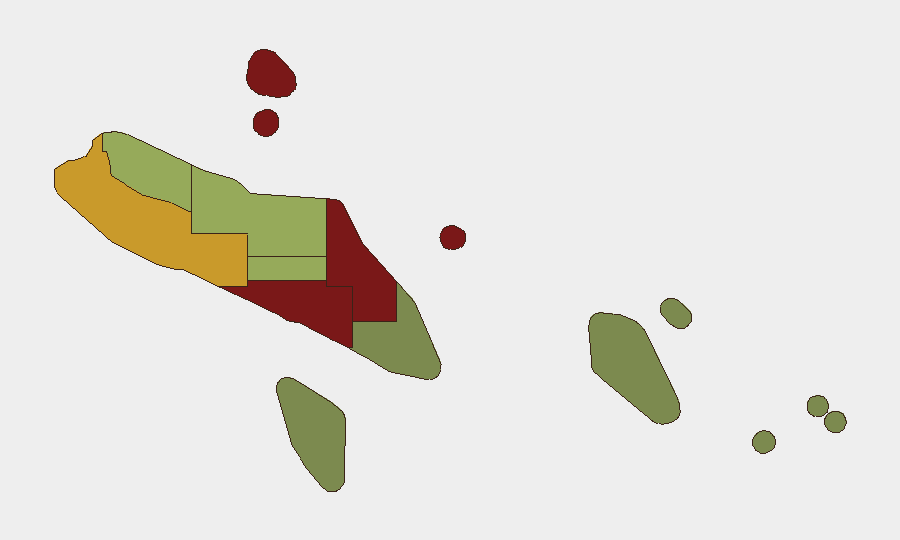
Situation Summary
Solomon Islands remains a low-priority global security environment (rank #152 globally, composite threat score 9) with no discrete security events recorded in the past week. The threat picture is shaped primarily by chronic constraints—limited police capacity, infrastructure fragility, and concentrated urban crime in Honiara—rather than by acute political, conflict, or civil-unrest incidents. Near-term risk is elevated in the capital and surrounding Guadalcanal Province, but no destabilizing developments emerged during 16–22 September. The security environment is stable but operationally constrained.
Key Developments
- 16 September, Honiara — Aviation disruption: Solomon Airlines announced a shift to single-aircraft international operations through 30 November, affecting routes to Brisbane, Auckland, Port Vila, Nadi, and Munda due to fleet availability. This creates travel delays and potential business continuity impact for personnel relying on these connections.
- 16 September, nationwide — Travel guidance updated: Canada's travel advisory retained a "normal security precautions" recommendation while reiterating limited local police capacity and elevated violent-crime risk targeting foreigners in Honiara.
- 16 September, nationwide — Infrastructure vulnerability reconfirmed: Canadian advisory noted that power outages disrupt telecommunications, banking, and hotel services, with prolonged blackouts increasing opportunistic theft risk; no new outage reported, but vulnerability remains acute.
- 16 September, Honiara — Climate policy announcement: Prime Minister Matthew Wale declared climate change a national security priority at the Pacific Climate Change Conference. This reflects long-term policy positioning rather than an immediate security incident.
- 16–22 September, diplomatic posture: The United States publicly welcomed Solomon Islands' foreign-policy reorientation toward greater transparency and partnership, signaling intent to deepen security and economic ties. This is a diplomatic development with no reported security incident.
- 16 September, Malaita Province — Infrastructure gain: Seven clinics were equipped with reliable solar power, reducing dependence on unreliable grid electricity and improving health-facility resilience in a peripheral province.
Note: No discrete security, crime, civil-unrest, political-instability, or conflict events were confirmed for 16–22 September 2026.
Highest-Risk Areas
Honiara (risk 92) and Guadalcanal Province (risk 88) account for the majority of tracked risk, driven by concentrated urban crime, limited police presence, and foreign-worker exposure. Malaita Province (risk 85) and Western Province (risk 72) present secondary risk, likely reflecting localized crime and remote-area governance gaps. Peripheral provinces (Temotu, Rennell and Bellona, Makira-Ulawa) carry substantially lower risk scores, indicating that security threats are highly urban-concentrated and that travel to outer islands presents relatively lower hazard. Organizations with personnel or assets in the capital should prioritize incident-response protocols and liaison with local authorities; those in provincial regions face lower acute risk but should plan for infrastructure instability.
How GeoBit Would Assist
Security teams monitoring Solomon Islands should employ AOI Monitoring & Early Warning for persistent watch on Honiara and Guadalcanal, with automated alerting triggered by crime, political, or infrastructure incidents. Intel Sweep and X/Twitter OSINT can provide real-time corroboration of emerging incidents and crowdsourced reporting of civil unrest or travel disruptions. Risk & Threat Assessment integrated with GIS & Spatial Analysis enables granular duty-of-care routing and site-security planning, while Economic & Trade and Environmental & Health data support business-continuity and supply-chain resilience planning.
7-Day Outlook
No acute security escalation is forecast for the next seven days. Chronic vulnerabilities—police capacity, power stability, and petty-to-moderate crime in Honiara—will persist. Aviation disruptions may continue through November, affecting corporate mobility. Monitoring should remain routine but vigilant for any uptick in crime reporting or infrastructure failure affecting banking or communications.
Highest-Risk Areas — Ranked
| # | State / Region | Risk |
|---|---|---|
| 1 | Honiara | 92 |
| 2 | Guadalcanal | 88 |
| 3 | Malaita | 85 |
| 4 | Western | 72 |
| 5 | Choiseul | 58 |
| 6 | Isabel | 52 |
| 7 | Central Province | 48 |
| 8 | Makira-Ulawa | 38 |
| 9 | Rennell and Bellona | 22 |
| 10 | Temotu | 18 |
Sources
Previous Weekly Briefs
A new Solomon Islands brief is written every Monday, covering the week — each with its own risk map and downloadable CSV. Use the calendar to go further back.
- September 15, 2026
- September 8, 2026
- September 2, 2026
- August 31, 2026
- August 28, 2026
- August 26, 2026
- August 24, 2026
📅 Browse past briefs by calendar →
Highlighted days have a brief. Tap a day for that day's map & analysis, or “csv” for that day's dataset ($5).
Atlas — our AI intelligence desk — emails them this snapshot personally. Nothing else, no list.