Situation Summary
Tajikistan remains a stable, low-threat environment with no confirmed security incidents, civil unrest, or infrastructure disruptions reported in the last 24–48 hours. The overall composite threat score remains at 6 (globally ranked #134), reflecting structural risks—sporadic terrorist activity, occasional Afghan border clashes, and isolated crime—rather than acute escalation. The security posture is steady with no indicators of near-term deterioration.
Key Developments
No qualifying security incidents were independently confirmed in Tajikistan during the last 24–48 hours. Open-source monitoring across news wires, regional outlets (Asia-Plus, RFE/RL, AtlasPress), and social media detected no discrete events meeting corroboration and recency thresholds. Broader trends monitored year-to-date—including drug-trafficking clashes along the Afghan border in the first half of 2026 and energy-policy concerns—remain in the structural/background category and do not constitute new developments for this reporting window.
Highest-Risk Areas
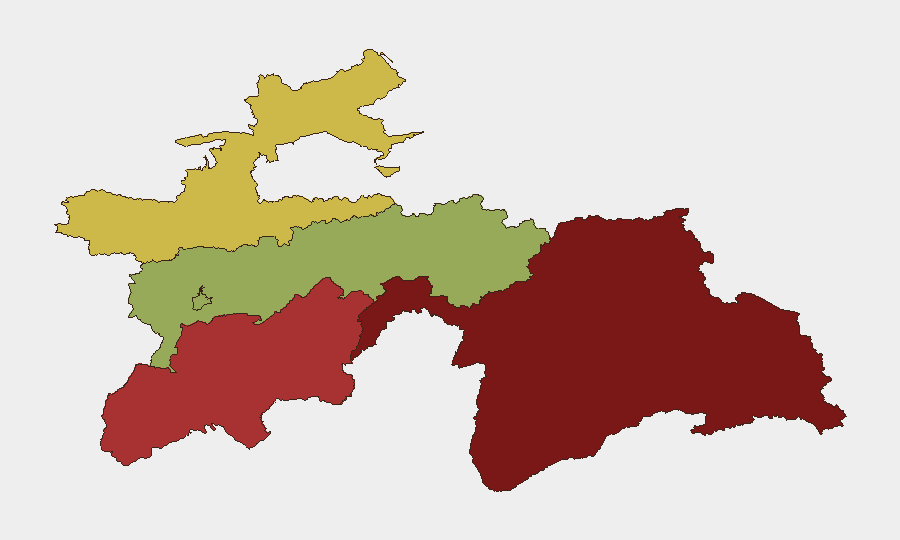
Gorno-Badakhshan Autonomous Region (GBAO) dominates sub-national risk (score 92), driven by its remote, mountainous terrain, limited state control, and proximity to the Afghan border where sporadic terrorist and narcotics-trafficking activity persists. Khatlon Region (score 78) remains the second-highest risk area, reflecting similar border exposure and occasional criminal incidents. Sughd Region (score 65) carries elevated risk from border dynamics and trafficking networks. Dushanbe (score 42) and the Districts of Republican Subordination show comparatively lower risk profiles but require standard duty-of-care vigilance. Corporate presence in GBAO and Khatlon should factor these scores into movement planning and asset-protection protocols.
How GeoBit Would Assist
Security teams with personnel or assets in Tajikistan should deploy Area-of-Interest (AOI) Monitoring & Early Warning on Gorno-Badakhshan and Khatlon Region to detect emerging clashes, border incidents, or infrastructure disruptions before they affect operations. Intel Sweep and multi-language OSINT (including X/Telegram monitoring and regional-outlet feeds) provide real-time visibility into low-frequency but high-impact events such as terrorist claims, criminal activity, or political instability. Routing & Network Analysis can model alternative travel corridors and safe transit windows, particularly for movements between Dushanbe and remote field locations in the north or south, reducing exposure to unpredictable border zones.
7-Day Outlook
No acute security triggers are visible in the 7-day horizon. Structural risks—border friction with Afghanistan, drug-trafficking networks, and occasional banditry—will persist at their current baseline. Personnel safety and asset protection should remain anchored to routine protocols for the GBAO and Khatlon regions, with heightened alertness to any resumption of reported clashes or terrorist claims that would signal a shift in the threat picture.
Highest-Risk Areas — Ranked
| # | State / Region | Risk |
|---|---|---|
| 1 | Gorno-Badakhshan Autonomous Region | 92 |
| 2 | Khatlon Region | 78 |
| 3 | Sughd Region | 65 |
| 4 | Districts of Republican Subordination | 58 |
| 5 | Dushanbe | 42 |
Sources
Previous Daily Briefs
A new Tajikistan brief is written every day — each with its own risk map and downloadable CSV. Here's the last week; use the calendar to go further back.
📅 Browse every day by calendar →
Highlighted days have a brief. Tap a day for that day's map & analysis, or “csv” for that day's dataset ($5).
Atlas — our AI intelligence desk — emails them this snapshot personally. Nothing else, no list.