Situation Summary
Turkmenistan remains a low-frequency threat environment (rank #159 globally, composite score 4) with no acute security incidents reported in the last 24–48 hours. The country's risk profile is heavily concentrated in Ashgabat City (31.8 composite score), reflecting baseline concerns around political controls, restricted movement, and crime rather than active conflict or civil unrest. Structural risks—including visa restrictions, limited rule of law, and border sensitivities—persist unchanged; no new destabilizing events have emerged to alter the near-term security trajectory.
Key Developments
No qualifying security incidents detected in Turkmenistan for 24–48 hours prior to 2026-07-18. Open-source monitoring (state outlets, regional news, social platforms) records only routine diplomatic activity: President Serdar Berdimuhamedov's ongoing state visit and "Culture Days of Turkmenistan" in Georgia (ongoing as of mid-July). Standing travel advisories (e.g., Australia's Smartraveller recommendation to "exercise a high degree of caution due to crime threat") remain in effect but reflect chronic baseline risk, not new incident-level developments. No credible reports of armed clashes, organized protests, major crime spikes, infrastructure disruptions tied to security, or new government crackdowns have been corroborated across multiple sources within the monitored window.
Highest-Risk Areas
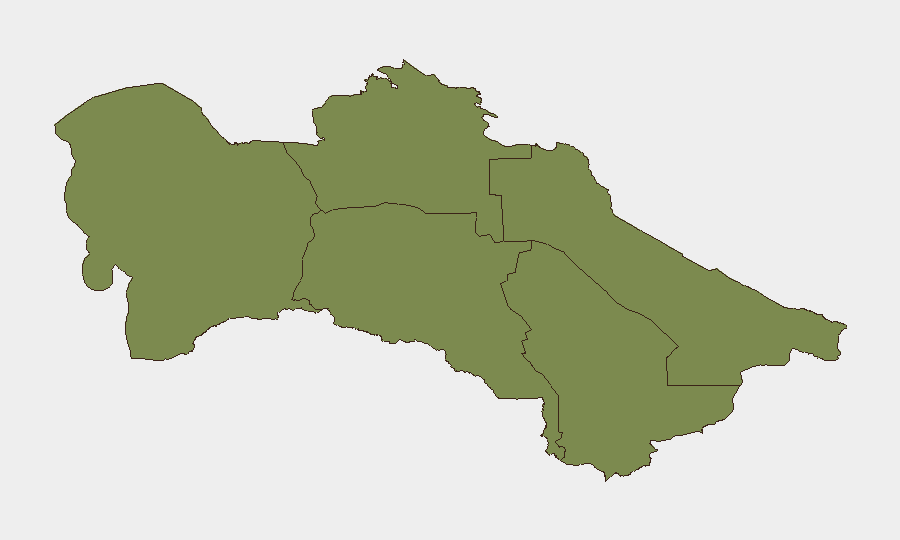
Ashgabat City dominates the sub-national risk picture at 31.8 (composite score), substantially ahead of Dashoguz Region (16.8) and the remaining four regions (all 1.8). Risk in the capital is driven by dense population, regime-security operations, restricted movement enforcement, and concentrated crime activity affecting diplomats and expatriates. Dashoguz's elevated score likely reflects proximity to the Uzbekistan border, where cross-border tensions and human-smuggling networks create localized friction. Peripheral regions remain marginal-risk zones; organizations with assets in Ashgabat should apply proportionally stricter duty-of-care protocols.
How GeoBit Would Assist
Teams with personnel or operations in Turkmenistan should deploy AOI Monitoring & Early Warning on Ashgabat and key border crossings (Dashoguz) to detect shifts in regime-security posture, unofficial checkpoints, or protest activity before they disrupt movement or access. OSINT fusion (multi-language news feeds, X/Telegram monitoring, and sentiment analysis) provides early signals of political instability or pressure on foreign nationals ahead of official announcements. Routing & Network Analysis supports contingency journey planning for staff in case of sudden access restrictions or curfews, a latent but recurrent risk in the capital.
7-Day Outlook
No acute triggers are visible for the next 7 days. President Berdimuhamedov's diplomatic schedule and ongoing cultural engagement suggest a period of routine governance. Structural risks—arbitrary visa enforcement, limited police accountability, and restricted civil space—remain static. Security teams should maintain standard monitoring cadence and readiness for low-probability but high-impact events (sudden border restrictions, isolated crime incidents targeting foreigners, or unexpected diplomatic tensions).
Highest-Risk Areas — Ranked
| # | State / Region | Risk |
|---|---|---|
| 1 | Ashgabat City | 31.8 |
| 2 | Dashoguz Region | 16.8 |
| 3 | Balkan Region | 1.8 |
| 4 | Lebap Region | 1.8 |
| 5 | Ahal Region | 1.8 |
| 6 | Mary Region | 1.8 |
Sources
Previous Daily Briefs
A new Turkmenistan brief is written every day — each with its own risk map and downloadable CSV. Here's the last week; use the calendar to go further back.
📅 Browse every day by calendar →
Highlighted days have a brief. Tap a day for that day's map & analysis, or “csv” for that day's dataset ($5).
Atlas — our AI intelligence desk — emails them this snapshot personally. Nothing else, no list.