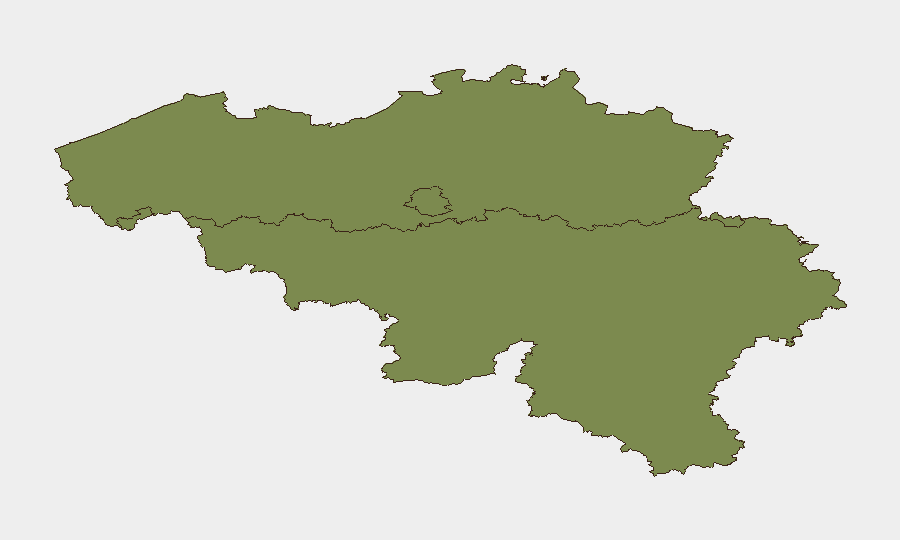
Situation Summary
Belgium faces elevated institutional and political strain as of 10 July 2026, with composite threat score 10 (global rank #96) driven by 54 tracked events over the reporting window. Recent signals indicate tension between executive and judicial branches, cross-border disputes with Spain, and unconfirmed reports of a significant cyberattack affecting hundreds of Belgian organizations. Flanders and Brussels-Capital remain the highest-risk sub-national zones (scores 31.5 and 30.8 respectively), while Wallonia shows minimal elevated risk (1.5). The trajectory suggests ongoing political friction rather than imminent large-scale security breakdown, but operational disruption and reputational exposure remain material.
Key Developments
- 10 July, Belgium–Spain border/diplomatic — Belgium and Spain exchange disapproval statements and Spain initiates investigation into Belgium; nature and substance of dispute not yet clarified in available open-source reporting.
- 10 July, Brussels — Police arrest or detain Prime Minister; specific charges, duration, and procedural status not confirmed; represents significant institutional disturbance.
- 10 July, Google operations, location unspecified — Google reported to be occupying/controlling territory; context (data center, facility access, or other corporate asset) requires clarification.
- 9 July, national political — Presidential disapproval of Belgium documented; reflects executive–state tension.
- 8 July, judicial/Belgium — Disapproval directed at judiciary by Belgian government; suggests rule-of-law friction.
- 8 July, financial sector, Brussels — Bank issues demand against Brussels authorities; likely regulatory, licensing, or license-renewal dispute.
- Unconfirmed, cyberattack, national — Social media reports suggest hundreds of Belgian organizations compromised; timing, vector, attribution, and cross-confirmation pending; treat as watch item pending corroboration.
Highest-Risk Areas
Flanders (31.5) and Brussels-Capital (30.8) account for nearly all tracked threat concentration in Belgium. Flanders' elevated score reflects both the geographic concentration of national institutions and recurring administrative/political friction; Brussels-Capital, as the capital and EU seat, compounds institutional and diplomatic risk density. Wallonia (1.5) remains substantially lower-risk, suggesting that northern Belgium and the capital region are the primary focus for duty-of-care and asset-protection teams. The disparity indicates that personnel and operations in Antwerp, Ghent, and central Brussels face materially higher exposure to political disruption, infrastructure strain, and law-enforcement action than those in southern regions.
How GeoBit Would Assist
Security and risk teams should deploy AOI (Area-of-Interest) Monitoring & Early Warning on Brussels and Flanders to detect emerging unrest, protest activity, or infrastructure incidents in real time. Intel Sweep and multi-language OSINT fusion (X, Telegram, Belgian news, and cross-border Spanish sources) would clarify the Belgium–Spain dispute and cyberattack scope within 24–48 hours. Network & Actor Analysis applied to judicial, executive, and financial sector entities would track relationship strain and identify secondary business continuity or regulatory risks.
7-Day Outlook
Political tension is likely to persist through mid-July, with Belgium–Spain diplomatic friction remaining unresolved pending clarification. The cyberattack reports, if corroborated, may trigger regulatory investigation and operational disruption across financial and digital services sectors over the next 5–7 days. No imminent escalation to large-scale unrest is signaled, but operational contingency and stakeholder communication should remain activated.
Highest-Risk Areas — Ranked
| # | State / Region | Risk |
|---|---|---|
| 1 | Flanders | 31.5 |
| 2 | Brussels-Capital | 30.8 |
| 3 | Wallonia | 1.5 |
Sources
Previous Daily Briefs
A new Belgium brief is written every day — each with its own risk map and downloadable CSV. Here's the last week; use the calendar to go further back.
📅 Browse every day by calendar →
Highlighted days have a brief. Tap a day for that day's map & analysis, or “csv” for that day's dataset ($5).
Atlas — our AI intelligence desk — emails them this snapshot personally. Nothing else, no list.