Situation Summary
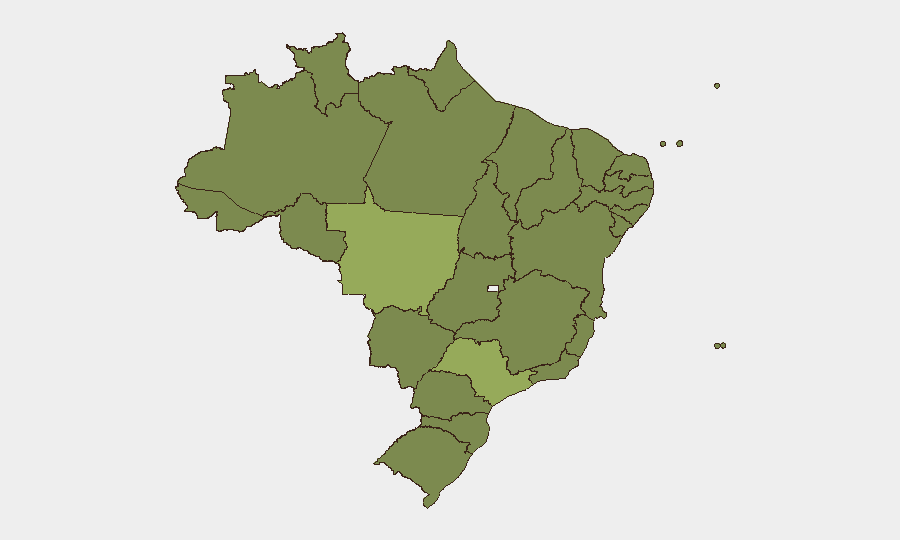
Brazil's composite threat score of 40 places it at position #43 globally, reflecting moderate but regionally concentrated security risks. The past 48 hours have included signals of criminal-police armed engagement, labor unrest, government investigations, and an unusual military-diplomatic incident involving a European actor. Risk remains significantly elevated in frontier and urban states—particularly Mato Grosso, São Paulo, and Amazonas—where criminal networks, land-use conflicts, and institutional friction drive operational exposure.
Key Developments
- 2026-07-05 · Small Arms Combat (Criminal vs. Police): Armed engagement reported; location and casualty count not yet confirmed in available signals. Consistent with ongoing PCC gang activity in São Paulo and interior regions.
- 2026-07-06 · Conventional Military Force (European vs. Brazil): Unspecified military interaction flagged. Requires urgent clarification on nature, location, duration, and diplomatic context; no corroborating open-source reporting available at time of brief.
- 2026-07-06 · Small Arms Combat (Brazil vs. Norway): A second armed incident involving a non-Latin American actor noted; details sparse. Warrants investigation to rule out training exercise, maritime interdiction, or other benign classification before escalation assessment.
- 2026-07-06 · Worker vs. Companies (Disapprove): Labor protest or strike signal; sector and state location unclear. May affect supply chains, logistics, or service continuity in affected regions.
- 2026-07-05 · Public Statement (Company vs. Governor): Corporate entity issued public statement against a state governor; likely related to regulatory, environmental, or fiscal dispute. Monitor for escalation in São Paulo or resource-extraction states.
- 2026-07-04 to 2026-07-05 · Government/Ministry Investigations: Two separate investigative actions initiated at federal/ministerial level. Scope and targets unconfirmed; suggests institutional scrutiny of either criminal, corporate, or corruption-related matters.
- 2026-07-05 · Public Statement (São Paulo State vs. SABESP): Water utility dispute flagged. São Paulo's SABESP manages the country's largest urban water supply; public-sector friction may signal service disruption risk for corporate operations and personnel in the metro area.
Note: Precise locations, timeframes, and operational details for several signals remain unconfirmed. Duty-of-care teams should seek clarification through local security partners and Brazilian government liaison contacts before altering travel or asset protocols.
Highest-Risk Areas
Mato Grosso (57.2) remains the country's single highest-risk state, driven by agrarian land disputes, cattle rustling, environmental enforcement clashes, and organized-crime presence in remote zones. São Paulo (43.9), despite relative institutional strength, carries the highest absolute density of criminal activity, labor unrest, and corporate-government friction—particularly affecting the capital and the SABESP water-supply ecosystem. Amazonas (33.6) and Ceará (32.1) round out the top tier, combining weak state presence, trafficking corridors, and gang-related violence. Teams with personnel or supply chains in these four states face materially higher exposure to armed crime, kidnapping, protests, and service disruption.
How GeoBit Would Assist
Intel Sweep & OSINT Fusion would clarify the two military incidents (European and Norwegian) through multi-language news feeds, government statement monitoring, and social-media corroboration. AOI Monitoring on Mato Grosso, São Paulo, and Amazonas would provide persistent early warning of criminal activity, protests, and official actions. Conflict & Military mapping and Network & Actor Analysis would track PCC gang operations and labor-movement leadership to forecast operational friction. Alternative Route & Journey Planning would identify secure corridors for personnel movement during labor strikes or regional unrest.
7-Day Outlook
The two military incidents require immediate diplomatic and intelligence assessment to determine whether they signal a wider pattern or isolated events. Labor unrest and corporate-state friction in São Paulo and resource states are likely to persist, with potential for service disruptions and supply-chain delays. Criminal-police engagement in urban and frontier zones will continue at current levels absent major enforcement operations or gang truces.
Highest-Risk Areas — Ranked
| # | State / Region | Risk |
|---|---|---|
| 1 | Mato Grosso | 57.2 |
| 2 | São Paulo | 43.9 |
| 3 | Amazonas | 33.6 |
| 4 | Ceará | 32.1 |
| 5 | Bahia | 31 |
| 6 | Minas Gerais | 29.4 |
| 7 | Paraná | 28.3 |
| 8 | Santa Catarina | 28.3 |
| 9 | Rio de Janeiro | 27.5 |
| 10 | Roraima | 27.2 |
| 11 | Pará | 27.2 |
| 12 | Rio Grande do Sul | 27.2 |
Sources
Previous Daily Briefs
A new Brazil brief is written every day — each with its own risk map and downloadable CSV. Here's the last week; use the calendar to go further back.
📅 Browse every day by calendar →
Highlighted days have a brief. Tap a day for that day's map & analysis, or “csv” for that day's dataset ($5).
Atlas — our AI intelligence desk — emails them this snapshot personally. Nothing else, no list.