Situation Summary
Chile remains a stable, low-threat environment globally (rank #132 composite) but faces acute localized security pressures in Los Ríos and Santiago Metropolitan regions, driven by student unrest, criminal organization activity, and recent cabinet-level security changes. Events in the last 48 hours—including violent student clashes in Santiago and a regional crime-cooperation announcement—signal both domestic instability and coordinated state response. The threat trajectory is volatile but contained; escalation risk is elevated in Santiago and Los Ríos but remains manageable across most of the country.
Key Developments
- Santiago, Instituto Nacional — 2026-07-29: Two students detained following clashes with Carabineros outside the school; at least 10 Molotov-type incendiary devices were thrown at police, prompting sustained police deployment and indicating organized youth-led protest activity.
- Santiago — 2026-07-28: President José Antonio Kast removed the Security Minister and Government Spokesperson in a cabinet reshuffle, signaling a shift in internal security governance and potential policy changes in law enforcement.
- Santiago & Multi-Regional — 2026-07-28: Chile announced a joint regional cooperation agreement against transnational organized crime with Argentina, Bolivia, Ecuador, and Peru, reflecting heightened official concern over cross-border criminal networks and increased inter-agency coordination.
- Santiago — 2026-07-29: Ministry and military investigations initiated following unspecified incidents; authorities issued public statements suggesting active fact-finding on security concerns.
- Santiago — 2026-07-29: Public disagreement between student and worker constituencies recorded, indicating broader social friction beyond institutional unrest.
Highest-Risk Areas
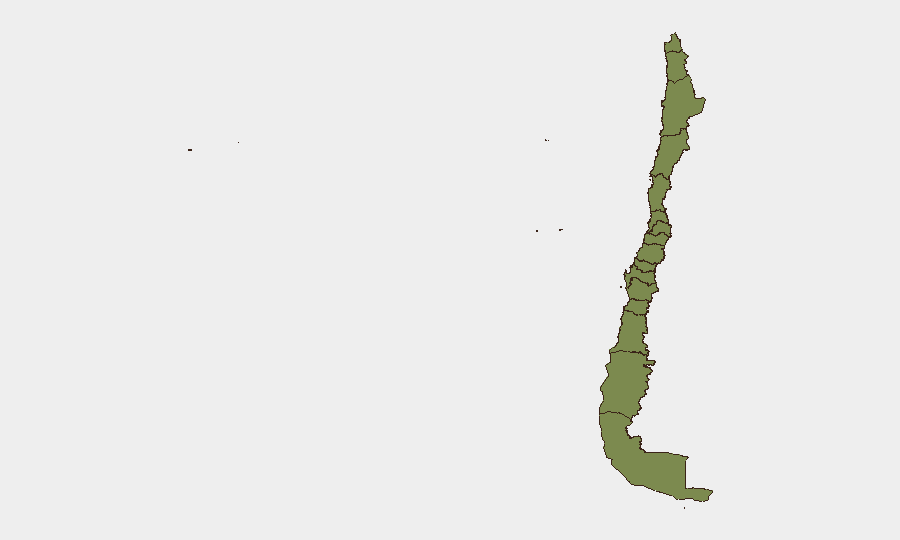
Los Ríos (score 31.4) and Santiago Metropolitan Region (score 24.2) drive Chile's internal risk profile, with Los Ríos showing exceptional elevation—likely reflecting organized crime activity, gang violence, or trafficking along southern corridors—while Santiago's risk stems from urban social unrest, protest activity, and political security volatility. All other regions score below 2.5, confirming risk concentration in the capital and far south. Corporate and duty-of-care teams should prioritize travel, personnel, and asset security protocols for Santiago and Los Ríos; routine precautions suffice elsewhere.
How GeoBit Would Assist
Security teams would employ Intel Sweep and X/Twitter OSINT to monitor student activism, criminal networks, and political statements in real time; AOI Monitoring & Early Warning on Instituto Nacional, key Santiago neighborhoods, and Los Ríos transport corridors to detect escalation before incidents; and Network & Actor Analysis to map student organizers, protest cells, and criminal organizations active in high-risk zones. Sentiment & temporal analysis on social media would provide leading indicators of planned demonstrations or unrest, enabling proactive duty-of-care adjustments.
7-Day Outlook
Student unrest in Santiago will likely persist given recent detentions and ministerial shifts; further clashes around educational institutions and transport hubs should be anticipated. Los Ríos remains volatile on organized-crime fronts, with the new regional cooperation framework potentially triggering enforcement spikes that could disrupt local operations and supply chains. No indication of systemic state collapse or capital-wide violence; risk remains tactical and localized.
Highest-Risk Areas — Ranked
| # | State / Region | Risk |
|---|---|---|
| 1 | Los Ríos | 31.4 |
| 2 | Santiago Metropolitan Region | 24.2 |
| 3 | Biobio Region | 2.4 |
| 4 | Valparaiso Region | 1.4 |
| 5 | Antofagasta Region | 1.4 |
| 6 | Coquimbo Region | 1.4 |
| 7 | Atacama Region | 1.4 |
| 8 | Aysen del General Carlos Ibanez del Campo Region | 1.4 |
| 9 | Los Lagos Region | 1.4 |
| 10 | Magallanes and Chilean Antarctica Region | 1.4 |
| 11 | O'Higgins Region | 1.4 |
| 12 | Maule Region | 1.4 |
Sources
Previous Daily Briefs
A new Chile brief is written every day — each with its own risk map and downloadable CSV. Here's the last week; use the calendar to go further back.
📅 Browse every day by calendar →
Highlighted days have a brief. Tap a day for that day's map & analysis, or “csv” for that day's dataset ($5).
Atlas — our AI intelligence desk — emails them this snapshot personally. Nothing else, no list.