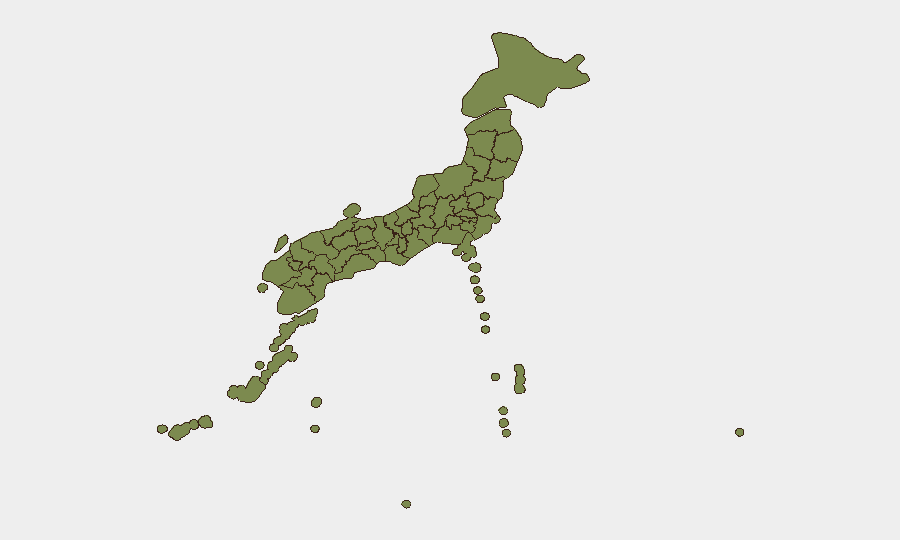
Situation Summary
Japan remains a low-threat environment globally (#149 composite score) with 91 tracked security events. The country faces a highly localized risk profile, with Nagano Prefecture accounting for a disproportionate share of reported incidents (risk score 33.2—more than three times Tokyo's 10.0). Recent activity includes a magnitude 5.6–5.8 earthquake in the Tokyo area on 26 June and routine law-enforcement and military incidents; no acute civil unrest, infrastructure collapse, or travel-disruption events are evident in the last 48 hours.
Key Developments
- Tokyo, 26 June, ~12:46 p.m. JST – Magnitude 5.6–5.8 earthquake triggered emergency alerts and building shaking across the metropolitan area. No widespread damage or casualty reports surfaced in available sources; standard seismic response protocols activated.
- Japan (national), 28 June – Japanese government released draft AI-governance plan targeting cybersecurity threats and AI-generated misinformation. This signals medium-term policy focus on information operations and digital resilience but does not represent an acute incident.
- Seoul, 28 June – Japan–South Korea defense ministers reaffirmed denuclearization goals, agreed to resume joint search-and-rescue drills, and committed to deeper maritime and defense-equipment cooperation. This reflects stable bilateral security alignment and does not affect domestic Japan risk.
- Japan (unspecified location), 26–28 June – Law-enforcement arrests and investigations reported (criminal detainment, arrest of Indonesian national). No detailed location, casualty, or motive data surfaced in available reporting; incidents appear routine and localized.
- Nagano Prefecture, 26 June (date approximate) – Conventional military force event and student-related threat/student-military interaction reported. Full context not available in open sources; requires further investigation for duty-of-care assessment if personnel present.
Note: Web research conducted 27–29 June 2026 did not surface corroborated reports of major protests, riots, political instability, or acute travel disruptions within the final 24–48 hour window. The June 26 earthquake and Seoul defense talks are the most substantive recent events with security implications; other signals reflect routine law-enforcement activity.
Highest-Risk Areas
Nagano Prefecture dominates Japan's risk profile, with a composite score of 33.2—substantially above all other prefectures. The driver(s) of this elevated score are not fully transparent from available event signals but warrant investigation, as the disparity suggests either concentrated reporting bias or a genuine localized risk cluster. Tokyo ranks second (10.0), reflecting its size and density; Kyoto, Fukuoka, and Osaka follow with single-digit scores. The remainder of prefectures cluster at 3.5–4.3, indicating broadly even baseline risk distribution. Organizations with personnel or assets in Nagano should prioritize localized intelligence gathering to clarify risk drivers; Tokyo, despite higher absolute numbers, remains a lower-risk environment on a per-capita and per-event basis.
How GeoBit Would Assist
Security teams should deploy Area-of-Interest Monitoring & Early Warning on Nagano, Tokyo, and Fukuoka prefectures to detect emerging unrest, crime clusters, or infrastructure disruptions in real time. Intel Sweep and multi-language OSINT fusion (X/Twitter, Telegram, local media) would corroborate or refute the Nagano risk spike and identify root causes. Earthquake and environmental hazard tracking combined with alternative routing & network analysis would enable duty-of-care teams to assess post-seismic travel and supply-chain continuity for Tokyo-region operations.
7-Day Outlook
No imminent escalation is forecast. The 26 June earthquake poses residual aftershock risk typical of Japan's seismic environment; standard precautions remain appropriate. The government's AI-governance draft may lead to new cyber-regulation announcements but will not drive acute operational disruption in the near term. Continued monitoring of Nagano Prefecture is advised to clarify whether recent event clustering reflects genuine risk elevation or reporting artifact.
Highest-Risk Areas — Ranked
| # | State / Region | Risk |
|---|---|---|
| 1 | Nagano Prefecture | 33.2 |
| 2 | Tokyo | 10 |
| 3 | Kyoto Prefecture | 6.8 |
| 4 | Fukuoka Prefecture | 6.5 |
| 5 | Osaka Prefecture | 4.9 |
| 6 | Okinawa Prefecture | 4.6 |
| 7 | Saga Prefecture | 4.3 |
| 8 | Hyogo Prefecture | 4 |
| 9 | Niigata Prefecture | 4 |
| 10 | Iwate Prefecture | 4 |
| 11 | Kanagawa Prefecture | 3.8 |
| 12 | Hokkaido Prefecture | 3.5 |
Sources
Previous Daily Briefs
A new Japan brief is written every day — each with its own risk map and downloadable CSV. Here's the last week; use the calendar to go further back.
📅 Browse every day by calendar →
Highlighted days have a brief. Tap a day for that day's map & analysis, or “csv” for that day's dataset ($5).