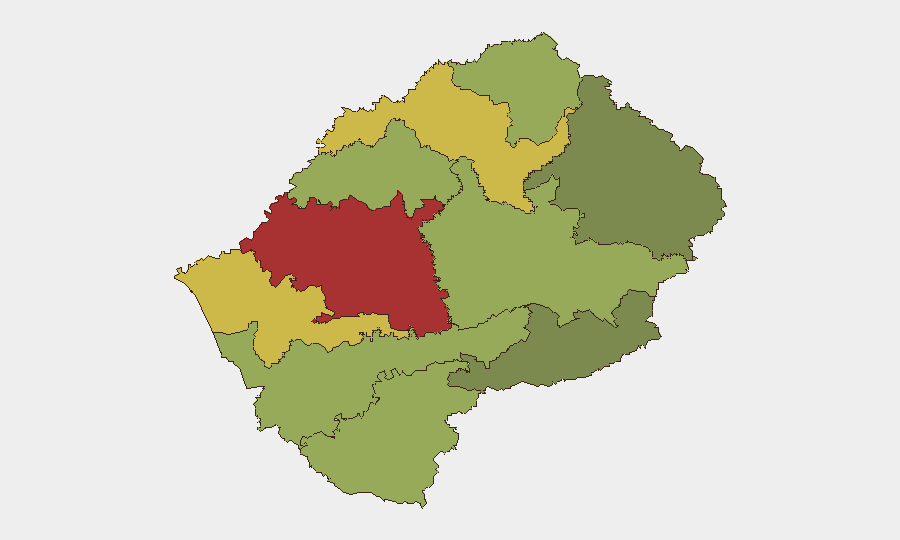
Situation Summary
Lesotho remains a low-threat environment globally (rank #155; composite score 8), but press freedom and rule-of-law concerns have surfaced sharply this week following a high-profile journalist abduction and assault in the capital. The incident has drawn international scrutiny from Amnesty International, the Committee to Protect Journalists, and Front Line Defenders, signaling potential deterioration in civic space and investigative journalism safety. Maseru District continues to dominate domestic risk metrics (score 78), reflecting ongoing exposure to urban crime, political tension, and now documented intimidation of media figures.
Key Developments
- Maseru, 5 September 2026 — Journalist and human rights defender Kananelo Boloetse was abducted from his home in Katlehong, reportedly by three unidentified men, interrogated about his work, assaulted, and abandoned injured near Thaba-Bosiu. The incident was corroborated by Amnesty International, Front Line Defenders, and the Committee to Protect Journalists.
- Maseru Central Police Station, 6 September 2026 — Boloetse filed a formal complaint with police following the attack, initiating an official investigation into the abduction and assault.
- Maseru/Nationwide, 8–9 September 2026 — Domestic media and civil-society organizations reported widespread alarm over the journalist's abduction, with stakeholders raising concerns about press intimidation, personal security risks for media practitioners, and potential state or non-state involvement in the attack.
- International, 9–12 September 2026 — Amnesty International, the Committee to Protect Journalists, and Front Line Defenders publicly demanded accountability and investigation, elevating the incident to regional and international attention and flagging Lesotho as an emerging press-freedom risk zone.
- Gauteng/Lesotho Border, 11–12 September 2026 — South African Police Service (SAPS) and Lesotho Mounted Police Service (LMPS) jointly destroyed 1,787 firearms seized during cross-border anti-crime operations, indicating active law-enforcement cooperation and ongoing weapons trafficking enforcement activity between the two nations.
- Lesotho Highlands Water Project Phase 2, 11–13 September 2026 — South Africa's water minister conducted an official oversight visit to the strategic water infrastructure site; no operational disruption was reported, but the visit underscores continued bilateral focus on critical regional infrastructure.
Highest-Risk Areas
Maseru District (score 78) and Mafeteng District (score 65) carry the highest composite risk and are the primary drivers of national threat exposure. Maseru, as the capital and economic hub, concentrates urban crime, political activity, and now documented press intimidation; this week's journalist abduction exemplifies the multi-dimensional risks present. Leribe (62) and Berea (58) districts follow, suggesting that risk is not confined to the capital but distributed across the northern and western population centers. The steeper drop-off beyond the top four districts (Mohale's Hoek, 52; Butha-Buthe, 48) indicates that southern and remote eastern areas carry significantly lower operational risk.
How GeoBit Would Assist
Security teams with personnel or assets in Lesotho should employ AOI Monitoring & Early Warning on Maseru District and surrounding high-risk zones to detect emerging civil unrest, arrests, or threats to journalists and civil-society figures. Network & Actor Analysis and OSINT fusion capabilities can correlate the Boloetse abduction with broader patterns of intimidation, identify responsible actors, and assess whether the incident reflects isolated criminal activity or coordinated pressure on media independence. Multi-language search and sentiment analysis of Lesotho media and social platforms will surface early indicators of renewed tension or threats to expatriate or corporate presence.
7-Day Outlook
The journalist abduction is unlikely to trigger immediate large-scale violence but may embolden further intimidation of civil-society and media actors, creating a chilling effect on investigative reporting. Cross-border law-enforcement activity (firearms destruction, police coordination) will likely continue. Near-term risk in Maseru remains elevated; personnel in other districts face lower acute threat, though standard situational awareness is warranted.
Highest-Risk Areas — Ranked
| # | State / Region | Risk |
|---|---|---|
| 1 | Maseru District | 78 |
| 2 | Mafeteng District | 65 |
| 3 | Leribe District | 62 |
| 4 | Berea District | 58 |
| 5 | Mohale's Hoek District | 52 |
| 6 | Butha-Buthe District | 48 |
| 7 | Thaba-Tseka District | 45 |
| 8 | Quthing District | 42 |
| 9 | Mokhotlong District | 38 |
| 10 | Qacha's Nek District | 28 |
Sources
Previous Weekly Briefs
A new Lesotho brief is written every Monday, covering the week — each with its own risk map and downloadable CSV. Use the calendar to go further back.
- September 8, 2026
- September 2, 2026
- August 31, 2026
- August 29, 2026
- August 26, 2026
- August 24, 2026
- August 22, 2026
📅 Browse past briefs by calendar →
Highlighted days have a brief. Tap a day for that day's map & analysis, or “csv” for that day's dataset ($5).
Atlas — our AI intelligence desk — emails them this snapshot personally. Nothing else, no list.