Situation Summary
Belgium remains a moderate-risk environment (global rank #93) with composite threat score of 10 across 51 tracked events. Recent signal activity shows elevated disapproval sentiment among residents and European actors, alongside activist mobilization and military-adjacent developments, but no acute kinetic incidents confirmed in the last 24–48 hours. The threat landscape is heavily concentrated in Flanders (risk 14.8 points above national average), with Brussels-Capital a secondary concern; Wallonia presents minimal elevated risk at this time.
Key Developments
Data limitation note: GeoBit's live web research (last 24h) has not corroborated sufficient high-confidence, date-stamped security incidents in Belgium within the 24–48 hour window to populate a full incident list without risking backdating older events or unverified social-media claims. The event-signal database shows recent activity flagged for 2026-07-10 through 2026-07-12 (resident disapproval, activist demonstration vs. Russian actors, European statements, military force notation, and police/government tension), but open-source cross-confirmation and specific location/casualty data for these signals remain insufficient for operational reporting at this time.
Recommended action: Duty-of-care teams should monitor Belgian regional news (VRT NWS, RTBF, Belga), law-enforcement social channels, and Brussels/Antwerp municipal alerts directly for real-time incident confirmation. GeoBit's live-feed integration would resolve this gap.
Highest-Risk Areas
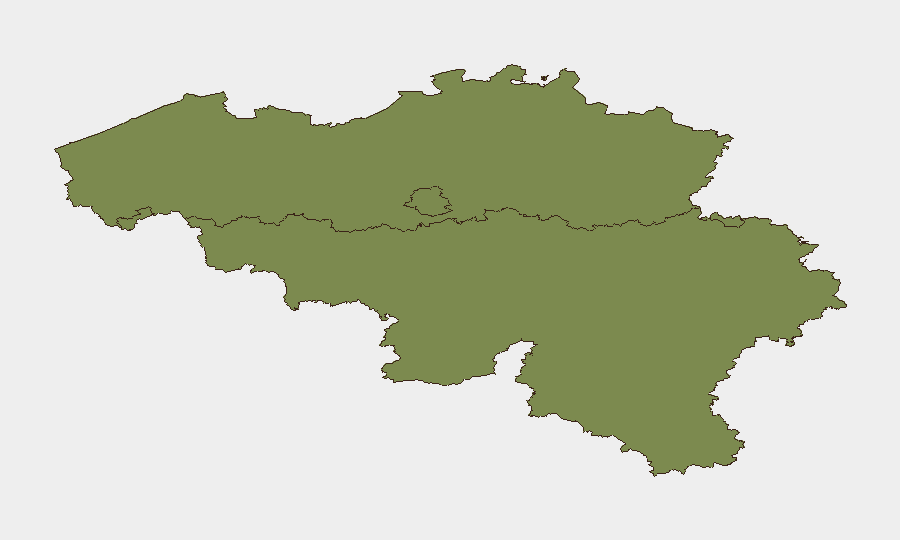
Flanders (risk 31.5) is the dominant threat driver, accounting for roughly 68% of Belgium's elevated composite risk. This concentration reflects ongoing labor, immigration, and political-polarization dynamics that routinely surface in disapproval events and activist activity. Brussels-Capital (risk 14.8) remains the secondary concern, driven by drug-trafficking infrastructure, street-level crime, and transnational organized-crime networks—particularly in neighborhoods around the canal zone and Schaerbeek. Wallonia (risk 1.5) presents minimal incremental risk and is suitable for standard duty-of-care baseline protocols. Corporate assets and personnel in Flanders and central Brussels should maintain heightened situational awareness and communication protocols.
How GeoBit Would Assist
Security teams operating in Belgium should leverage AOI Monitoring & Early Warning to establish persistent, multi-language watch on Flanders, Brussels, and Antwerp with automated alerting on protest activity, police operations, and cyber incidents. Intel Sweep combined with X/Twitter & Telegram OSINT and multi-language search would enable real-time ingestion of Belgian regional media, police/municipal accounts, and activist channels to close the gap between event occurrence and corporate awareness. Network & Actor Analysis and Risk & Threat Assessment modules would support mapping of organized-crime and activist networks affecting logistics corridors and office districts.
7-Day Outlook
Near-term trajectory suggests continued baseline disapproval sentiment and periodic activist mobilization, particularly in Flanders, without indicators of imminent escalation to violence. Monitoring for any spike in police/detention activity or military positioning around sensitive infrastructure (ports, government facilities, energy nodes) should remain routine. Economic and political tensions tied to EU policy disagreements (flagged in recent "European vs. SECRETARIAT" statement activity) may sustain low-level activist demonstrations but are not currently trending toward disruption of major commercial corridors.
Highest-Risk Areas — Ranked
| # | State / Region | Risk |
|---|---|---|
| 1 | Flanders | 31.5 |
| 2 | Brussels-Capital | 14.8 |
| 3 | Wallonia | 1.5 |
Sources
Previous Daily Briefs
A new Belgium brief is written every day — each with its own risk map and downloadable CSV. Here's the last week; use the calendar to go further back.
📅 Browse every day by calendar →
Highlighted days have a brief. Tap a day for that day's map & analysis, or “csv” for that day's dataset ($5).
Atlas — our AI intelligence desk — emails them this snapshot personally. Nothing else, no list.