Situation Summary
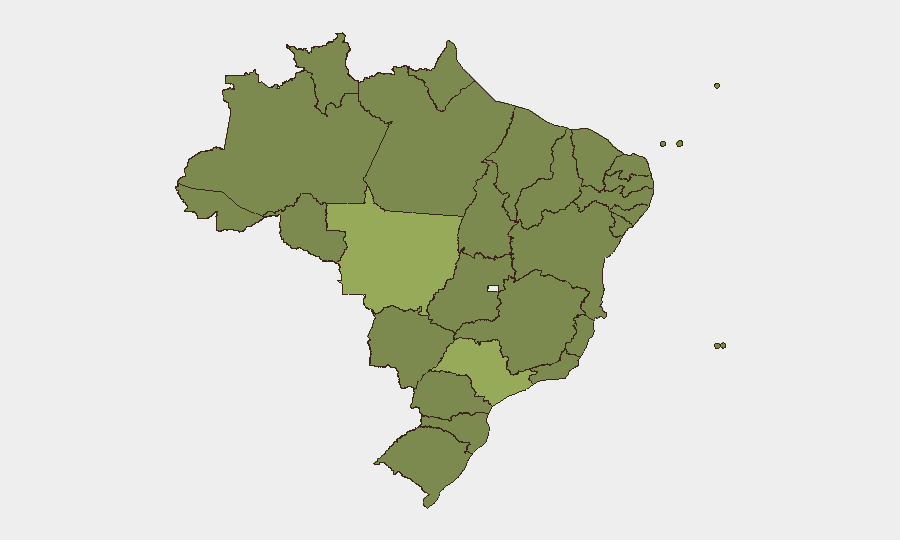
Brazil holds a moderate composite threat score (41/100, rank #44 globally) with 399 tracked events, indicating persistent but not acute instability. Emerging signals across 2026-07-05 to 07-07 reflect fragmented civil and labor friction—senatorial disapproval, university-neighborhood disputes, worker grievances, and a student-linked small-arms incident—rather than coordinated national crisis. Mato Grosso (57.8), São Paulo (43.6), and Minas Gerais (34.4) dominate sub-national risk, driven by resource-competition, urban crime, and organized activity. Trajectory remains volatile rather than deteriorating.
Key Developments
- 2026-07-05: Senatorial disapproval statement issued; political friction evident but no specific legislative collapse or security emergency reported.
- 2026-07-05: University–neighborhood public dispute in an unspecified location; civil friction documented; no violence confirmed as of reporting.
- 2026-07-05: Government investigation initiated (subject and location not yet determined); suggests emerging accountability or operational concern requiring monitoring.
- 2026-07-06: Worker–company labor disapproval escalated; collective or individual grievance action flagged but no supply-chain disruption or facility seizure confirmed.
- 2026-07-06: School-linked advocacy rejection noted; education-sector tension; no facility closure or mass action reported.
- 2026-07-07: Small-arms combat incident involving student(s); specific location and casualty count not confirmed; warrants urgent clarification on whether isolated or part of broader pattern.
- 2026-07-07: Police public statement issued; likely response to above incident or related security concern.
- 2026-07-07: Company-linked investigation underway; regulatory or security concern not yet detailed.
*Note: Open-source verification of 24–48-hour events remains incomplete. Signal-level confidence is moderate pending field confirmation.*
Highest-Risk Areas
Mato Grosso (57.8) leads national sub-national risk, reflecting agricultural-zone competition, land disputes, and organized-crime supply-chain activity. São Paulo (43.6) remains Brazil's principal urban-crime and trafficking nexus, with persistent favela instability and cartel logistics. Minas Gerais (34.4) combines mining-sector labor tension, rural land conflict, and organized-crime presence. Northern states (Amazonas 32.4, Acre 28.1) carry elevated transnational smuggling, illegal mining, and indigenous-tension signals. Rio de Janeiro (28.8) reflects ongoing favela violence and narcotics competition. Companies and personnel in or transiting Mato Grosso and São Paulo face highest kidnap, robbery, and supply-chain disruption risk.
How GeoBit Would Assist
Intel Sweep and OSINT Fusion would correlate fragmented signals (senatorial, labor, education, police statements) to determine whether incidents reflect isolated friction or coordinated action. AOI Monitoring with persistent alerting on Mato Grosso, São Paulo, and Minas Gerais would flag labor unrest, facility threats, or organized-crime logistics before operational impact. Network & Actor Analysis would map relationships between student cohorts, worker collectives, and advocacy groups to assess escalation risk and supply-chain vulnerability. Routing & Network Analysis would identify safe transit corridors during periods of urban unrest or roadblock activity.
7-Day Outlook
Labor and civic friction is likely to persist or intensify given cost-of-living and education-access pressures. Mato Grosso and São Paulo remain high-probability zones for kidnap, theft, or facility interference. Student-linked or organized small-arms activity warrants close monitoring; if linked to gang recruitment or cartel activity, escalation risk rises sharply. No imminent nationwide crisis is evident, but localized disruption to operations in high-risk states should be anticipated.
Highest-Risk Areas — Ranked
| # | State / Region | Risk |
|---|---|---|
| 1 | Mato Grosso | 57.8 |
| 2 | São Paulo | 43.6 |
| 3 | Minas Gerais | 34.4 |
| 4 | Amazonas | 32.4 |
| 5 | Maranhão | 31.7 |
| 6 | Ceará | 31.7 |
| 7 | Goiás | 31.7 |
| 8 | Paraná | 29.1 |
| 9 | Rio de Janeiro | 28.8 |
| 10 | Acre | 28.1 |
| 11 | Piauí | 28.1 |
| 12 | Santa Catarina | 27.8 |
Sources
Previous Daily Briefs
A new Brazil brief is written every day — each with its own risk map and downloadable CSV. Here's the last week; use the calendar to go further back.
📅 Browse every day by calendar →
Highlighted days have a brief. Tap a day for that day's map & analysis, or “csv” for that day's dataset ($5).
Atlas — our AI intelligence desk — emails them this snapshot personally. Nothing else, no list.