Situation Summary
Taiwan remains a moderate-threat environment (global rank #101, composite score 9) with 39 tracked security events, but recent signal density suggests elevated tension across cross-strait relations, domestic law enforcement, and international diplomatic friction. A cluster of seven event signals emerged in the 24–48 hours ending 2026-07-16, spanning arrest, property seizure, state disapproval, coercion, and administrative sanctions—indicating concurrent friction across investor detention, intelligence rejection, cross-strait property incidents, and external pressure from regional actors. The concentration in Taipei and Nantou County accounts for the majority of measurable risk, while maritime gray-zone activity off outlying islands remains a persistent low-level stressor.
Key Developments
- 2026-07-14 · Investor Arrest/Detention (location unspecified). Taiwan law enforcement detained an investor; police issued a public statement the same day, suggesting a domestic financial or intelligence-related investigation.
- 2026-07-14 · Intelligence Rejection (Industry vs. Intelligence). An industry entity publicly rejected or rebuffed intelligence agency claims or requests, signaling operational friction within the domestic security apparatus.
- 2026-07-15 · Property Seizure/Damage (China vs. Taiwan). Chinese actor seized or damaged Taiwan-controlled property, likely in maritime or territorial contexts given concurrent coast guard activity.
- 2026-07-15 · Cross-Strait Disapproval Statements (Taiwan government). Taiwan issued multiple disapproving statements directed at China, indicating reactive diplomatic posturing to unspecified provocations.
- 2026-07-15 · Domestic Threat Statement (Taiwan vs. Citizen). Taiwan authorities issued a threatening statement toward a citizen or citizen group, suggesting internal security concern or enforcement action.
- 2026-07-15 · US Threat Statement. The US issued a threatening statement; context and target unspecified in available signals, but consistent with recent US-Taiwan-China trilateral messaging cycles.
- 2026-07-16 · Coercion Against Taiwanese (Japan vs. Taiwanese). Japanese authorities applied coercive pressure on Taiwanese nationals or interests; concurrent Tokyo administrative sanctions suggest linked enforcement.
- 2026-07-14 · Cross-Strait Investigation (Chongqing vs. Taiwan). Chongqing authorities initiated or publicized an investigation with Taiwan nexus, consistent with PRC pressure on Taiwan-linked financial or technology actors.
Note: Live web research confirmed no high-confidence developments in the preceding 24–48 hours beyond signal-level events; older context (Taiwan defense drills, coast guard gray-zone patrols since late June, March 2026 subsea cable incident) is available but pre-dates the reporting window.
Highest-Risk Areas
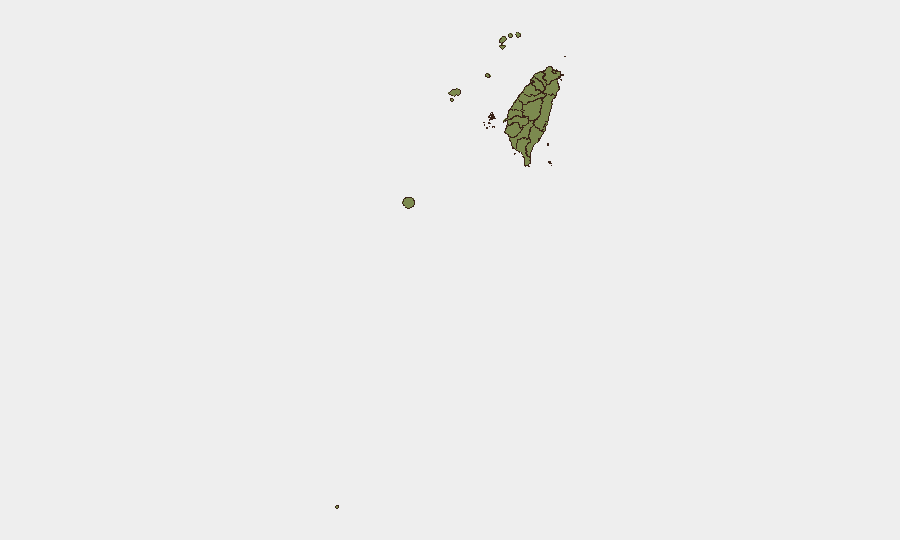
Taipei (31.8) and Nantou County (27.7) drive the composite risk ranking by a wide margin, likely reflecting capital-city density of financial, diplomatic, and intelligence activity, plus Nantou's mountainous terrain and cross-strait visibility. All other tracked regions cluster at 1.8, indicating uniform baseline risk across southern, central, and offshore areas. The disparity suggests threats are concentrated in urban centers and sensitive inland zones rather than broadly distributed; security teams with personnel in Taipei should prioritize liaison with local authorities and maintain awareness of investor/financial sector investigations and law enforcement activity. Nantou's elevation may reflect telecommunications, critical infrastructure, or cross-strait espionage vectors.
How GeoBit Would Assist
Intel Sweep & OSINT Fusion (X/Twitter, Telegram, multi-language feeds) would track actor statements, arrest announcements, and sentiment shifts in real time across PRC, Taiwan, US, and Japan sources. Network & Actor Analysis would map investor/industry relationships to the detained figure and intelligence rejection incident, clarifying operational networks. AOI Monitoring & Early Warning with persistent watch on Taipei and maritime zones would alert security teams to law enforcement activity, diplomatic statements, and gray-zone incidents before they escalate.
7-Day Outlook
Signal density and thematic clustering (law enforcement, cross-strait property, international coercion) suggest a period of active diplomatic friction and selective pressure campaigns rather than kinetic escalation. Expect continued public statements, targeted enforcement, and maritime gray-zone operations. No indicators of imminent armed conflict; medium-term vigilance on investor/financial sector exposure and staff safety in Taipei warranted.
Highest-Risk Areas — Ranked
| # | State / Region | Risk |
|---|---|---|
| 1 | Taipei | 31.8 |
| 2 | Nantou County | 27.7 |
| 3 | Kaohsiung | 1.8 |
| 4 | Pingtung County | 1.8 |
| 5 | Taitung County | 1.8 |
| 6 | Lienchiang County | 1.8 |
| 7 | Kinmen | 1.8 |
| 8 | Penghu | 1.8 |
| 9 | Changhua County | 1.8 |
| 10 | Miaoli County | 1.8 |
| 11 | Taichung | 1.8 |
| 12 | Yunlin County | 1.8 |
Sources
Previous Daily Briefs
A new Taiwan brief is written every day — each with its own risk map and downloadable CSV. Here's the last week; use the calendar to go further back.
📅 Browse every day by calendar →
Highlighted days have a brief. Tap a day for that day's map & analysis, or “csv” for that day's dataset ($5).
Atlas — our AI intelligence desk — emails them this snapshot personally. Nothing else, no list.