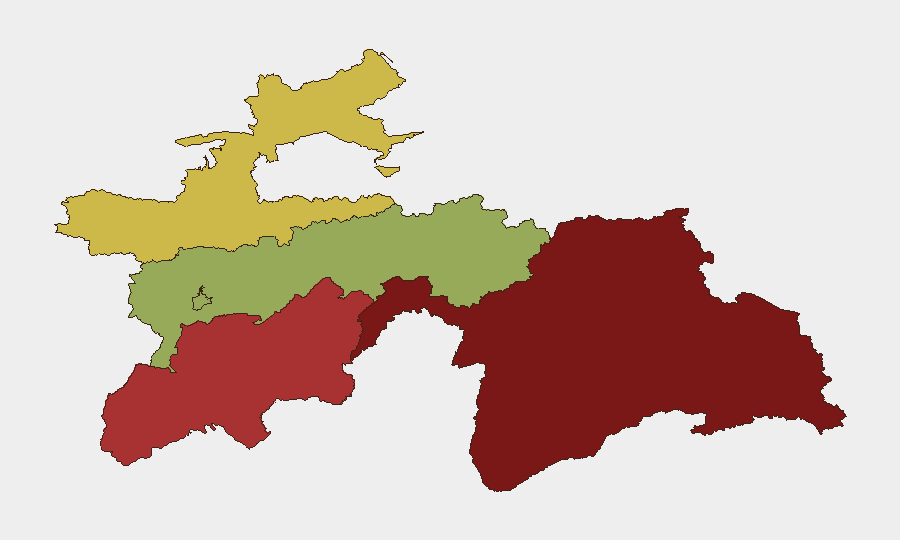
Situation Summary
Tajikistan remains stable at the national level with no confirmed security incidents, civil unrest, or acute travel disruptions reported in the last 24–48 hours. The country's composite threat score of 8 places it at global rank #115, reflecting low acute risk but persistent structural vulnerabilities in border security and remote mountainous regions. Sub-national risk is heavily concentrated in the eastern and southern periphery, particularly Gorno-Badakhshan and Khatlon regions, where terrain, limited state presence, and transnational smuggling networks create chronic exposure.
Key Developments
- No independently confirmed security incidents, civil unrest, infrastructure disruptions, or acute travel-risk events reported in Tajikistan during the last 24–48 hours (as of 17 July 2026, latest systematic monitoring).
- 2026-07-15: Small Arms Combat incident involving Kazakhstan and a business entity – location and detailed circumstances not yet independently corroborated in open sources; requires follow-up via confidential inter-agency or corporate intelligence channels to establish relevance to Tajik territory and diaspora/supply-chain exposure.
- Background context (not current): Tajikistan–Kyrgyzstan border tensions and drug trafficking remain chronic – since at least early 2026, transnational narcotics flows and informal border dynamics persist in Sughd and Khatlon regions, but no acute escalation or new incident reported in the past 48 hours.
- Routine advisories and fuel-reserve commentary (10–13 July) – fall outside the 24–48 hour event window and represent structural monitoring rather than discrete incidents.
Highest-Risk Areas
Gorno-Badakhshan Autonomous Region (east; risk 92) and Khatlon Region (south; risk 78) dominate sub-national threat exposure. Gorno-Badakhshan's extreme isolation, high altitude, minimal governance, and proximity to Afghanistan create conditions for smuggling, militant transit, and limited emergency response. Khatlon's southern border with Afghanistan and drug-trafficking routes elevate transnational crime risk. Sughd Region (north; risk 65) faces secondary exposure via Kyrgyzstan border friction and informal trade networks. By contrast, Dushanbe (capital; risk 42) remains the most secure urban zone, with state security apparatus and international presence, though business disruption and crime remain present at baseline levels.
How GeoBit Would Assist
AOI (Area-of-Interest) Monitoring & Early Warning on Gorno-Badakhshan, Khatlon, and key border crossings would provide persistent watch for emerging violence, smuggling activity, or infrastructure disruption before it escalates to crisis scale. OSINT Fusion & Corroboration (X/Telegram, multi-language feeds, entity extraction) would clarify the 15 July Kazakhstan–business incident and detect related supply-chain or personnel exposure. Routing & Network Analysis would enable security teams to model alternative travel and logistics corridors avoiding high-risk zones and informal checkpoints, essential for field operations or supply movement in the south and east.
7-Day Outlook
No acute escalation is forecast for the next 7 days; the security environment is expected to remain stable at national level. Chronic risks—border tensions, drug trafficking, and remote-area governance gaps—will persist without triggering major incidents. Security teams should maintain routine vigilance in peripheral regions and monitor the Kazakhstan incident for clarification and downstream implications.
Highest-Risk Areas — Ranked
| # | State / Region | Risk |
|---|---|---|
| 1 | Gorno-Badakhshan Autonomous Region | 92 |
| 2 | Khatlon Region | 78 |
| 3 | Sughd Region | 65 |
| 4 | Districts of Republican Subordination | 58 |
| 5 | Dushanbe | 42 |
Sources
Previous Daily Briefs
A new Tajikistan brief is written every day — each with its own risk map and downloadable CSV. Here's the last week; use the calendar to go further back.
📅 Browse every day by calendar →
Highlighted days have a brief. Tap a day for that day's map & analysis, or “csv” for that day's dataset ($5).
Atlas — our AI intelligence desk — emails them this snapshot personally. Nothing else, no list.