Situation Summary
Turkmenistan presents a stable operational environment with no credible acute security incidents reported in the last 24–48 hours. The country's extremely restrictive information environment and tight media control mean that open-source reporting on security events is sparse and often delayed; however, no independently verifiable civil unrest, conflict, major crime spikes, or infrastructure disruptions have been detected. Routine diplomatic, policy, and administrative activity continues normally, including air travel, visa processing, and government meetings.
Key Developments
- Ashgabat, 20–22 July 2026 – OSCE-organized workshop on UN Security Council Resolution 1540 (WMD non-proliferation) and Turkmenistan's national Action Plan concluded; reflects strategic security capacity-building with no security incidents reported.
- Ashgabat, late July 2026 – President Serdar Berdimuhamedov chaired Cabinet meeting on environmental and climate security; established governance initiatives including an Interdepartmental Commission and the "Ashgabat Climate Dialogue"; no acute disruptions noted.
- Ashgabat, as of 6 July–30 September 2026 – Chinese Embassy announced additional weekly visa reception day to handle growing demand from Turkmen citizens; confirms normal travel-flow operations and no reported consular security incidents.
- Ashgabat–Istanbul route, through 31 July 2026 – Turkmenistan's airline offering 30% Business Class upgrades; route operating normally with no disruptions or security alerts in the last 24–48 hours.
- Turkmenistan (national), ongoing – Independent outlets report periodic police raids and confiscation of Starlink terminals used for internet access; reflects ongoing information-control enforcement, though specific incidents cannot be time-verified to the last 48 hours.
Highest-Risk Areas
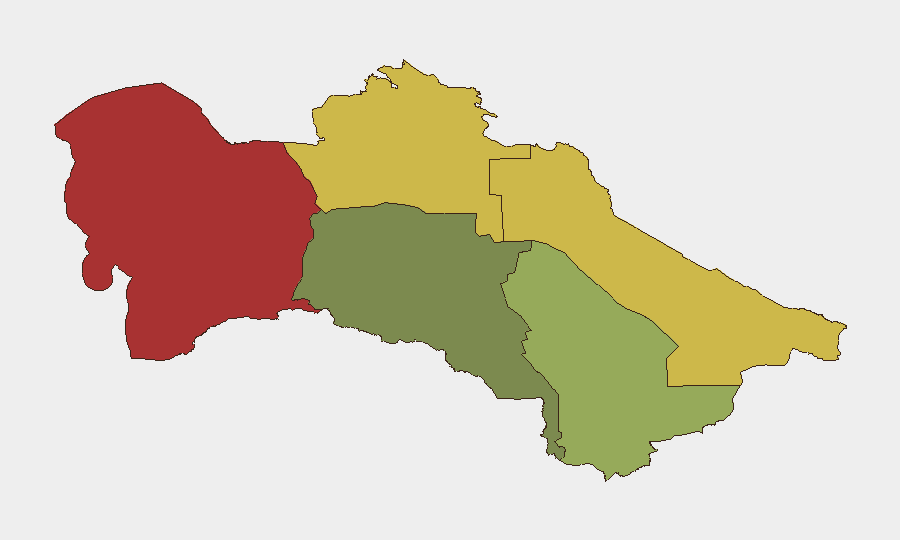
Balkan Region (risk score 78) and Lebap Region (risk score 68) significantly exceed other areas and drive the national composite risk profile. Both regions border Afghanistan and the broader Central Asian frontier zone; elevated scores likely reflect trafficking routes, cross-border smuggling, and irregular migration patterns common to remote border areas in the region. Dashoguz Region (score 62) presents similar border-proximity risks. By contrast, Ashgabat City (score 18) and Ahal Region (score 35) carry substantially lower sub-national risk, reflecting tighter government presence and lower cross-border exposure. Corporate and field teams operating in Balkan and Lebap should prioritize border-zone awareness and supply-chain security.
How GeoBit Would Assist
Teams with personnel or assets in Turkmenistan should employ AOI Monitoring & Early Warning with persistent watch on Balkan and Lebap regions to detect emerging trafficking, security-force activity, or civil unrest before open reporting surfaces—critical given information-control constraints. OSINT Fusion (multi-language search, Telegram/X monitoring, and corroboration across diplomatic, local, and humanitarian channels) enables early detection of incidents that official sources suppress or delay. Routing & Network Analysis supports alternative-route planning for supply chains and personnel movement away from highest-risk border corridors.
7-Day Outlook
No acute threat escalation is anticipated over the next seven days; Turkmenistan's stable governance posture and lack of near-term political or security catalysts support a continued low-incident environment. However, persistent border-zone trafficking and information-control operations will remain routine background factors, particularly in Balkan and Lebap regions. Teams should maintain standard duty-of-care monitoring and border-awareness protocols without heightened alert status.
Highest-Risk Areas — Ranked
| # | State / Region | Risk |
|---|---|---|
| 1 | Balkan Region | 78 |
| 2 | Lebap Region | 68 |
| 3 | Dashoguz Region | 62 |
| 4 | Mary Region | 42 |
| 5 | Ahal Region | 35 |
| 6 | Ashgabat City | 18 |
Sources
Previous Daily Briefs
A new Turkmenistan brief is written every day — each with its own risk map and downloadable CSV. Here's the last week; use the calendar to go further back.
📅 Browse every day by calendar →
Highlighted days have a brief. Tap a day for that day's map & analysis, or “csv” for that day's dataset ($5).
Atlas — our AI intelligence desk — emails them this snapshot personally. Nothing else, no list.